When tensions between the United States and Iran disrupted maritime traffic through the Strait of Hormuz, the ripples reached far beyond the Middle East. Global supplies of oil—a fundamental ingredient in fertiliser production—and plastic packaging materials faced immediate constraints, triggering concerns across importing nations about coming shortages and sharply higher consumer prices. Malaysian households, like many in the region, braced themselves for the economic squeeze, with families tightening budgets and prioritising spending on essentials as international energy costs climbed. Yet reality has defied those grim expectations, with food price growth in Malaysia remaining surprisingly moderate throughout this period of global turbulence.
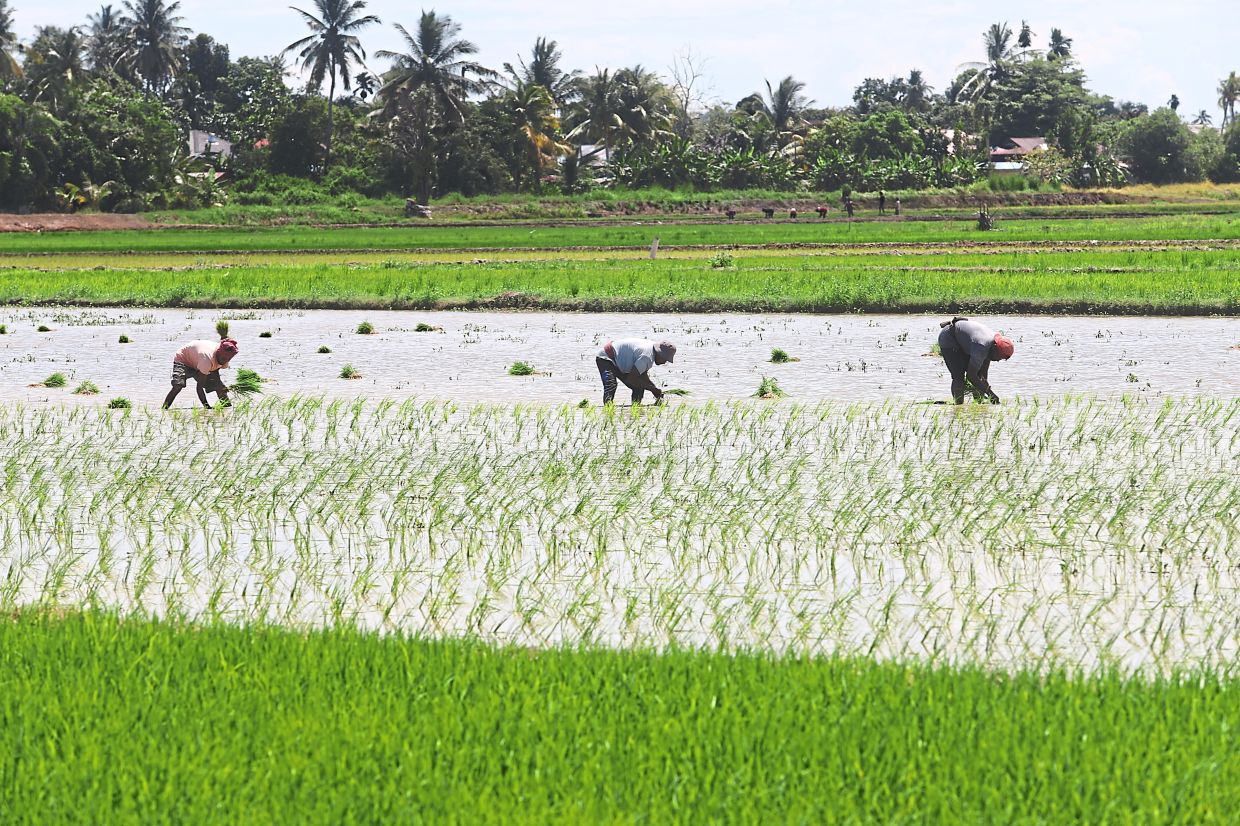
The stability has not been accidental. Rather, it reflects a deliberate strategy of government intervention designed to cushion the agricultural sector and ultimately protect consumer wallets. Starting in April, the Ministry of Finance rolled out an expanded package of support measures targeting the farming community directly. The Budi Agri-Komoditi diesel subsidy programme, which helps agricultural machinery operators manage fuel expenses, received a substantial boost from RM300 to RM400 monthly—a 33 percent increase that put more cash in farmers' hands when fuel prices remained elevated. Simultaneously, the government nearly doubled the ploughing incentive (Insentif Pembajakan kepada Pesawah, or IPKP) from RM160 to RM300 per hectare for the 2026 planting season, with farmers in Peninsular Malaysia receiving an advance payment of RM200 per hectare to prepare their fields for the upcoming cycle.
These measures directly addressed the cost pressures that farmers faced from elevated global energy prices. By reducing the burden of diesel expenditure and incentivising land preparation ahead of planting, the initiatives allowed agricultural producers to maintain output levels without passing excessive cost increases to buyers downstream. Prof Datuk Dr Nasir Shamsudin, an agricultural economist at Putra Business School and emeritus professor at Universiti Putra Malaysia's Faculty of Agriculture, explains that the combination works effectively as a short-term shock absorber. The monthly RM400 assistance helps offset both diesel and transportation costs, while the doubled ploughing incentive strengthens farmers' cash positions during the critical pre-season phase, enabling them to execute their planting plans without financial strain.
The evidence of effectiveness appears in Malaysia's official inflation data. Food price inflation registered at just 1.4 percent year-on-year in May 2026, a modest increase from 1.2 percent the previous month—far below the double-digit levels many regional economies experienced. Prime Minister Datuk Seri Anwar Ibrahim acknowledged the mounting pressures from rising living costs and global economic uncertainty when announcing the extension of Budi Agri-Komoditi, describing smallholders and agricultural entrepreneurs as the economic backbone deserving of protection and support. The government's commitment extends well beyond temporary emergency measures, with Budget 2026 allocating RM2.62 billion across multiple subsidies and assistance programmes covering paddy prices, crop cultivation, fertiliser supply, seeds, and production incentives.
Support has broadened to encompass other food-producing sectors as well. Fishing communities received RM160 million in allocations to fund living allowances up to RM300 monthly and catch incentives, recognising the sector's vulnerability to fuel price fluctuations and supply chain disruptions. The fruit-growing industry, particularly producers of domestically important crops like pineapples, soursop, water apple, and pomelo, received RM55 million in dedicated funding for incentives and infrastructure improvements. These complementary measures across agriculture, fishing, and horticulture create a more comprehensive safety net protecting multiple segments of Malaysia's food production system.
Beyond immediate price support, the government has implemented strategic stockpiling to ensure security during external shocks. Official sources confirm that Malaysia maintains sufficient stocks of essential food items—chicken, eggs, fish, milk, and various fruits—to cover at least one month of national consumption. The rice buffer, including government reserves, provides coverage for five to six months, a substantial cushion given that rice remains a staple dietary element for Malaysian families. Fertiliser stocks similarly offer approximately nine months of supply, reducing immediate vulnerability to global market price spikes. These reserves serve as both a practical safeguard and a psychological reassurance to consumers worried about food security during periods of global uncertainty.
Yet experts caution that subsidies, while effective short-term tools, cannot permanently solve underlying structural challenges. Prof Nasir emphasises that sustained food price stability depends ultimately on raising agricultural productivity and strengthening the resilience of the entire food system rather than relying indefinitely on government financial assistance. The long-term solution requires substantial investment in mechanisation that reduces manual labour costs, precision agriculture technologies that optimise resource use, climate-smart farming practices that adapt to changing environmental conditions, high-yield crop varieties that deliver more output per hectare, efficient irrigation systems that conserve water while maintaining yields, modern post-harvest facilities that reduce spoilage, and integrated supply chain logistics that move products efficiently from farm to consumer.
The government has begun pursuing these productivity-focused approaches alongside immediate subsidy measures. A significant initiative launched under the 13th Malaysia Plan channels RM5.5 million toward circular economy development, specifically converting agricultural and food processing waste into compost and organic fertilisers. This initiative addresses multiple challenges simultaneously: it reduces farmers' reliance on chemical fertilisers whose global prices fluctuate unpredictably, it diverts organic waste from landfills, and it builds a more sustainable production model. The Agriculture and Food Security Ministry is simultaneously promoting alternatives including biofertilisers and Effective Microorganisms (EM) products, deliberately shifting the sector's input profile away from imported chemical options vulnerable to international supply disruptions.
However, Malaysia faces a fundamental structural challenge that cannot be entirely overcome through domestic measures alone. The country remains a substantial net food importer, with the 2024 agri-food trade deficit reaching RM39.34 billion—a figure that testifies to deep reliance on global markets for basic foodstuffs including rice, wheat, dairy products, and meat. This import dependence inevitably exposes Malaysian consumers and producers to external price shocks whenever international supply chains experience disruption or when global commodity prices surge. Even sectors that appear self-sufficient in domestic production often depend heavily on imported inputs, creating hidden vulnerability throughout the food system.
Domestic production has shown improvement over recent years, yet Malaysia continues importing substantial portions of its fundamental food requirements. The current geopolitical tensions and Middle East shipping disruptions have highlighted how quickly distant global events can cascade through supply chains to affect household budgets in Southeast Asia. While Malaysia's current food inflation performance demonstrates that effective policy can mitigate these impacts, the underlying structural imbalance—chronic dependence on imports for core nutritional needs—remains a persistent vulnerability. Addressing this challenge requires a multi-year commitment to agricultural expansion, crop diversification, technology adoption, and supply chain development that goes far beyond annual budgetary allocations.
The Malaysian experience during this period of global disruption offers valuable lessons for policymakers across Southeast Asia. Immediate policy interventions can provide meaningful relief to farmers and moderate consumer price pressures during crisis periods. However, such measures work best when combined with long-term strategic investments in productive capacity and system resilience. Malaysia's balanced approach—using subsidies to stabilize the present while investing in productivity improvements for the future—demonstrates that food security requires both crisis management and structural economic transformation. As global supply chains face increasing volatility from geopolitical tensions, climate disruption, and pandemic risks, the importance of building diverse, efficient, and domestically-productive food systems becomes ever more apparent for countries throughout the region.

