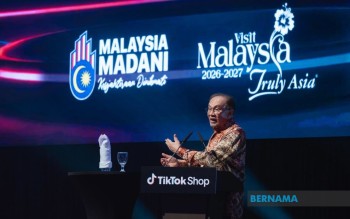
Malaysia's government is intensifying scrutiny of incoming foreign investment to guarantee that businesses contribute meaningfully to the domestic economy and job market, Prime Minister Datuk Seri Anwar Ibrahim announced during the TikTok Shop Summit 2026 in Kuala Lumpur on August 20. The drive reflects growing concern among policymakers that an influx of foreign-owned enterprises are exploiting Malaysia's open-market framework without generating the employment opportunities or economic activity that typically justify foreign direct investment approvals.
The Ministry of Investment, Trade and Industry has flagged a troubling pattern of companies establishing operations through warehousing and transit hubs that provide minimal domestic economic activity or job creation. Anwar outlined the government's position that such entities, while technically legal under Malaysia's trade agreements, fundamentally undermine the rationale for permitting foreign capital entry. The new review process will therefore assess whether applicant companies can demonstrate tangible employment generation and meaningful contributions to the local economy before being granted operational permits.
One category of concern Anwar highlighted involves small-business facades operated by international e-commerce actors, particularly those importing goods through cross-border platforms such as Temu and Pinduoduo. These entities register under ostensibly local business names—adopting identities suggesting traditional Malaysian commerce such as coffee shops—while exclusively selling imported merchandise with no domestic production or sourcing component. The prime minister noted that such arrangements deceive consumers about product origins while eliminating opportunities for legitimate local retailers and manufacturers to compete fairly in their own market.
The digital transformation of retail has accelerated this particular challenge. E-commerce platforms have fundamentally lowered barriers to market entry, enabling overseas sellers to reach Malaysian consumers without establishing conventional physical presence or supply chains. Where traditional foreign investment typically required infrastructure investment and local employment, digital retailers can operate through minimal logistics arrangements. Anwar characterized aggressive pricing strategies deployed by some foreign competitors as tantamount to market dumping—flooding Malaysia with artificially discounted goods to establish market dominance at the expense of local businesses unable to match such margins.
Port Klang has emerged as a focal point for enforcement concerns, with large international investors securing warehouse space for transhipment operations that employ virtually no Malaysian workers and source none of their inventory from local suppliers. The disconnect between warehouse scale and local economic contribution starkly illustrates the gap the government now seeks to address. These facilities function essentially as foreign logistics hubs that happen to be located in Malaysia rather than as genuine participants in the Malaysian economy. Anwar emphasized that permitting such arrangements without requiring employment of local workers or procurement of domestic products represents a failure of investment screening mechanisms.
The government's response reflects broader tensions inherent in Malaysia's dual commitment to free-trade principles and domestic economic protection. As a signatory to multiple trade agreements and a major hub for regional commerce, Malaysia has historically maintained relatively open investment conditions. However, policymakers increasingly recognize that indiscriminate openness can harm uncompetitive domestic industries and displace workers without delivering proportionate gains to the broader economy. The investment review initiative therefore attempts to calibrate Malaysia's openness—maintaining the capital flows and market access that support economic growth while preventing exploitation by businesses designed to extract market opportunities without reciprocal contribution.
Enforcement officers have already begun taking action against identified problematic operations, Anwar indicated, suggesting the review process will have immediate practical consequences rather than remaining purely prospective. This two-pronged approach—stricter screening of new applicants combined with enforcement against existing non-compliant entities—signals serious government commitment to reshaping Malaysia's investment profile. The prime minister's public articulation of concerns during a major industry summit also serves to signal expectations to the broader investment community that vague or purely logistical contributions will no longer suffice.
The timing of these announcements reflects accumulated pressure from Malaysian small and medium enterprises struggling against cheap imported competition and from constituencies concerned about employment in retail and traditional commerce sectors. By framing the issue around genuine economic benefit rather than simple protectionism, Anwar positions the policy as economically rational rather than defensive. Foreign investors contributing substantially to employment, technology transfer, and local supply-chain development will face no new barriers, while entities operating as hollow logistics nodes will encounter heightened scrutiny.
For Southeast Asian investors and businesses, Malaysia's evolving approach carries important implications. The region has positioned itself as a magnet for foreign capital and digital commerce platforms, but individual countries increasingly face domestic pressures to demonstrate that such openness generates benefits beyond elite sectors. Malaysia's experience may foreshadow similar policy tightening across the region as other governments confront voters' concerns about job losses and market erosion among traditional traders. The investment review therefore signals not merely a Malaysian policy adjustment but potentially a broader recalibration of how Southeast Asian economies balance free-trade commitments against domestic economic protection.

