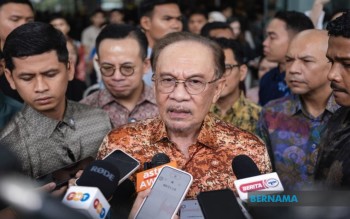
Prime Minister Datuk Seri Anwar Ibrahim has drawn a clear line on Malaysia's tax policy, declaring the government will not reverse course on the Goods and Services Tax despite ongoing discussions about consumption tax reform. Speaking after opening the TikTok Shop Summit 2026 in Kuala Lumpur, Anwar, who also holds the Finance Ministry portfolio, stressed that any future tax adjustments must prioritise protecting the lowest-earning segments of society from additional burden.
The pronouncement carries significance given the wider debate within policymaking circles about strengthening Malaysia's revenue collection mechanisms. Government officials have previously floated proposals ranging from levies on digital payment transactions to a potential reversion to broad-based consumption taxation as ways to improve fiscal sustainability. However, Anwar's statement signals that while the administration remains willing to explore certain improvements to the existing framework, a fundamental architectural shift back towards GST is not on the table.
Malaysia abandoned GST in 2018 following sustained public backlash against the tax structure introduced in 2015, replacing it with the narrower Sales and Service Tax regime. That transition reflected widespread concern about the regressive nature of a broad-based consumption levy, which disproportionately affects households with lower disposable incomes. The SST system, by contrast, targets specific goods and services rather than applying uniformly across the economy, allowing policymakers to exempt essential items and protect vulnerable populations.
Anwar's reassurance underscores the MADANI administration's stated commitment to ensuring that fiscal tightening does not worsen inequality. He explicitly acknowledged that the government could consider selective modifications to SST implementation or incorporate certain design elements from GST frameworks without embracing the principle of universal taxation. This suggests officials are contemplating targeted adjustments—potentially widening the SST net slightly or improving compliance mechanisms—rather than wholesale structural overhaul.
The distinction Anwar made between accepting component improvements and rejecting core GST principles reflects the delicate balance governing authorities must maintain. Southeast Asia has witnessed recurring cycles of tax reform reversals as successive governments respond to electoral pressure and public discontent over cost-of-living pressures. By publicly emphasising that lower-income households will not shoulder additional tax obligations, Anwar attempts to preempt political resistance while keeping options open for incremental refinement.
Industry observers note that the current SST framework, while more politically palatable, generates lower revenue than GST did and creates administrative complexity through multiple tax rates and exemptions. The government's willingness to improve SST implementation suggests officials recognise efficiency gaps whilst remaining bound by political constraints against broader tax expansion. Any future reforms would likely focus on administrative streamlining, better compliance enforcement, or modest base broadening rather than rate increases on low-income earners.
The timing of Anwar's remarks coincides with ongoing economic pressures on Malaysia's fiscal position. The government continues pursuing multiple revenue-enhancement strategies, including improved tax collection, greater emphasis on digital economy taxation, and efficiency improvements in existing frameworks. However, these measures alone may not suffice to meet medium-term fiscal consolidation targets without some form of consumption tax enhancement.
For Malaysian consumers and businesses, the clarity provided by Anwar's statement offers reassurance that regressive taxation increases targeting essential consumption are unlikely in the near term. Small and medium enterprises that rely on consumer spending may also view the commitment favourably, as it signals government prioritisation of household purchasing power. However, suppliers of goods subject to higher SST rates may continue facing pressure as officials explore ways to broaden the tax base without explicitly expanding it to all goods and services.
The remarks also carry implications for Southeast Asian neighbours observing Malaysia's tax trajectory. Several countries in the region have grappled with similar tensions between revenue requirements and political feasibility of broad-based consumption taxes. Thailand, Indonesia, and Vietnam each navigate comparable pressures to increase tax revenues whilst managing income inequality and public sentiment. Malaysia's explicit rejection of full GST restoration, despite economic arguments for broader tax bases, demonstrates that political economy constraints often supersede technical tax policy recommendations across the region.
Looking forward, the government appears committed to pursuing a middle path: accepting that some SST adjustments may be necessary for fiscal sustainability and administrative efficiency, but refusing to reimpose the kind of universal consumption taxation that triggered the 2018 policy reversal. This approach acknowledges both the economic case for tax reform and the political limits on redistribution upward to lower-income groups. Whether incremental SST modifications ultimately prove sufficient for Malaysia's fiscal needs without broader tax expansion remains an open question, particularly given regional growth challenges and rising expenditure pressures on government services.

