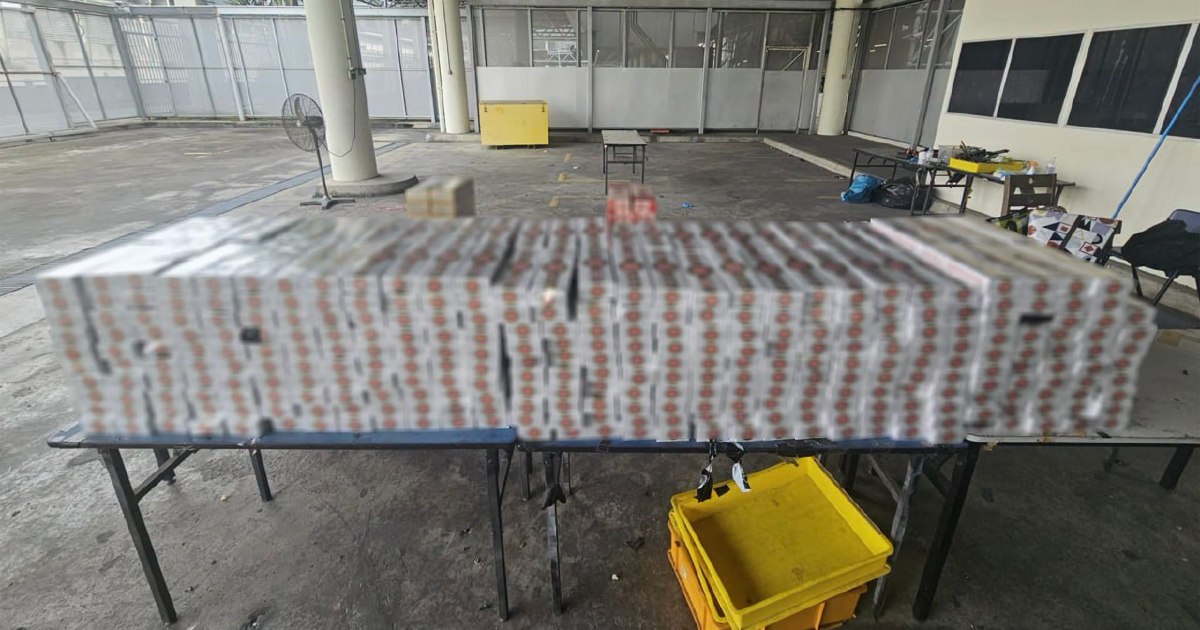
Authorities in Singapore have arrested a 30-year-old Malaysian national following the discovery of a substantial haul of contraband cigarettes at the Woodlands Checkpoint. The seizure represents a significant interdiction in what remains an ongoing battle against cigarette smuggling across the Malaysia-Singapore border, one of the world's busiest international crossings handling hundreds of thousands of vehicles monthly.
The arrest occurred when Singapore's customs and excise officials conducted a routine vehicle inspection at the checkpoint and uncovered more than 700 cartons and an additional 100 packets of cigarettes that had not been subjected to duty payments. The sheer volume of the seizure suggests this was not a case of personal consumption but rather an attempt at commercial-scale smuggling, a distinction that typically results in more serious legal consequences under Singapore's strict regulations governing tobacco importation.
The Woodlands Checkpoint, situated along the Johor Strait between Johor Bahru and Singapore, processes an enormous volume of cross-border traffic daily. The facility has become a critical frontline in Southeast Asia's fight against organized smuggling operations, which exploit the significant price differential between cigarettes sold in Malaysia and Singapore. The taxation regime in Singapore makes locally-purchased cigarettes substantially more expensive than their Malaysian counterparts, creating a lucrative arbitrage opportunity that criminal networks regularly attempt to exploit.
Singapore maintains among the world's most stringent regulations governing tobacco products, including excise duties that rank among Asia's highest. The island nation has progressively tightened these measures as part of broader public health initiatives aimed at reducing smoking prevalence and associated healthcare costs. This regulatory environment inevitably creates incentive structures that encourage smuggling operations, making border checkpoints essential enforcement points where authorities must balance efficiency against security imperatives.
The duty-unpaid cigarettes recovered during this interception represent a significant loss of revenue to Singapore's government, which depends heavily on excise duties to fund public services and health programmes. Beyond the fiscal implications, authorities recognize that contraband cigarettes undermine public health objectives by making tobacco products more affordable and accessible, particularly to younger demographics more price-sensitive to cigarette purchases. The illicit trade also fuels organized crime networks that often diversify into other contraband activities.
Malaysian nationals constitute a notable proportion of individuals intercepted at Singapore's borders with contraband goods, reflecting the country's geographic position and the established smuggling routes between the two nations. The relative ease of travel between Malaysia and Singapore, facilitated by customs union arrangements and the causeway's high traffic volumes, has historically made the route attractive for smugglers seeking to exploit regulatory arbitrage. However, both governments maintain sophisticated intelligence-sharing arrangements and coordinated enforcement operations to disrupt these networks.
The specific methodology employed in this case—concealing contraband within vehicle compartments during border crossings—represents a conventional smuggling technique that authorities have encountered countless times previously. Customs officials rely on a combination of technological screening, trained detection dogs, and intelligence-led inspection protocols to identify suspicious vehicles. The success of this particular interception underscores the efficacy of these systems, though the volume seized also indicates that determined smugglers continue developing new concealment methods and routing strategies to evade detection.
The legal consequences facing the arrested Malaysian individual could be substantial, as Singapore's customs legislation imposes severe penalties for duty evasion and smuggling offences. Depending on the specific charges filed and aggravating circumstances, penalties may include substantial fines and imprisonment. The severity of Singapore's approach to customs violations serves as a deterrent, though the persistence of smuggling attempts suggests that economic incentives continue outweighing legal risks in smugglers' calculations.
From a regional perspective, this seizure exemplifies broader illicit trade challenges confronting Southeast Asian economies. Cigarette smuggling represents merely one dimension of a much larger contraband ecosystem encompassing counterfeit goods, narcotics, and other prohibited items. The Malaysia-Singapore border, despite advanced enforcement capabilities, remains vulnerable to determined smuggling operations that generate substantial proceeds for criminal organizations. Addressing these challenges requires sustained coordination between national authorities, intelligence agencies, and border control services across the region.
The incident also reflects underlying tensions between national sovereignty and commercial imperatives in border management. Singapore's strict regulatory environment, though effective in advancing public health objectives, inherently creates smuggling opportunities that threaten neighboring nations' enforcement capacity. Similarly, Malaysia faces pressure to enhance its outbound cargo screening capabilities to prevent smuggling operations that originate within its territory. These dynamics necessitate ongoing dialogue and cooperation to develop enforcement strategies that serve the interests of both nations while disrupting criminal networks that profit from regulatory arbitrage.
Moving forward, this seizure will likely reinforce existing enforcement prioritization at the Woodlands Checkpoint and potentially trigger intelligence operations targeting suspected smuggling networks. Customs authorities will analyze trafficking patterns to identify vulnerabilities in their detection protocols and adjust strategies accordingly. The case also contributes to a broader body of evidence informing policymakers' assessments regarding the effectiveness of current border security measures and the adequacy of existing penalties in deterring future smuggling attempts.

