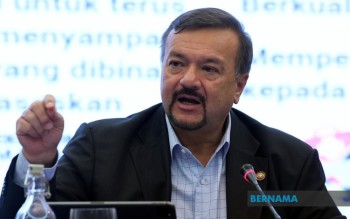
Malaysia's economic performance has defied expectations as the country maintains steady expansion despite a volatile international environment, Finance Minister II Datuk Seri Amir Hamzah Azizan announced at the GEAR-uP Progress Report briefing in Putrajaya. The assertion underscores the government's confidence that foundational economic policies are bearing fruit even as trade disputes and West Asian tensions continue to preoccupy global markets. This resilience carries particular significance for Southeast Asian observers, suggesting that diversified economies with strong domestic fundamentals can weather external shocks more effectively than those heavily dependent on single export corridors or markets.
The quantitative evidence backing this optimism paints a picture of consistent expansion. Malaysia achieved 5.2 per cent gross domestic product growth in 2024 and maintained that rate throughout 2025, a trajectory that accelerated into the current year with first-quarter GDP expanding to 5.4 per cent. The government's advance estimate for the second quarter projects growth of 5.8 per cent, implying an average of 5.6 per cent for the first half of 2026. These figures, if sustained, would position Malaysia among the faster-growing economies in its regional peer group and substantially above many developed nations managing stagnation or modest single-digit growth.
The minister attributed this economic momentum to the implementation of the MADANI Economy Framework, a comprehensive policy architecture designed to reorient growth drivers toward domestic productivity, human capital development, and strategic sectors. Rather than relying primarily on external demand or commodity price cycles, the framework emphasises internal consumption, investment in talent, and technology transfer. Amir Hamzah's remarks suggest that initial phases of this initiative are translating into measurable outcomes, though observers should note that the true test will come in subsequent quarters as the framework matures and faces inevitable implementation challenges.
Central to this strategy is the GEAR-uP programme, which the Ministry of Finance has spearheaded since 2024. This initiative allocates RM120 billion in domestic direct investment over a five-year span extending through 2028, a substantial commitment that signals governmental determination to catalyse private sector activity and crowd in additional capital. The programme's architects operate on the premise that strategically deployed public investment can unlock private spending and create multiplier effects throughout the economy, particularly when targeting infrastructure, manufacturing capabilities, and innovation ecosystems.
Government-linked investment companies and government-linked companies occupy a pivotal role in this architecture. Rather than simply injecting capital, these entities are tasked with facilitating technology transfer, attracting foreign expertise and funding, and strengthening supply chains across priority sectors. Amir Hamzah emphasised that the objective transcends mere capital accumulation; instead, the government seeks to build institutional capacity and human capital that will sustain competitive advantage over decades. This distinction reflects a sophisticated understanding that countries transitioning toward developed-economy status require more than financial injections—they demand knowledge ecosystems, skilled workforces, and integrated industrial networks.
The geopolitical and trade headwinds against which Malaysia has performed represent genuine obstacles that merit contextualisation. Trade tensions between major powers, particularly those involving Washington and Beijing, have disrupted global supply chains and created uncertainty for manufacturers. Simultaneously, regional instability in West Asia has affected energy markets, shipping routes, and investor confidence. That Malaysia has grown steadily despite these crosscurrents suggests either that the economy's structural vulnerabilities have been mitigated or that the government's policy responses have effectively insulated domestic activity from external shocks.
For Malaysian business leaders and investors, the implications are multilayered. Continued stable growth offers confidence for long-term planning and capital expenditure decisions, potentially unlocking investments that have been held in abeyance pending clarity on the economic direction. The emphasis on talent attraction and knowledge-intensive sectors signals that future job creation will increasingly concentrate in higher-skilled, higher-wage occupations, with consequences for education policy, training systems, and labour market dynamics. The RM120 billion GEAR-uP allocation also creates opportunities for suppliers, service providers, and companies positioned to benefit from infrastructure development and industrial modernisation.
Regionally, Malaysia's economic steadiness carries broader implications for ASEAN confidence and Southeast Asian integration narratives. If Malaysia successfully executes its transition toward a higher-income, innovation-driven economy, it could establish a template for peer nations grappling with similar challenges: slowing commodity-export growth, rising labour costs, and the need to move up global value chains. Conversely, should implementation falter or external conditions deteriorate sharply, the psychological and economic spillovers could dampen sentiment across Southeast Asia.
The minister's confidence in achieving long-term development aspirations hinges significantly on continued cooperation across government agencies, private firms, and civil society. This interdependence introduces execution risk; policy frameworks, however well-designed, depend on institutional competence, political consistency, and absence of debilitating corruption. The MADANI Economy Framework's success will ultimately be judged not by current-quarter growth figures but by whether Malaysia achieves measurable progress toward developed-country status—a threshold typically measured by per-capita income, human development indices, and industrial sophistication—over the remainder of this decade.
Looking forward, the convergence of steady growth, substantial investment commitments, and strategic focus on capabilities and talent suggests Malaysia has charted a credible path forward. Whether the 5.6 per cent average growth rate can be sustained, accelerated, or extended across the broader population will determine whether this period is remembered as the foundation of a genuine economic transformation or merely a cyclical expansion destined to moderate. For now, Amir Hamzah's optimism reflects genuine economic performance, though the ultimate validation will emerge through continued quarterly data, employment trends, and evidence that prosperity is being distributed equitably across Malaysian society.

