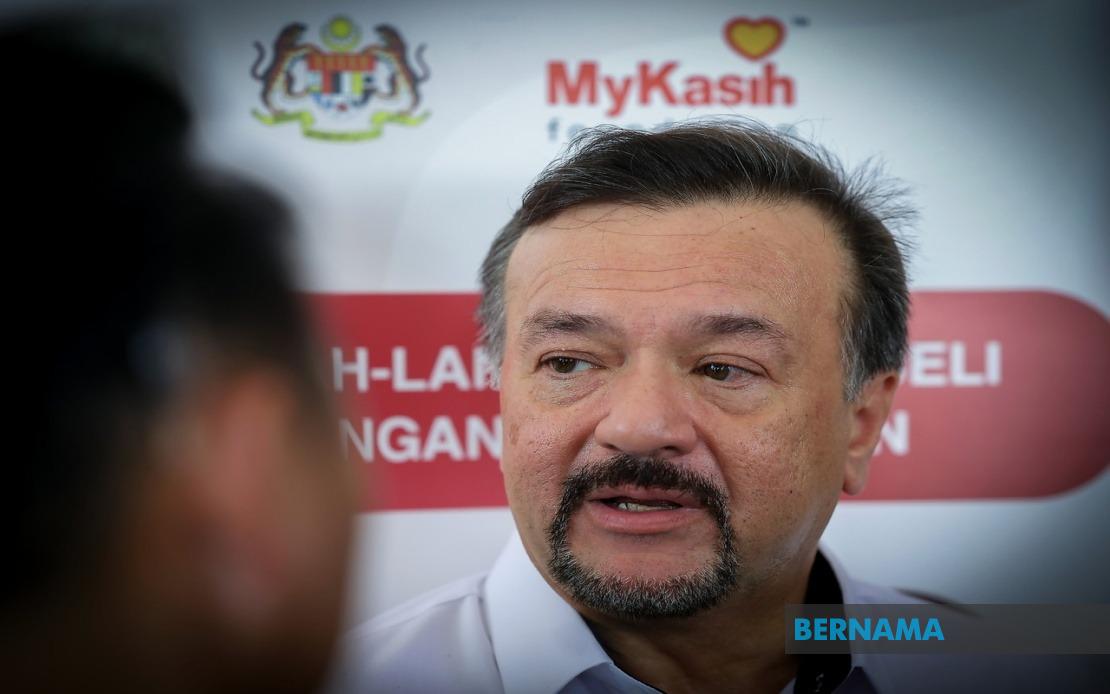
Malaysia's Finance Ministry has signalled flexibility in managing the BUDI MADANI Diesel subsidy programme, indicating willingness to consider refinements that emerge from practical implementation experience. Finance Minister II Datuk Seri Amir Hamzah Azizan underscored this adaptive approach during a media briefing in Kuching on June 24, emphasising that any policy modifications—including potential quota adjustments—will rest on empirical consumption data rather than theoretical projections or anecdotal complaints.
The government's commitment to evidence-based policymaking reflects lessons learned from previous targeted subsidy initiatives. When the subsidised RON95 fuel quota was first introduced, stakeholders immediately voiced concerns that the allocation would prove insufficient for motorists' actual needs. However, five months of operational data tells a different story. Between January and May this year, consumption records demonstrate that merely 0.76 per cent of programme participants utilised more than the 200-litre monthly threshold, suggesting the current quota structure adequately serves the vast majority of beneficiaries.
This measured stance represents a departure from the knee-jerk policy reversals that have occasionally characterised subsidy management in the region. Rather than hastily expanding quotas in response to initial complaints, the Ministry of Finance is allowing the system to function long enough to generate statistically meaningful feedback. The rationale is straightforward: early-stage implementation typically produces disproportionately loud voices from dissatisfied users, potentially obscuring whether the actual problems are systemic or confined to edge cases.
The e-hailing sector provides an instructive precedent for how Malaysia's government can balance consumer concerns with fiscal sustainability. When ride-sharing drivers reported that their allocated fuel quotas seemed restrictive, the government did not simply double the allowance across the board. Instead, officials reviewed consumption patterns recorded by transport operators and identified genuine high-usage cases warranting elevated support. This analytical approach ultimately produced a two-tiered quota system, with drivers receiving either 600 or 800 litres monthly depending on their documented fuel consumption. The differentiation ensures that subsidies flow to those with legitimate elevated needs while preventing blanket increases that would waste public resources.
Applying similar principles to the diesel subsidy programme makes economic sense for Malaysia. Diesel consumption patterns vary considerably depending on vehicle type, usage intensity, and occupational demands. Commercial drivers, taxi operators, and those undertaking long-haul transport face genuinely different fuel requirements than occasional private users. A data-driven approach allows policymakers to distinguish between these categories rather than imposing one-size-fits-all quotas that either shortchange heavy users or bloat subsidies for lighter consumers.
The broader context of targeted subsidy reform in Southeast Asia suggests that Malaysia is navigating a delicate balance between supporting lower and middle-income populations and maintaining fiscal discipline. Blanket fuel subsidies historically consumed enormous government resources while disproportionately benefiting wealthier vehicle owners. By restricting benefits to defined quotas and tailoring allocation levels to consumption patterns, Malaysia attempts to preserve the social safety net while improving targeting efficiency.
For Malaysian consumers and businesses dependent on diesel, the Finance Ministry's data-centric position carries important implications. Petty traders, small transport operators, and rural residents relying on personal vehicles have tangible reasons to monitor how their consumption patterns are recorded within the system. Those whose usage legitimately exceeds current quotas should document and report their requirements systematically rather than anecdotally, as this evidence will inform any future adjustments. Conversely, the government's patience in waiting for comprehensive data gives industry participants time to adapt their operations to the subsidy structure.
The involvement of Works Minister Datuk Seri Alexander Nanta Linggi in the briefing highlights the cross-sectoral implications of diesel subsidy policy. Transportation infrastructure, logistics, and construction—all vital to national development—depend significantly on diesel availability and cost predictability. The dual ministerial presence signals that fuel subsidy decisions extend beyond Finance Ministry considerations into broader economic and development strategy.
Looking ahead, the success of the BUDI Diesel programme will largely depend on transparent data collection and honest analysis. If the government genuinely commits to reviewing quotas when evidence demonstrates widespread inadequacy, the programme can maintain credibility. If policymakers dismiss legitimate concerns about quota insufficiency once data emerges, public trust in targeted subsidies will erode further. The early consumption statistics—showing that under one per cent of users exceed 200 litres—suggest the current framework is broadly appropriate, but this conclusion rests on assuming the data collection mechanisms are robust and representative.
For Southeast Asian policymakers observing Malaysia's approach, the case illustrates how targeted subsidies can function more sustainably than universal support schemes. However, success requires patience, transparency, and genuine responsiveness to evidence. The Finance Ministry's willingness to adjust the programme based on emerging data offers promise that BUDI Diesel can evolve into an efficient, equitable mechanism for supporting those genuinely dependent on diesel fuel, while avoiding the fiscal excesses that plagued earlier subsidy regimes.