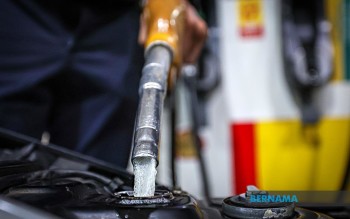
The government faces mounting pressure on its budget as fuel subsidies threaten to surge dramatically in coming months, according to statements made in parliament this week. Deputy Finance Minister Liew Chin Tong outlined projections showing that if crude oil prices stabilise around US$90 per barrel, the country will spend approximately RM2 billion monthly on RON95 petrol subsidies and a further RM1.5 billion on diesel support. These combined figures underscore the considerable fiscal challenge posed by elevated global energy prices and Malaysia's commitment to maintaining affordable fuel for its citizens.
The announcement reflects deepening concerns about energy cost inflation across the region, a situation that has already strained government budgets throughout Southeast Asia. Malaysia's approach of maintaining price controls on fuel represents a deliberate policy choice to shield consumers and businesses from volatile international markets, a strategy shared by several neighbouring economies. However, the mounting subsidy bill raises fundamental questions about fiscal sustainability and the long-term viability of such interventions without structural reforms to the energy sector or the broader economy.
Yet the government has attempted to frame the situation as manageable, emphasising that Malaysia's overall fiscal position remains fundamentally sound despite these elevated subsidy commitments. Liew stressed that current fiscal projections remain unchanged, suggesting confidence that higher fuel costs will not derail broader economic management objectives. This assertion hinges partly on an often-overlooked aspect of energy policy: the significant revenues that petroleum production generates for federal coffers. Malaysia's status as a hydrocarbon-producing nation means it benefits from the same price increases that create subsidy pressures, creating a natural fiscal hedge that non-oil-producing nations cannot access.
The economics of this offsetting mechanism deserve closer examination. Liew indicated that every one-dollar increase in crude oil prices per barrel translates into approximately RM300 million in additional government petroleum revenue. At current projected levels, this revenue enhancement would substantially mitigate the impact of expanded subsidy expenditures, though the relationship is not perfectly proportional and depends heavily on production volumes and extraction costs. This dynamic illustrates why oil-producing states can sustain fuel price controls that would prove unsustainable for oil-importing peers, yet it also creates a vulnerability to revenue volatility that complicates long-term fiscal planning.
The government's commitment to unveiling updated fiscal projections when Prime Minister Datuk Seri Anwar Ibrahim tables the 2027 Budget in October provides a crucial deadline for reassessing Malaysia's financial trajectory. At that juncture, policymakers will face fresh data on global economic conditions, refined oil price expectations, and actual subsidy expenditure from the preceding months. The timing is significant because it falls during a period when global energy markets remain notably uncertain, influenced by geopolitical tensions, production decisions by major suppliers, and shifts in international demand patterns that could shift prices substantially in either direction.
Beyond headline subsidy costs, the broader implications for Malaysia's economic management deserve consideration. Persistent high fuel prices, even when subsidised, create ripple effects throughout the economy by affecting transportation costs, electricity generation expenses, and manufacturing competitiveness. Businesses forced to absorb higher energy input costs often pass increases to consumers through price inflation, potentially undermining the intended protective effect of subsidies. This phenomenon has become increasingly visible across Malaysia's services and logistics sectors, where fuel represents a significant operational component.
The government has also demonstrated willingness to consider targeted modifications to subsidy mechanisms when specific constituencies or economic actors make compelling cases. Liew indicated that pickup truck owners have already received additional BUDI Diesel quotas of 100 litres through streamlined application processes, and he signalled openness to reviewing other applications that can demonstrate genuine hardship or economic importance. This case-by-case approach reflects an attempt to balance fiscal constraints with political and economic realities, allowing the government to address genuine need while maintaining overall subsidy expenditure within acceptable parameters.
The particular focus on Sabah and Sarawak subsidies underscores regional economic disparities that Malaysia continues to grapple with, particularly in East Malaysia where transportation costs and geographic isolation make fuel price support especially significant for rural communities and resource-dependent industries. Any expansion of BUDI quotas for these states carries both fiscal and political dimensions, as the federal government navigates obligations to these constituent states against tighter budget management nationwide. The flexibility shown in considering applications suggests that purely formulaic approaches to subsidy administration may be giving way to more nuanced assessment of regional circumstances.
Looking ahead, the sustainability of Malaysia's subsidy framework depends on several interconnected factors that remain substantially beyond government control. Oil prices could decline sharply, reducing both subsidy burdens and offsetting revenues; conversely, further price increases would compound fiscal pressures despite petroleum income growth. Domestic economic growth influences demand for fuel and therefore subsidy costs, while production changes in key global markets ripple through international pricing mechanisms. These complexities suggest that while the government's current confidence in managing the situation may prove justified, policymakers should simultaneously prepare contingency measures for scenarios where either petroleum revenues underperform expectations or subsidy costs exceed projections.
The broader policy debate around fuel subsidies continues quietly in Malaysian political and economic circles, even as the government maintains existing support mechanisms. Economists remain divided on whether universal price controls represent optimal policy, with some arguing that targeted vouchers or cash transfers would more efficiently protect vulnerable groups while allowing market signals to guide consumption patterns. Others contend that removing subsidies too rapidly would provoke social unrest and competitive disadvantage for Malaysian exporters. For now, the government has chosen to sustain the present system while monitoring costs, updating projections, and making incremental adjustments based on demonstrable need. The 2027 Budget presentation will provide the next comprehensive opportunity to assess whether this measured approach remains viable.

