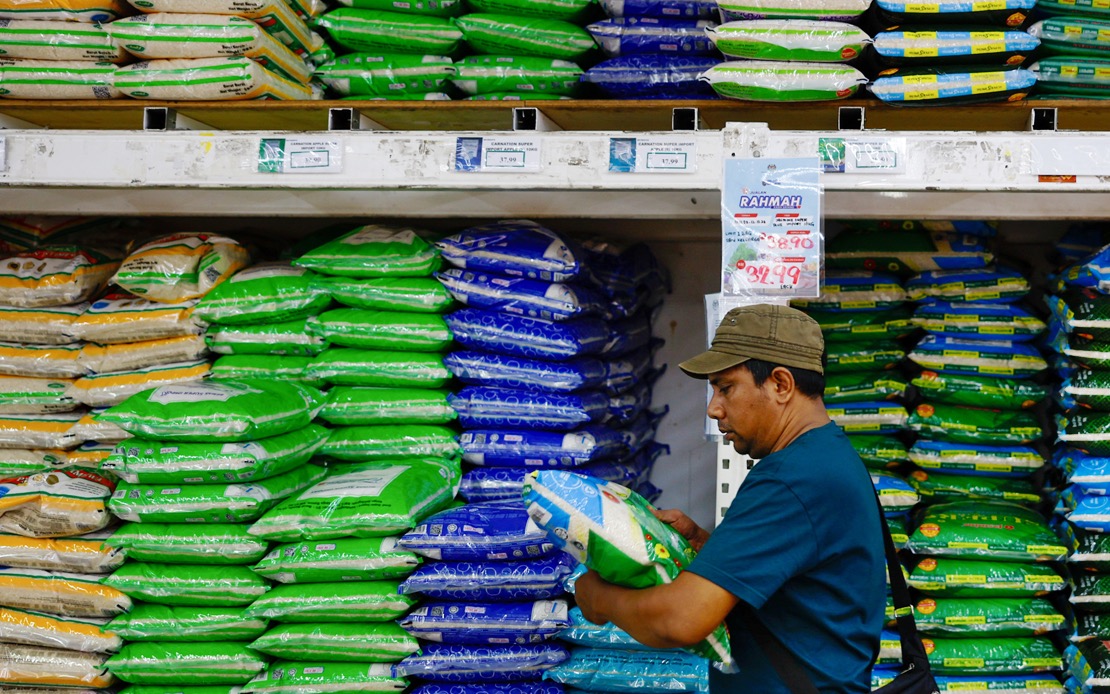
Malaysia's rice supply chain remains adequately cushioned against potential disruptions stemming from escalating geopolitical tensions in West Asia, with current reserves totalling 1.237 million tonnes providing a comfortable buffer for at least half a year of national consumption. Deputy Agriculture and Food Security Minister Datuk Chan Foong Hin made this reassurance during parliamentary proceedings in Kuala Lumpur on August 4, emphasising that the country's food security framework has been deliberately structured to withstand international supply shocks of the kind that periodically destabilise global commodity markets.
The reserve composition reflects a dual-pillar approach to maintaining adequate rice availability. The government maintains 200,000 tonnes through Padiberas Nasional Berhad (BERNAS), the national rice buffer authority, while an additional 1.037 million tonnes exists within the commercial sector's holdings. This layered system allows both strategic state-level intervention and market-driven supply mechanisms to function in concert, creating redundancy that insulates consumers from sudden price volatility or supply chain disruptions. Chan's statement addressed concerns raised by Senator Datuk Dr Mohd Hatta Md Ramli regarding the nation's food security preparedness as regional instability threatens international commerce and agricultural supply chains.
Beyond immediate stockpiling, the government employs price-stabilisation mechanisms that have proven effective in shielding Malaysian consumers from the commodity inflation that periodically grips other nations. Ongoing subsidies on locally produced white rice create what Chan characterised as a "stable price buffer," insulating domestic consumers from the steep premiums that materialise when global rice prices spike due to export restrictions or supply disruptions. This policy tool has historically protected household budgets during periods when international rice markets have experienced sudden contractions in availability, as occurred during major supply crises in the previous two decades.
However, Malaysia's medium-term food security strategy extends well beyond merely managing existing reserves. The Ministry of Agriculture and Food Security has set an ambitious target to achieve 80 per cent self-sufficiency in rice by 2030, a goal that requires substantial investment in production capacity given recent declining output trends. This objective carries particular weight as the nation confronts the dual challenges of shrinking cultivated areas and the mounting threat posed by climate phenomena such as El Niño, which can devastate yields across Southeast Asia during severe manifestations.
The ministry is pursuing multiple pathways to expand domestic production. A cornerstone initiative involves widespread adoption of drought-resistant padi varieties designated MR 380, MR 381, and MR 382, which can maintain viable yields despite water stress conditions increasingly common during irregular monsoon seasons. These genetically improved cultivars represent the intersection of agricultural science and practical necessity, allowing farmers to sustain productivity on the same land base even as environmental conditions grow more volatile. Complementing varietal improvements, the government is promoting water management innovations including Alternate Wetting and Drying (AWD) and System of Rice Intensification (SRI), both of which substantially reduce irrigation water demand while maintaining or enhancing grain yields.
Infrastructural modernisation underpins these agronomic advances. The Ministry is implementing an intensive five-season cultivation programme spanning two years within areas administered by the Muda Agricultural Development Authority (MADA), simultaneously upgrading irrigation systems to operate with greater efficiency and resilience. These infrastructure investments acknowledge that productivity gains from improved varieties and management practices require complementary physical assets capable of delivering water precisely when needed and at manageable cost to farming communities.
Recognising that rising input costs constitute a serious barrier to expanded production, the government has introduced fiscal measures designed to ease the financial burden on farming households. A notable intervention exempts agricultural fertilisers—specifically rock phosphate and magnesium sulphate—from the Sales and Service Tax throughout 2026 and 2027, effectively reducing production expenses at a critical juncture when energy prices have elevated fertiliser costs globally. This two-year exemption window represents a direct government subsidy to the farming sector, acknowledging that unsubsidised input prices would render marginal expansion economically unviable for many smallholding farmers.
Equally significant, the government has sharply increased incentives for paddy cultivation during the 2026 planting season, nearly doubling the ploughing incentive from RM160 to RM300 per hectare. This enhancement requires roughly RM40 million in additional budgetary allocation yet stands to benefit approximately 200,000 farming households, directly addressing the challenge of making rice farming economically competitive relative to alternative land uses. For smallholding farmers operating on tight margins, such incentives can prove decisive in determining whether land remains in padi cultivation or transitions to other activities.
The comprehensive nature of Malaysia's rice security strategy reflects a sophisticated understanding that food security rests upon multiple pillars: adequate reserves, price stability mechanisms, domestic production capacity, farmer income sustainability, and infrastructure resilience. The emphasis on reaching 80 per cent self-sufficiency by 2030 demonstrates recognition that excessive reliance on imports leaves the nation vulnerable to supply disruptions beyond its control. Current geopolitical tensions in West Asia add urgency to this objective, as disruptions to shipping routes or regional instability could rapidly propagate through global food supply networks in ways that earlier generations did not anticipate.
For Malaysian consumers and policymakers, the combination of substantial current reserves alongside ambitious medium-term production targets provides reasonable confidence that staple food availability will remain adequate even if international conditions deteriorate significantly. However, the government's active management of self-sufficiency targets and continued investment in agricultural modernisation suggests official recognition that complacency would be unwarranted. The rice sector remains vulnerable to climate shocks, pest pressures, and international economic disruptions, necessitating ongoing vigilance and strategic adaptation to preserve the food security gains achieved over recent decades.

