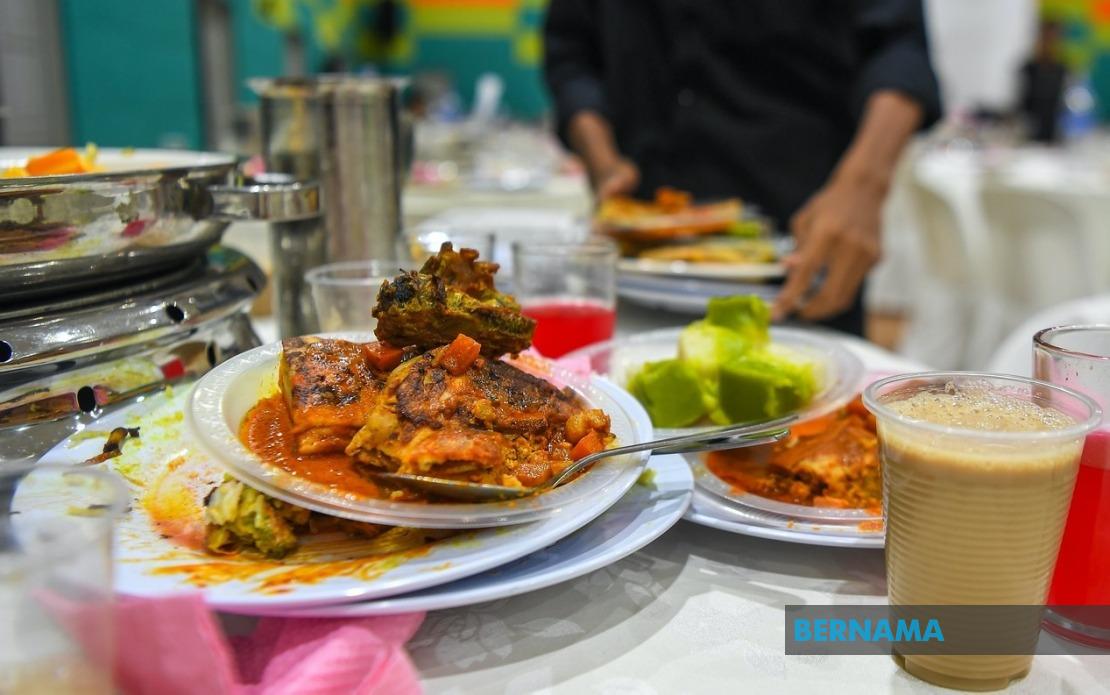
As Malaysia's economy has matured and household incomes risen, a troubling paradox has emerged: greater prosperity has coincided with increasing food wastage. Datuk Seri Dr Mohd Uzir Mahidin, the Chief Statistician who recently retired after nearly nine years leading the Department of Statistics Malaysia, identified this phenomenon as a defining characteristic of the nation's evolving consumption landscape. The correlation between affluence and food waste reflects deeper shifts in how Malaysian families now relate to sustenance itself—moving beyond necessity toward surplus, and often, excess.
Data from the National Household Indicators Survey 2025 paints a striking portrait of the scale of the problem. Across Malaysian households, annual per capita food waste ranges between 31.9 kilogrammes and 97.3 kilogrammes, a variance that itself speaks to the disparities between different community types. When extrapolated across the nation's roughly 7.5 million households, these figures suggest tens of thousands of tonnes of edible food reach landfills annually. The survey's findings highlight not merely waste, but a systemic disconnect between purchase and consumption that permeates society from the prosperous Klang Valley to smaller towns increasingly embracing urban consumption patterns.
Mohd Uzir articulated a nuanced explanation for this wastage phenomenon, one rooted in behavioral economics and shifting attitudes toward food as a commodity. Once households transcend the threshold of meeting basic nutritional requirements, their purchasing patterns transform fundamentally. Families begin acquiring items beyond immediate necessity, often driven by promotional activities and the psychology of abundance. The survey revealed a particularly common scenario in Malaysian homes: parents purchase groceries in bulk during supermarket promotions, unaware that their children have independently made identical purchases, resulting in duplicate stocks that spoil and eventually end up discarded. This dynamic underscores how improved living standards have paradoxically created organizational challenges within households.
The geographic dimension of food waste reveals striking disparities between urban and rural Malaysia. Urban households consistently generate higher food waste volumes, a trend increasingly replicated in rural areas as they become integrated into modern consumer culture. One significant factor driving rural waste is the growing reliance on catering services for kenduri and family celebrations, replacing traditional home-cooked meals prepared with careful portion control. Urban areas present an even more complex picture, with multiple social functions often scheduled on single weekends, featuring similar menus. Guests attending several celebrations in a day consume selectively, leaving substantial quantities of uneaten food. Selangor and other high-income states demonstrate notably higher wastage rates, not necessarily due to greater affluence per capita but because their active social calendars generate more ceremonial dining occasions.
Mohd Uzir identified a critical psychological element in consumption behavior: the diminished value assigned to abundant or discounted goods. Economic theory posits that price reflects scarcity, and consumers perceive intrinsic worth accordingly. When food becomes ubiquitously available or heavily discounted, households psychologically downvalue it, making food waste appear inconsequential. A 500 millilitre container of cooking oil or kilogrammes of rice left unconsumed generates less guilt than it might in environments where scarcity is evident. This economic truth extends beyond food to broader consumption patterns, visible particularly in online shopping where artificially low prices encourage excessive purchases of clothing and goods that never reach meaningful use before being discarded.
The types of food discarded reveal important patterns about Malaysian waste. Processed or cooked foods dominate waste streams far more than raw ingredients, with 94.1 per cent of households reporting disposal of prepared foods compared to 88.7 per cent for raw items. Within raw food categories, vegetables lead wastage at 29.1 per cent, followed by fruits at 22.4 per cent and seafood at 15 per cent. The processed food category highlights rice as the principal culprit at 16.7 per cent waste, alongside vegetables at 15.8 per cent and restaurant or takeaway meals at 13.8 per cent. These patterns suggest that ready-to-eat options and meal preparation failures constitute the largest component of household waste, pointing toward time-pressed urban and increasingly suburban families struggling to manage inventory.
Perhaps most revealing is the survey's finding regarding waste separation practices. Only 20.7 per cent of Malaysian households separate food waste from other household refuse, with the overwhelming majority disposing of food commingled with general waste. This statistic indicates that food waste reduction remains marginal to household environmental consciousness, at least operationally. While awareness of food wastage may have increased through government campaigns and NGO initiatives, the failure to establish separation practices suggests that behavioral change has not yet materialized at scale. For Malaysia to meaningfully address food waste, this gap between awareness and action must narrow considerably.
The departure of Mohd Uzir after 36 years in public service marked the conclusion of a transformative period at the Department of Statistics Malaysia. During his tenure since 2017, he directed the agency's evolution into the nation's strategic data institution, shifting its role beyond mere number-crunching toward insights generation. His observations on food waste, drawn from comprehensive household surveys, represent the kind of data-driven understanding essential for policymaking. Yet data alone cannot shift ingrained behavioral patterns; successive administrations must translate these insights into targeted interventions addressing both the cultural and economic drivers of waste.
Addressing Malaysia's food waste crisis requires multifaceted approaches that acknowledge the underlying prosperity paradox. Public education campaigns must cultivate renewed appreciation for food, particularly among younger generations raised in environments of apparent abundance. Tax incentives or regulatory frameworks might discourage bulk promotional pricing that encourages excessive purchasing. Simultaneously, state governments could restrict catering for public events or establish voluntary guidelines encouraging meal portion reduction at social gatherings. Food banks and community collection systems warrant expansion to capture edible discarded items before reaching landfills. However, the most fundamental shift must occur culturally, reestablishing the connection between food and the effort required to produce it—a perspective increasingly distant for urban Malaysians but essential for sustainable consumption.
For policymakers and business leaders, Mohd Uzir's analysis offers clear directives. The household food waste challenge cannot be solved through supply-side interventions alone; demand-side behavioral change remains paramount. Young professionals accumulating disposable income, urban families juggling competing schedules, and celebrations marking significant social occasions all require tailored messaging and structural changes. Malaysia's economic trajectory suggests that without intervention, food waste will likely increase as incomes continue rising and urbanization deepens. The comprehensive data now available through the Department of Statistics Malaysia provides the foundation for evidence-based policy; whether succeeding administrations act upon these insights will determine whether growing prosperity becomes compatible with sustainability.

