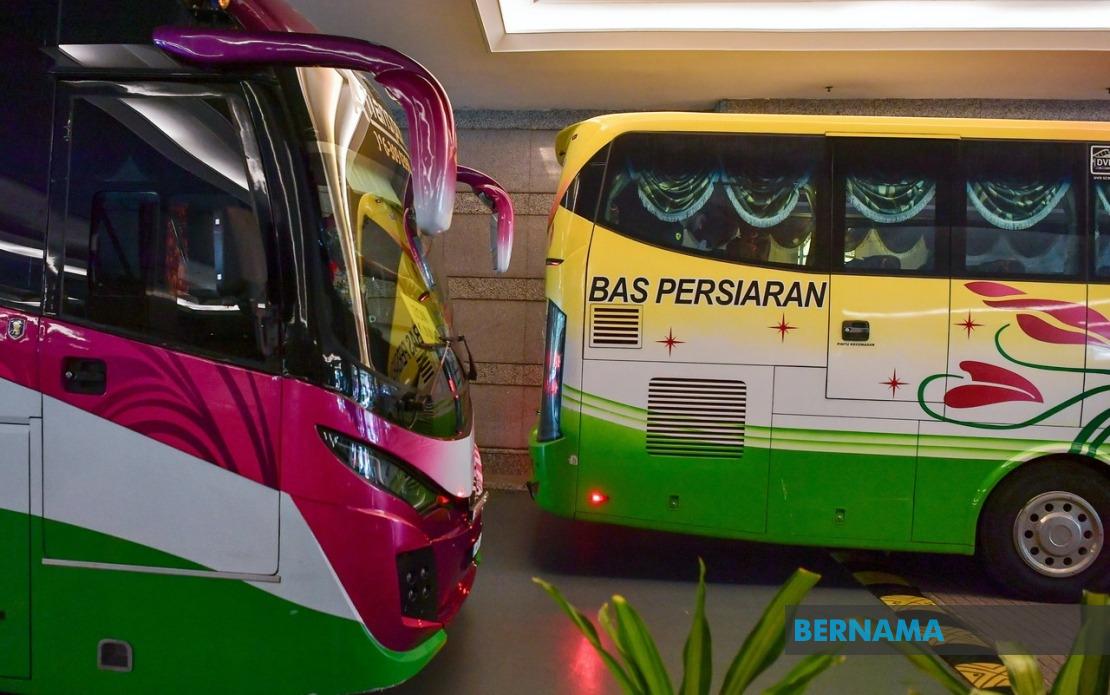
The Malaysian Association of Tour and Travel Agents (MATTA) has formally requested that the government reverse its recent decision to exclude licensed tourism transport operators from receiving diesel subsidies, contending that the move overlooks the essential role these operators play in serving Malaysian travellers alongside international visitors.
MATTA president Nigel Wong has directly challenged Finance Minister II Datuk Seri Amir Hamzah Azizan's characterisation of the subsidy exclusion, which portrayed such support as primarily benefiting foreign tourists. Wong emphasised that Malaysia's tourism transport fleet caters to a diverse domestic clientele, including families taking holidays, school groups embarking on educational journeys, corporate teams attending business conferences, religious pilgrims travelling to holy sites, and participants in community programmes and incentive travel schemes. This operational reality, Wong stressed, demonstrates that licensing tourism vehicles serve the breadth of the Malaysian travel market, not merely international arrivals.
The practical implications of removing diesel subsidies would ripple through the entire tourism value chain. Operating expenses for tourism coaches, minibuses and vans would rise significantly without subsidy protection, creating economic pressure on transport companies to absorb these costs or pass them along to customers. For Malaysian families and groups already conscious of travel budgets, fare increases triggered by subsidy withdrawal would make domestic tourism less affordable, potentially redirecting spending away from the sector entirely. This scenario contradicts the government's stated objective of encouraging Malaysians to holiday within their own country while strengthening Malaysia's international competitiveness in attracting visitors.
The timing of the subsidy exclusion presents particular friction with Malaysia's Visit Malaysia 2026 campaign, an ambitious initiative designed to showcase the nation's diverse attractions and boost tourism arrivals during a critical promotional window. Domestic tourism spending generates substantial multiplier effects throughout regional economies, as travellers spend money on accommodation, food services, entertainment, retail shopping, and visits to heritage sites and natural attractions. Local communities depending on tourism-related employment would face reduced visitor numbers if travel becomes less accessible due to higher transport costs. The exclusion, therefore, threatens to undermine broader economic objectives that the government simultaneously pursues through VM2026.
Wong articulated MATTA's core argument: that the government should view supporting licensed tourism transport not as a budgetary expense but as a strategic investment capable of delivering returns that exceed the immediate subsidy cost. Stronger domestic tourism activity generates sustained employment, encourages business development across hospitality and services sectors, and enhances Malaysia's reputation as an accessible destination. These longer-term economic benefits, Wong suggested, justify the continuation of targeted subsidy support. The comparison implies a cost-benefit analysis favouring subsidy retention over exclusion.
A secondary concern emerging from MATTA's position involves the potential displacement of legitimate business activity toward informal providers. If licensed operators face unsustainable cost pressures, Malaysian consumers might increasingly turn to unlicensed transportation services that evade regulatory oversight and safety standards. This scenario would erode the government's ability to monitor service quality and passenger safety while simultaneously reducing tax revenue and formal employment. The unintended consequence of subsidy withdrawal could be accelerated informality in the tourism transport sector, contrary to formal economy priorities.
MATTA has presented a multi-part proposal to the Finance Ministry, requesting formal reconsideration of the exclusion decision alongside structured engagement with the Ministry of Tourism, Arts and Culture (MOTAC) and industry stakeholders. The association advocates developing a carefully designed, transparent subsidy mechanism that targets licensed operators specifically, recognising the strategic importance of transport accessibility to domestic mobility patterns and tourism sector performance. This collaborative approach differs from the apparent unilateral decision to exclude tourism vehicles, suggesting that inter-ministerial coordination may have been insufficient during the subsidy programme review.
The Finance Ministry's original rationale—that diesel subsidies for tourism operators would concentrate benefits on foreign visitors—reflects a narrow interpretation of how tourism transport functions within Malaysia's economy. While international arrivals certainly utilise licensed coaches and transfer services, these vehicles generate most of their revenue and occupancy from domestic users taking regular holiday trips, family excursions, and group travel throughout Malaysia. The assumption that subsidy removal primarily harms only foreign tourists misrepresents the service distribution reality that MATTA operators navigate daily.
Regional implications extend beyond Malaysia's borders. Southeast Asian nations increasingly compete for tourist arrivals and spending, with transport accessibility and affordability influencing destination choices. Neighbouring countries maintaining competitive transport costs through subsidy support or tax incentives gain advantage in attracting both regional and international travellers. Malaysia's withdrawal from subsidy support could shift visitor flows toward competing destinations, affecting not only the transport sector but downstream tourism businesses in hotels, dining, attractions and retail that depend on steady visitor volume.
The broader policy context reveals tension between fiscal consolidation objectives and sector development priorities. Government budget pressures may explain the subsidy exclusion, yet selective removal of support for specific industries can create inconsistencies that undermine overall economic strategy. If tourism promotion through VM2026 represents genuine policy, then removing subsidy protection for tourism transport operators appears contradictory. Resolving this tension requires the inter-ministerial dialogue that MATTA has requested, bringing finance and tourism perspectives into alignment.
As Malaysia positions itself as a premium yet accessible destination for the region, transport affordability becomes increasingly central to competitiveness. MATTA's intervention in this debate provides industry perspective that policy-makers should weigh carefully, particularly as Visit Malaysia 2026 enters its execution phase and Malaysia seeks to establish itself as the tourism leader in Southeast Asia during a critical marketing window.

