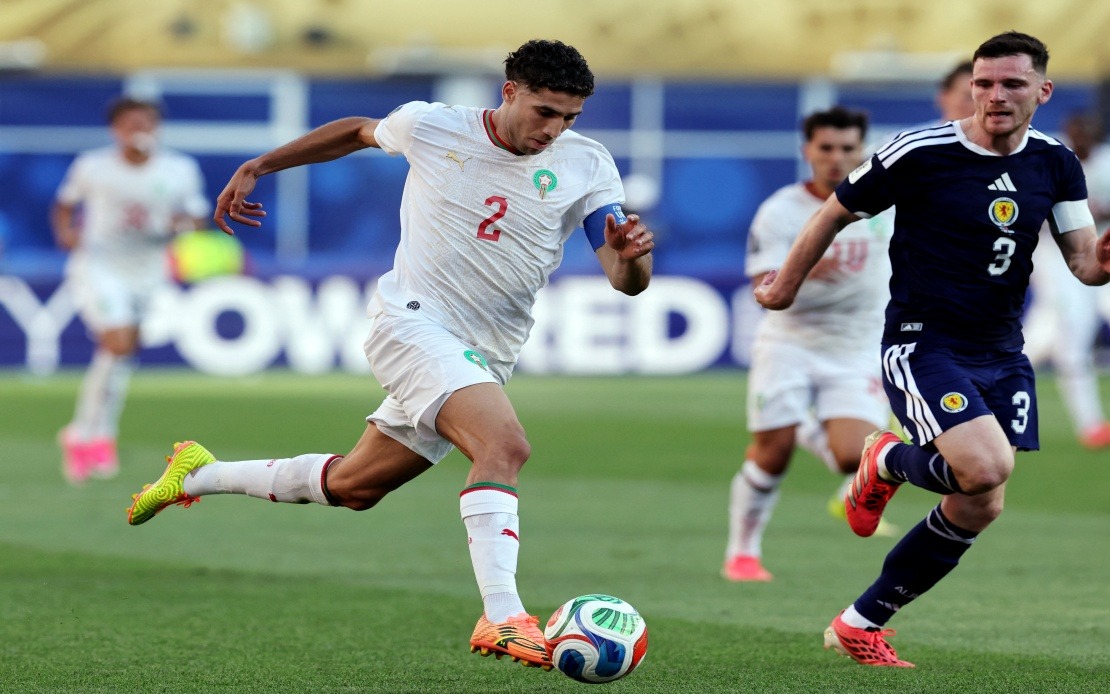
Morocco coach Mohamed Ouahbi has publicly demonstrated his backing for captain Achraf Hakimi following a difficult evening at Foxborough, Massachusetts, where sections of the crowd expressed their displeasure as the team secured a 1-0 World Cup triumph over Scotland. The timing of the match proved particularly challenging, as it coincided with a significant legal development in France that cast a shadow over the player's participation in the tournament.
The Versailles appeal court made its announcement on Friday morning, determining that Paris Saint-Germain's Hakimi must stand trial on rape charges relating to an alleged incident involving a 24-year-old woman at his residence in 2023. This judicial development became the backdrop for the evening's encounter, creating an unusual atmosphere that tested both the player's composure and his team's unity during an international competition.
The hostility Hakimi encountered was unmistakable and pervasive throughout the fixture. From the moment the teams were announced and the line-ups were read out, portions of the crowd made their disapproval audible. This booing intensified each time the Morocco captain touched the ball, creating a challenging environment that extended beyond the usual competitive pressures of World Cup football. Such sustained crowd reaction at a major tournament represents an extraordinary circumstance for any player to navigate.
Despite the adversity, Ouahbi chose to emphasise the sporting performance rather than engage with the off-field matters consuming media attention. In his post-match assessment, the coach deliberately steered conversation toward Hakimi's on-field contributions and abilities. "We didn't talk about it and we don't have to. We are behind him. Hopefully he will show at this World Cup that he is the best right back in the world," Ouahbi stated, signalling that Morocco's management would maintain solidarity with their embattled captain.
The coach's remarks reflected a broader team strategy to shield Hakimi from distraction and demonstrate internal cohesion during a sensitive period. Ouahbi's observation that "Hakimi was very strong" acknowledged the defender's resilience in performing effectively despite the hostile reception. This assessment suggested that, from Morocco's perspective, the player had successfully compartmentalised the external turbulence and delivered a creditable performance in a high-stakes match.
Ouahbi's confidence in Hakimi's mental state and preparation extended to observations about the team's overall disposition. He indicated that Morocco's camp maintained a relaxed atmosphere despite the circumstances, and that Hakimi himself appeared unaffected by the surrounding turmoil. "We are very relaxed, he is also relaxed and playing well," the coach added, attempting to project an image of normalcy and focus within the squad's preparations.
The player's teammates declined to elaborate on the legal proceedings or provide commentary on the trial announcement, maintaining a unified front that prioritised football matters. This collective silence from the Morocco camp reflected a deliberate choice to avoid amplifying discussion of the allegations and instead concentrate on their World Cup campaign. Such discipline from a squad under considerable scrutiny demonstrates the cohesion Ouahbi sought to maintain throughout the tournament.
Hakimi himself had previously broken his silence on the legal development through social media, stating that "at last, I will be able to speak." This brief statement suggested a desire to address the allegations through appropriate legal channels rather than through public statements or media commentary. The player has consistently maintained his innocence regarding the rape charges, and his social media remarks hinted at anticipation for the opportunity to present his defence in court.
The French legal process preceding Friday's court decision had involved an appeal against an earlier determination from an investigating judge. This procedural context indicated that Hakimi's legal representatives had mounted a challenge to previous judicial findings, and the Versailles court's confirmation of the trial order represented a significant juncture in the case. The trial itself remains pending, meaning the questions surrounding Hakimi's allegations will continue to develop independently of his World Cup participation.
From a broader perspective, Hakimi's situation highlights the intersection of elite sport, legal proceedings, and public opinion at major international tournaments. The incident demonstrates how court announcements can generate immediate and visceral crowd responses, particularly when cases involve serious allegations. For Morocco as a national team, the challenge extends beyond supporting an individual player to managing the emotional and psychological dimensions of competing while one team member faces substantial off-field pressures.
The performance against Scotland, despite the antagonistic atmosphere, may serve as an important statement about Morocco's ability to maintain focus and achieve results despite distractions. Ouahbi's willingness to publicly endorse Hakimi sends a clear signal about squad unity and the team's priorities during the tournament. Whether this approach successfully insulates the player and team from continued scrutiny remains uncertain, but the coach's backing provides immediate reassurance that Hakimi retains the confidence of the management and his teammates.
Looking ahead, Morocco's trajectory in the World Cup will unfold against this backdrop of legal proceedings affecting one of their key personnel. The team's ability to perform while managing both sporting objectives and the personal circumstances of their captain will test their resilience and organisational discipline. Ouahbi's statements suggest Morocco intends to treat Hakimi as a normal participant in their campaign, focusing exclusively on his contributions to the team's footballing ambitions rather than allowing legal matters to dictate the narrative surrounding the player or the squad.