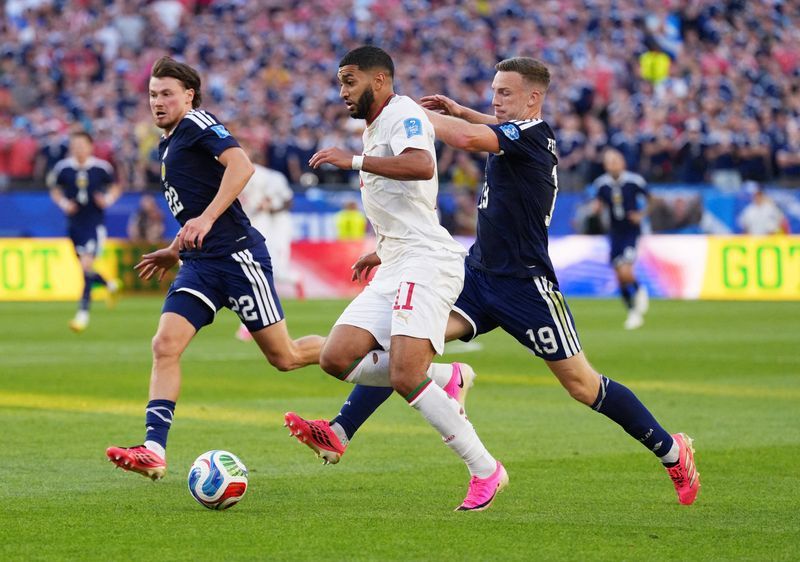
Morocco has seized control of World Cup Group C following a commanding 1-0 triumph over Scotland at Foxborough, Massachusetts, showcasing the attacking prowess and defensive organisation that made them semi-finalists in Qatar two years ago. The North Africans' clinical finishing was on display within little more than a minute, when Ismael Saibari latched onto a Brahim Diaz cross to power past Scottish defenders for the tournament's earliest goal to date. The victory leaves Morocco with four points from two matches and positions them perfectly to progress from the group stage.
The Scottish side entered the contest buoyed by confidence following their historic 1-0 opening-match victory against Haiti—their first World Cup win in 36 years—but found themselves overwhelmed by Morocco's intensity and precision from the opening whistle. What began as a promising campaign for the Scots unravelled almost immediately as they struggled to establish any meaningful rhythm or territorial advantage. The speed with which Morocco struck served notice that this was no ordinary Group C encounter, with the North Africans displaying the technical quality and tactical discipline that has garnered them respect throughout the tournament.
Saibari's breakthrough goal came as a result of a defensive lapse by Scotland when central defender Grant Hanley stepped out too early, leaving the Moroccan forward with space to exploit behind the Scottish backline. The move itself was textbook offensive football—Diaz's well-weighted cross found the unmarked Saibari, who converted with a powerful finish that left goalkeeper Angus Gunn with no chance. Remarkably, Saibari's early strike represented his second goal in two World Cup appearances, making him only the second African player to achieve this feat after Egypt's Mohamed Salah, underscoring his significance to Morocco's attacking setup in this tournament.
Beyond the individual achievement, Morocco's dominance extended throughout the first half as they controlled possession, dictated the tempo, and created multiple scoring opportunities that could easily have extended their advantage. The Scots were kept on their heels continuously, unable to mount any credible attacking threat until deep into stoppage time of the opening period. Bilal El Khannouss came close to doubling the lead in the 36th minute following another devastating Moroccan move, firing his effort over the crossbar after receiving the ball in a promising position. Similarly, Azzedine Ounahi threatened on the left flank later in the half, cutting the ball back for teammates who narrowly failed to make decisive contact in front of goal.
Scotland's predicament was compounded by their complete lack of attacking penetration throughout the opening 45 minutes. The side managed not a single shot on target or even off target until the dying moments of the first half, a statistic that illustrated their defensive vulnerability and inability to transition effectively from defence to attack. Morocco's pressing game effectively suffocated the Scots' rhythm, with the North Africans winning the ball repeatedly in midfield and transitioning into dangerous attacking situations. This one-sided opening period suggested that only a dramatic change in Scotland's approach would salvage anything from the encounter.
The second half continued in similar fashion, with Morocco maintaining control whilst adding further pressure through sustained attacking movements. Saibari struck the post with a deflected attempt early in the second period, whilst El Khannouss forced a sharp save from Gunn with a glancing header shortly after the restart. These chances represented clear evidence that Morocco possessed the capacity to extend their lead significantly, yet a combination of solid Scottish defending and occasional wasteful finishing prevented further goals. The North Africans' ability to maintain intensity and discipline throughout the contest revealed a team operating with genuine ambitions in this tournament.
Scotland's late efforts to accumulate pressure and force an equaliser proved insufficient, with the Scots unable to capitalise on the few half-chances that came their way as the match progressed. The psychological burden of chasing an opponent in command from such an early stage clearly weighed upon the Scottish squad, who never truly recovered from the shock of Saibari's lightning-fast opener. Despite showing resilience in the final stages, Steve Clarke's side lacked the creative spark necessary to unlock Morocco's increasingly defensive setup.
The victory establishes Morocco as genuine contenders within Group C, with their next assignment coming against Haiti on Wednesday, whilst Scotland faces an altogether different proposition when they encounter five-time champions Brazil in their final group match. Morocco's four points from two matches places them in an enviable position, requiring minimal from their remaining fixture to secure progression. The mathematics remain straightforward for Scotland, who hold three points from two games and must find a way to produce a performance of considerable quality against a Brazilian side that will be seeking to bounce back from their opening draw against the Moroccans.
Saibari's rapid-fire contribution to Morocco's cause takes on additional significance given the midfielder's recent medical clearance to join German champions Bayern Munich, suggesting the player is operating at peak physical condition and confidence. His emergence as a tournament player of substance reinforces the notion that Morocco possesses attacking depth and quality throughout their squad, not merely relying upon established reputation. The incident surrounding captain Achraf Hakimi, who was booed by Scottish supporters amid his ongoing legal situation, served as an unwanted distraction, yet the player's team-mates maintained focus and professionalism throughout the encounter.
For Malaysian and Southeast Asian observers, Morocco's comprehensive approach and technical execution offers instructive lessons in tournament football. The North Africans have demonstrated how early pressure combined with clinical finishing can establish psychological dominance, even when the ultimate scoreline appears deceptively narrow. Their trajectory from semi-finalists in Qatar to genuine Group C contenders suggests that strategic consistency and player development can elevate African football to the highest level of international competition. The remaining fixtures will determine whether Morocco can maintain this momentum whilst Scotland attempts to salvage their campaign against a Brazilian side that cannot afford further stumbles in the competition.