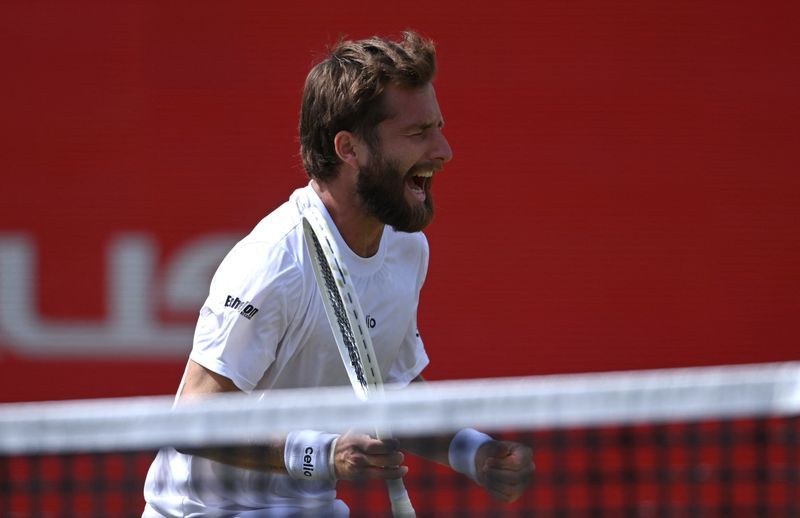
French tennis player Corentin Moutet has forfeited nearly all his prize money from the prestigious Queen's Club tournament after the ATP imposed a $40,000 disciplinary fine for an expletive-filled interview broadcast on the BBC. The 27-year-old's outburst during the on-court interview following his opening-round victory over fellow Frenchman Giovanni Mpetshi Perricard has resulted in a financial penalty that effectively erases the $43,000 he earned for advancing to the second round, leaving him with minimal compensation for his week's work at the London grasscourt event.
The incident unfolded after Moutet's first-round success, when a BBC interviewer conducted the standard post-match broadcast moment with the player. During the exchange, Moutet let loose with seven profanities, apparently frustrated by being aced on match point by a 142mph second serve from his opponent. When the interviewer politely requested that he refrain from repeating the expletive, Moutet proceeded to utter it three additional times before the network abruptly terminated the segment and issued apologies to both the live crowd and television audience.
The ATP's disciplinary panel cited unsportsmanlike conduct as the grounds for the substantial fine, though Moutet has indicated he intends to appeal the ruling. This suggests the player believes either the penalty is excessive or that his behaviour should have attracted lesser sanctions. The appeal process offers some prospect of a reduction, though the likelihood of a complete reversal appears remote given the publicly broadcast nature of the misconduct and the clear warning he received mid-interview.
Moutet subsequently took to Instagram to characterise his outburst as a joke, suggesting he was not entirely serious during the interview. However, this explanation has done little to mitigate the consequences already imposed. The fine represents a staggering financial blow for a player ranked 36th in the world, effectively nullifying the benefit of a tournament run that required winning matches at one of tennis's most demanding grasscourt venues. For perspective, the penalty amounts to substantially more than what many professional players earn across entire tournaments outside the elite circuit.
The French player's disciplinary record reveals this is hardly an isolated incident of poor conduct. In 2022, he was defaulted from the Adelaide International during a match against Serbia's Laslo Djere after directing profanities at the umpire, an outcome far more severe than a financial penalty. That tournament expulsion demonstrated a pattern of difficulty controlling his emotions during matches, suggesting underlying frustration management issues rather than momentary lapses in judgment.
Further compounding Moutet's troubles that year, the French Tennis Federation itself suspended his participation in certain competitions due to behavioural concerns. This institutional sanction from his own national federation underscored that his conduct problems extended beyond isolated incidents and represented a more systemic challenge. The combination of ATP fines, tournament defaults, and federation-level restrictions paints a picture of a talented player whose on-court deportment remains a significant liability.
Moutet's performance at Queen's itself proved disappointing beyond the financial ramifications of the fine. After defeating Mpetshi Perricard in the first round, he fell to Spain's Alejandro Davidovich Fokina in the second round, suggesting he did not sustain the form required to make a deep run at the tournament. The Queen's Club championship ranks among the most prestigious grass-court competitions outside the Grand Slams, attracting the world's elite players and offering substantial prize money distributed across multiple rounds. Early exits, particularly when coupled with disciplinary penalties, represent significant missed opportunities.
For Malaysian and Southeast Asian tennis observers, Moutet's situation offers instructive lessons about professional conduct standards in elite sport. While his talent as a player is evident from his world ranking and participation in major tournaments, his inability to maintain composure and respect broadcast protocols undermines his marketability and earning potential. In an era where player brand value extends far beyond match earnings into sponsorships and media opportunities, public displays of poor sportsmanship carry amplified consequences.
The incident also highlights the evolving standards around player behaviour that major sporting bodies are increasingly enforcing. The ATP's willingness to impose substantial fines for on-court misconduct, particularly when broadcast to global audiences, reflects governing bodies' commitment to maintaining professional standards and protecting the sport's image. Networks like the BBC have editorial interests in avoiding controversy, and players who behave disruptively during live interviews risk not only disciplinary sanctions but also reputational damage that can follow them throughout their careers.
Moutet's situation serves as a cautionary tale about the intersection of emotion, broadcast media, and professional accountability in modern tennis. While professional athletes are entitled to express frustration, the specific context matters enormously—live television broadcasts create permanent records that reach millions of viewers instantly. The warnings issued during interviews provide explicit opportunities to course-correct, and ignoring such clear signals tends to result in maximum penalties.
Looking forward, Moutet faces the prospect of an appeal process that may provide some financial relief, though the reputational consequences of the incident have already crystallised. Tournament organisers, broadcasters, and sponsors will likely scrutinise his conduct more carefully going forward. Whether this experience serves as a sufficient wake-up call to modify his behaviour patterns remains uncertain, but the financial and professional costs of another similar incident would be difficult to absorb given the trajectory his disciplinary record has already established.
%22%2F%3E%3C%2Fpattern%3E%3C%2Fdefs%3E%3Crect%20width%3D%22100%25%22%20height%3D%22100%25%22%20fill%3D%22url(%23ph4gj7hg)%22%2F%3E%3Crect%20width%3D%22100%25%22%20height%3D%22100%25%22%20fill%3D%22url(%23ph4gj7hp)%22%2F%3E%3Ctext%20x%3D%2250%25%22%20y%3D%2250%25%22%20text-anchor%3D%22middle%22%20dominant-baseline%3D%22central%22%20fill%3D%22rgba(255%2C255%2C255%2C0.95)%22%20font-family%3D%22Georgia%2C%20'Times%20New%20Roman'%2C%20serif%22%20font-weight%3D%22700%22%20font-size%3D%22272%22%20letter-spacing%3D%22-0.02em%22%3EFahmi%3C%2Ftext%3E%3C%2Fsvg%3E)