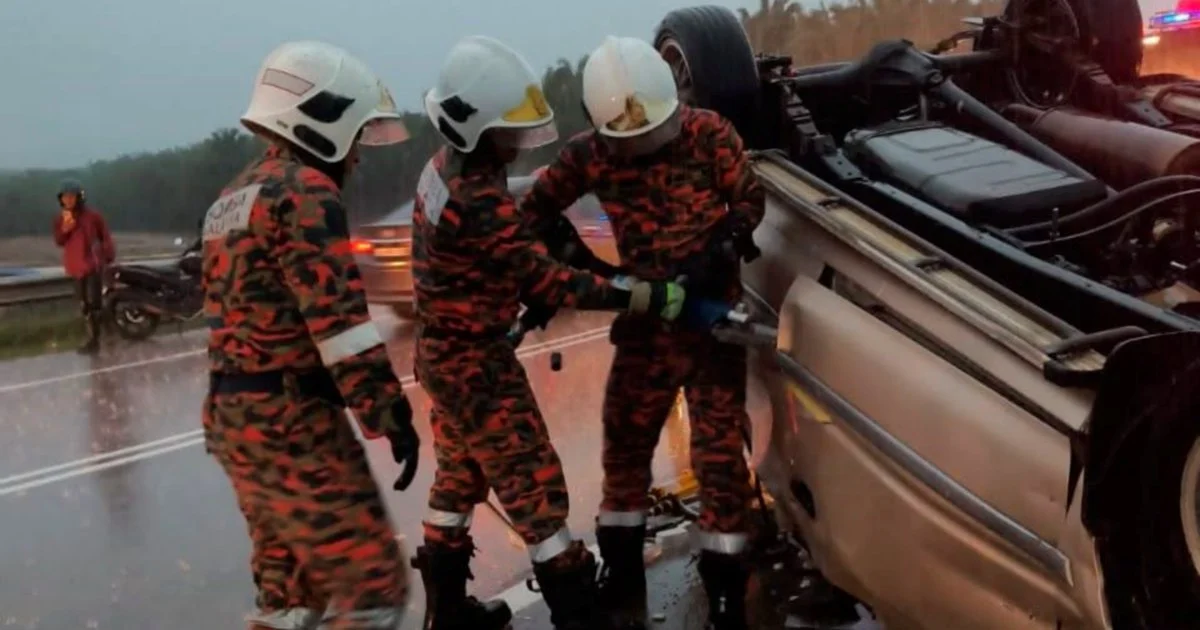
A tragic sequence of events claimed four lives across Pahang today when two fatal motor vehicle crashes occurred in quick succession in the districts of Maran and Pekan, with the second collision happening less than an hour after the first. Among those who perished were two sisters, underscoring the sudden and indiscriminate nature of fatal traffic incidents that continue to plague Malaysian roads despite ongoing efforts to improve highway safety standards.
The clustering of these two disasters within such a compressed timeframe has drawn attention to the recurring patterns of severe road accidents in the state, where accident-prone stretches and varying road conditions present ongoing hazards to motorists. Pahang, traversed by major arterial routes connecting different regions of Peninsular Malaysia, has long been identified as a corridor where traffic incidents occur with concerning regularity, particularly during peak travel periods and holiday seasons when congestion and driver fatigue become compounding factors.
The death of the two sisters represents a particularly poignant human tragedy within this larger statistic. Family losses of this magnitude—where multiple members perish in separate incidents occurring minutes apart—illustrate the cascading consequences of road accidents beyond the immediate impact on those directly involved. The simultaneous nature of these tragedies would have created intense pressure on emergency response services and hospital facilities in the region as they coordinated efforts to manage multiple crisis situations unfolding almost simultaneously.
Maran and Pekan, both significant towns within Pahang's administrative and commercial landscape, serve as transit points for considerable volumes of through-traffic daily. The incidents occurring in both locations within such rapid succession suggests that whatever underlying causes contributed to these crashes—whether mechanical failure, driver error, weather conditions, or road infrastructure issues—may reflect broader systemic challenges affecting road safety across the state rather than isolated incidents at specific locations.
The Malaysian road fatality crisis has remained persistently high despite technological advances in vehicle safety features and the proliferation of awareness campaigns. Annual death tolls from traffic accidents consistently rank among the highest in the region, with particular vulnerability during festive seasons and extended holiday periods when travel volume surges dramatically. Each incident, particularly those claiming multiple lives, reinforces the urgency of implementing more robust preventive measures and enforcement strategies.
Investigations into both crashes would typically examine multiple variables including vehicle conditions, driver behaviour, visibility and weather circumstances at the time, and road surface conditions. Authorities in Pahang would be examining whether factors common to both incidents—such as sudden weather changes, visibility obstruction, or road maintenance issues—contributed to the rapid succession of disasters. Such analysis becomes crucial for identifying whether targeted interventions could prevent recurrence at these specific locations.
The emergency services response to dual crisis situations of this magnitude requires substantial coordination and resource deployment. First responders in both Maran and Pekan would have faced the challenge of simultaneously managing scene investigations, casualty extraction and treatment, and traffic control while ensuring the safety of rescue personnel working in hazardous roadside environments. Hospital facilities received multiple critical and fatal casualties within the same narrow timeframe, straining medical resources and staffing across the region.
For Malaysian road users, incidents of this nature serve as sobering reminders of the fragility of safety on public roads and the critical importance of defensive driving practices. The concentration of fatalities within such a short period underscores how quickly normal commutes or journeys can transform into tragedies, emphasizing the need for sustained vigilance, appropriate speed management, and full compliance with traffic regulations regardless of familiarity with particular routes.
The broader policy implications extend to questions regarding road infrastructure maintenance, signage adequacy, accident prevention barriers, and the effectiveness of traffic enforcement in high-incident areas. State and federal authorities responsible for Pahang's road network would face renewed scrutiny regarding whether adequate resources have been allocated to hazard mitigation and whether enforcement activities have achieved sufficient deterrent effect against reckless driving behaviour.
Beyond the immediate loss of life, such incidents generate ripple effects through families, workplaces, and communities affected by the sudden deaths. The families of all four victims face extended trauma and grief compounded by the shocking suddenness and preventable nature of these tragedies. Colleagues, friends, and neighbours are confronted with the sharp reality that ordinary journeys carry inherent risks that cannot always be controlled by individual precaution alone.
Road safety experts continue to advocate for comprehensive approaches combining infrastructure improvements, stricter enforcement, public education, and vehicle safety standards to reduce Malaysia's road death toll. Each tragedy of this magnitude provides renewed impetus for such advocacy, though translating this urgency into sustained policy implementation and resource allocation remains a persistent challenge across multiple administration levels.
%22%2F%3E%3C%2Fpattern%3E%3C%2Fdefs%3E%3Crect%20width%3D%22100%25%22%20height%3D%22100%25%22%20fill%3D%22url(%23ph4gj7hg)%22%2F%3E%3Crect%20width%3D%22100%25%22%20height%3D%22100%25%22%20fill%3D%22url(%23ph4gj7hp)%22%2F%3E%3Ctext%20x%3D%2250%25%22%20y%3D%2250%25%22%20text-anchor%3D%22middle%22%20dominant-baseline%3D%22central%22%20fill%3D%22rgba(255%2C255%2C255%2C0.95)%22%20font-family%3D%22Georgia%2C%20'Times%20New%20Roman'%2C%20serif%22%20font-weight%3D%22700%22%20font-size%3D%22272%22%20letter-spacing%3D%22-0.02em%22%3EFahmi%3C%2Ftext%3E%3C%2Fsvg%3E)