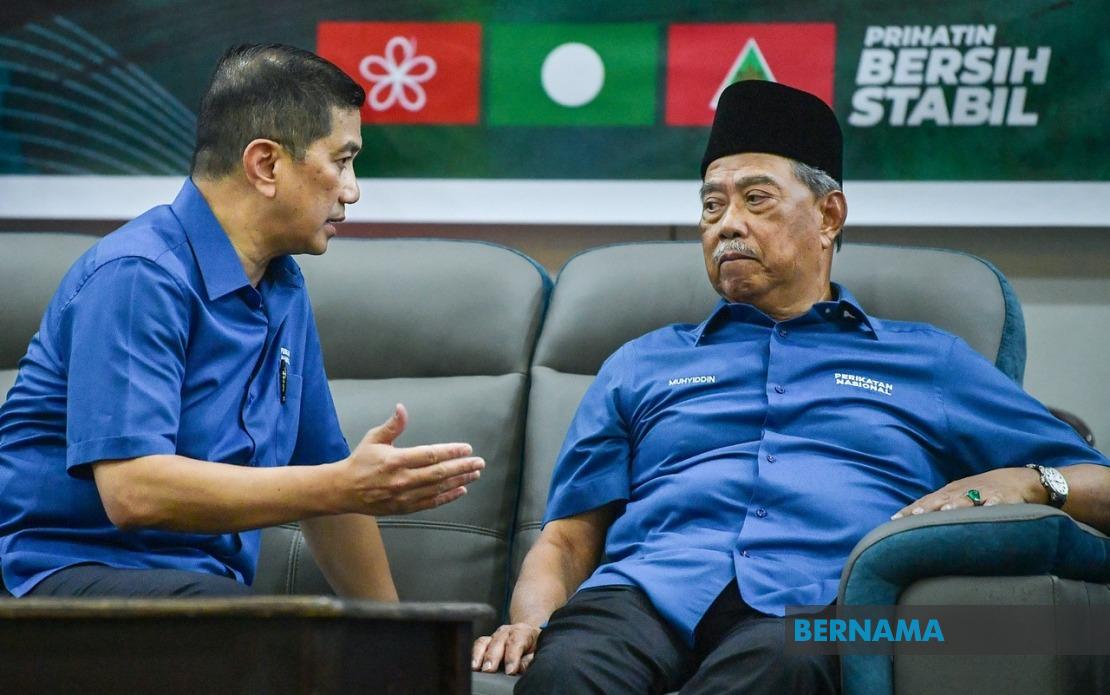
Former Prime Minister Tan Sri Muhyiddin Yassin has publicly endorsed a fresh package of government initiatives aimed at alleviating the financial pressures facing ordinary Malaysians and the business community. The Bersatu president's backing comes after Prime Minister Datuk Seri Anwar Ibrahim announced six immediate measures designed to address mounting cost-of-living concerns across the nation. These interventions, taking effect on September 1, signal a continued policy focus on managing household expenses and supporting entrepreneurship during a period of sustained economic uncertainty.
Among the centerpiece measures Muhyiddin highlighted is the restoration of RON95 fuel subsidy eligibility to 300 litres per month, up from the previous 200-litre threshold. This adjustment represents a meaningful expansion of fuel assistance that could provide monthly savings for millions of vehicle owners, particularly those in lower and middle-income brackets who depend on personal transport for work and commerce. For Malaysia's sprawling middle class, whose real incomes have stagnated while transport costs have climbed, such relief touches a genuine nerve in household budgeting and disposable income management.
Equally significant in Muhyiddin's assessment is the government's decision to raise the e-Invoicing exemption ceiling for small businesses to those with annual sales reaching RM3 million. This threshold adjustment aims to reduce compliance burdens on entrepreneurs operating at the micro and small-enterprise scale, potentially freeing resources previously absorbed by administrative requirements. For the estimated millions of Malaysian businesses operating below this sales level, the exemption represents tangible operational simplification and cost savings that can be redirected toward wages, inventory, or business expansion rather than regulatory paperwork.
The former premier specifically commended initiatives directed at strengthening Malaysia's social infrastructure and digital capabilities. An additional RM500 million allocated to school maintenance addresses a longstanding concern in the education sector, where deteriorating facilities have compromised teaching and learning environments across urban and rural schools alike. Complementing this investment is the government's push to digitalise healthcare services, a modernisation agenda that could improve access to medical consultations and reduce geographic barriers for patients in remote areas. These structural improvements respond to quality-of-life expectations that extend beyond simple cost relief into the realm of institutional efficiency and service accessibility.
Muhyiddin's commentary also reflected appreciation for government support targeting Malaysia's digital economy aspirations. The provision of artificial intelligence software subscriptions for youth represents an attempt to equip the next generation with technological competencies increasingly essential for employment in advanced sectors. As regional economies compete fiercely for talent and innovation capacity, enabling young Malaysians to develop AI literacy at no individual cost could have meaningful implications for workforce readiness and competitive positioning in Southeast Asia's digital-driven economy.
The business-oriented components of the package drew particular attention in Muhyiddin's statement. An additional RM1 billion in micro-credit facilities dedicated to small traders alongside RM200 million in direct grants targeting petty traders, night market vendors, and women-led home-based enterprises represents targeted support for Malaysia's informal and semi-formal commercial sectors. These segments, which employ millions but traditionally operate on thin margins and limited access to capital, face particular vulnerability during inflationary cycles. The dual approach combining credit access with grant support acknowledges that credit alone cannot solve the challenges facing traders operating at subsistence profitability levels.
However, Muhyiddin's endorsement was not entirely uncritical. The Bersatu leader explicitly urged the government to conduct broader policy reviews encompassing taxation and subsidy rationalisation frameworks that he identified as contributors to the public's present financial difficulties. This call for systemic examination suggests that while discrete relief measures have merit, they may address symptoms rather than root causes of cost-of-living pressures. For Malaysian observers, such commentary hints at ongoing policy tensions between short-term relief and medium-term structural reform, a balance that governments across the region struggle to calibrate effectively.
The timing of Muhyiddin's statement, delivered through a Facebook post on August 31, positions the Bersatu president as a constructive voice on government policy despite his opposition party status. His measured tone—welcoming current measures while urging their acceleration and supplementation—reflects broader political calculations about maintaining credibility on economic management without appearing obstructionist. For Malaysian political observers, such positioning illustrates how opposition figures navigate the delicate task of supporting popular policies while preserving room for criticism and differentiation.
Muhyiddin's specific reference to Budget 2027 as a framework for anticipated comprehensive measures suggests that stakeholders across the political spectrum anticipate sustained cost-of-living pressures extending into 2027. This forward-looking perspective indicates that the government's current initiatives, while welcome, are regarded as interim steps rather than definitive solutions to Malaysia's inflation and affordability challenges. The medium-term budget outlook will likely become a focal point for debate over whether relief measures are adequately scaled and whether deeper structural reforms addressing productivity, taxation, and resource allocation efficiency are being contemplated.
The emphasis placed by both the government and Muhyiddin on rapid implementation deserves particular attention. The September 1 commencement date compressed announcement and deployment into a tight timeline, suggesting political pressure to demonstrate tangible relief quickly. For ordinary Malaysians awaiting benefits, such speed matters significantly; conversely, implementation challenges frequently emerge when programmes launch rapidly without adequate preparation. The government's success in distributing fuel subsidy credits, processing e-Invoice exemptions, and disbursing micro-credit at scale over coming weeks will substantially influence public perception of administrative competence and political credibility.
For Malaysia's broader economic context, Muhyiddin's implicit framing of these measures as complementary to business-sector support rather than substitutes for structural competitiveness reforms underscores ongoing policy debates about productivity growth and economic resilience. Southeast Asian economies across the region confront similar pressures to balance immediate household relief with investments in educational quality, infrastructure, and technological adoption that determine long-term prosperity. Malaysia's approach, combining subsidy maintenance with digital economy enablement and small-business support, reflects a particular strategic orientation—though whether these elements cohere into a coherent development strategy remains an open question that future policy announcements and Budget 2027 deliberations will help clarify.

