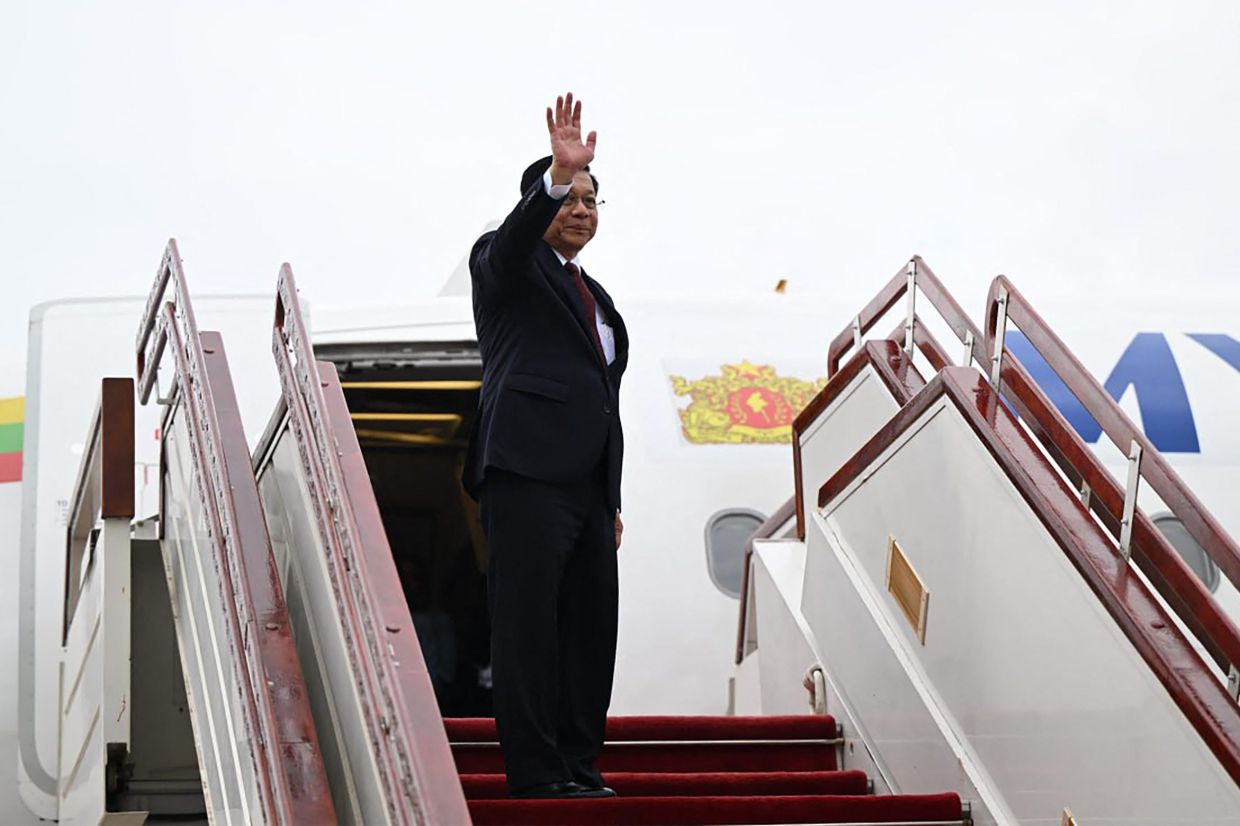
Myanmar's military leader Min Aung Hlaing departed for Russia on Monday for high-level talks with President Vladimir Putin, marking the first visit to Moscow by the former junta chief since assuming civilian office. The trip underscores Myanmar's strategic pivot towards Moscow at a time when the country remains isolated by much of the Western world following the turbulent events of recent years. The Myanmar presidency confirmed the departure from Naypyidaw, noting that the visit aims to deepen long-standing bilateral relations and explore avenues for enhanced cooperation across defence and economic sectors.
Russia's role as a steadfast supporter of Myanmar has grown increasingly significant since the 2021 military coup that dismantled the democratically elected administration led by Aung San Suu Kyi. While most Western nations and international observers condemned the intervention as an illegal seizure of power, Moscow distinguished itself by offering tacit backing to the new military authorities. This strategic alignment has provided Myanmar's junta with crucial diplomatic cover in forums where Western pressure for democratic restoration might otherwise have prevailed, cementing Russia as a key ally in Myanmar's efforts to navigate international condemnation.
The aftermath of the coup has been marked by widespread bloodshed and instability. An ongoing civil war has ravaged the country, claiming an estimated toll exceeding 100,000 lives and displacing countless civilians. Armed resistance movements have contested military control across numerous regions, creating a humanitarian crisis that has drawn concern from neighbouring countries and international agencies. Despite these circumstances, the junta has sought to normalise its position both domestically and internationally, presenting itself as a legitimate government worthy of recognition and investment.
Min Aung Hlaing consolidated his political authority when he was installed as president in April following elections that international observers and human rights monitors widely dismissed as theatre rather than genuine democratic exercise. The voting process was tightly controlled, with outcomes predetermined to ensure the military maintained command of state institutions. This installation as civilian president, rather than retaining an explicit military title, represented an attempt to rebrand the regime as more palatable to the international community, though few nations accepted this characterisation at face value.
The diplomatic visit carries substantial symbolic weight for Myanmar's foreign policy trajectory. By formalising engagement with Russia at the presidential level, Myanmar's leadership signals its willingness to anchor itself within alternative international partnerships that offer protection from Western isolation. The timing of such visits, following earlier diplomatic missions to China, India, and Thailand, suggests a calculated strategy to cultivate relationships with major powers who either share Myanmar's resistance to Western pressure or have strategic reasons to maintain regional stability and influence.
Russia's military support for Myanmar has proven consequential in practical terms. The Myanmar armed forces operate Russian-manufactured fighter jets that have been deployed against various opposition forces and armed ethnic organisations. Human rights organisations and conflict monitoring groups have documented incidents where these aircraft have struck civilian areas, with some analysts alleging that such attacks constitute violations of international humanitarian law and potential war crimes. The provision of such weaponry deepens Moscow's institutional investment in Myanmar's military establishment and creates mutual dependencies that transcend conventional diplomatic relationships.
The military cooperation between the two nations received formal institutional backing through a five-year defence partnership agreement signed in February, though the specific terms and obligations remain largely opaque to outside observers. The precise nature of this arrangement—including provisions for weapons transfers, training programmes, intelligence sharing, and operational coordination—has not been publicly disclosed, leaving analysts to speculate about the true scope of Russian military engagement within Myanmar.
During his stay in Moscow, Min Aung Hlaing is scheduled to meet with Russia's prime minister and the speaker of the State Duma, Russia's lower parliamentary chamber, alongside participation in a bilateral economic forum. These meetings with senior civilian and legislative representatives suggest that Russia is treating the engagement as a substantial diplomatic affair deserving attention at multiple institutional levels. The economic forum component reflects Moscow's interest in exploring commercial opportunities and investment partnerships that could deepen Myanmar's economic orientation towards Russia and potentially provide mutual benefits as both nations contend with international sanctions and trade restrictions.
This visit constitutes one in a broader pattern of international engagement undertaken by Min Aung Hlaing since his April elevation to the presidency. Prior journeys to neighbouring Thailand, as well as diplomatic overtures to major regional powers including China and India, have demonstrated the junta's determination to escape the pariah status that initially followed the 2021 coup. While the military government remains unable to secure acceptance from Western capitals, its strategy of cultivating relationships with non-Western powers has yielded meaningful diplomatic and material support.
For Southeast Asia, Myanmar's gravitational pull towards Russia carries regional implications. The Association of Southeast Asian Nations (ASEAN) has struggled to mount a unified response to Myanmar's political crisis, with some member states prioritising pragmatic engagement over principled stands on democracy. Myanmar's deepening ties with Russia could further complicate ASEAN consensus-building and might influence the bloc's approach to questions of international conduct, humanitarian standards, and the legitimacy of military governance in the region.
The diplomatic mission also reflects broader geopolitical currents reshaping international alignments. As Western powers have tightened sanctions regimes against Myanmar's military government, and as regional neighbours have grown weary of the costs imposed by Myanmar's instability, the junta's cultivation of partnerships with Russia and China offers alternative pathways for survival and international legitimacy. For Naypyidaw, the Russia visit represents both a practical effort to secure continued military and economic support and a symbolic affirmation that alternatives to Western-led international order exist and remain accessible to governments willing to pursue them.

