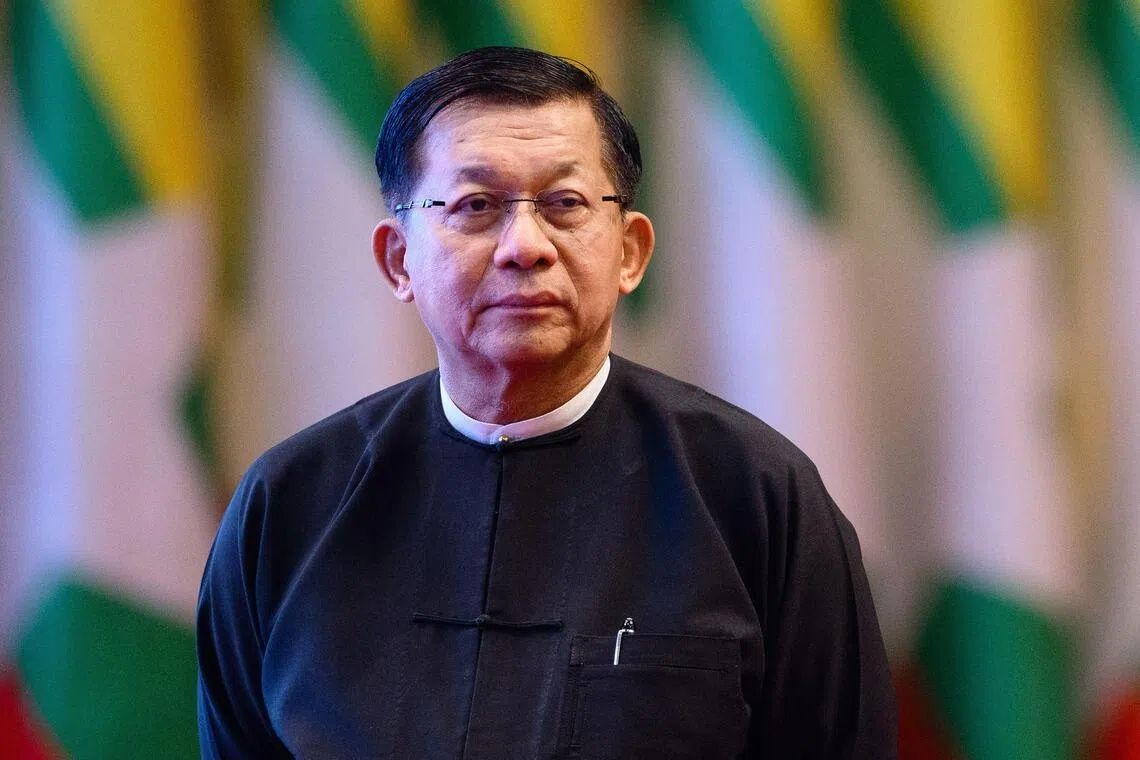
Myanmar's former military ruler Min Aung Hlaing touched down in Thailand on Thursday as part of an intensifying diplomatic campaign to rehabilitate his image and restore his isolated nation's standing within Southeast Asia's regional bloc. The visit represents a significant thaw in Myanmar's international isolation following the 2021 coup that removed democratic leader Aung San Suu Kyi and plunged the country into protracted armed conflict. It underscores how Thailand has positioned itself as a key mediator willing to engage with Naypyidaw's current regime, even as Western powers and international justice advocates maintain their opposition.
The coup orchestrated by Min Aung Hlaing three years ago fundamentally destabilised Myanmar and triggered a descent into civil war that has claimed an estimated 100,000 lives across competing military and civilian armed forces. Following his takeover, the general consolidated power by engineering a new political structure designed to legitimise military rule. In April this year, stage-managed elections produced Min Aung Hlaing's appointment as president, a choreographed transition that international observers and democracy monitoring organisations derided as a transparently fabricated exercise in image laundering rather than genuine democratic governance.
Thailand's willingness to host Min Aung Hlaing reflects Bangkok's pragmatic calculations about regional stability and border security. The kingdom shares a lengthy frontier with Myanmar and faces tangible consequences from the ongoing instability there, including refugee flows totalling millions of displaced persons and transnational criminal networks exploiting Myanmar's ungoverned spaces. Thai Foreign Minister Sihasak Phuangketkeow signalled on Monday that combating cyberscam operations would feature prominently during the bilateral discussions, indicating that practical security concerns rather than ideological considerations are driving Thailand's engagement strategy.
Within the Association of Southeast Asian Nations, Myanmar's reintegration remains contentious and incomplete. The bloc has maintained formal restrictions on Myanmar's participation in high-level summits since the 2021 putsch, reflecting Asean's official commitment to its non-interference principle while simultaneously registering disapproval of the coup. However, cracks in this consensus have emerged. Myanmar's foreign minister was permitted to attend an informal gathering with regional counterparts last month in Thailand, suggesting that selective normalisation is quietly proceeding despite the official freeze.
Min Aung Hlaing has embarked on an active diplomatic schedule since donning civilian attire, making reciprocal visits to strategic partners including India, China, and Laos. These travels demonstrate a calculated effort to rebuild relationships across Asia's major powers while simultaneously signalling that Myanmar remains a player in regional geopolitics rather than a pariah state. Each engagement serves to incrementally restore his legitimacy as a statesman rather than a coup leader, fundamentally reshaping perceptions of his regime's standing.
Thailand's Foreign Minister acknowledged a modest positive development when Aung San Suu Kyi, who remains detained under house arrest, was permitted to receive a representative from the International Committee of the Red Cross on Monday. This marked her first documented meeting with a foreign official since her ouster, suggesting that Myanmar's authorities may be responding to international pressure regarding her detention. Thai officials welcomed this gesture, framing it as evidence of potential movement toward reconciliation, though sceptics note that such symbolic concessions require substantive action on Myanmar's part.
Independent Myanmar analyst David Mathieson identified a fundamental contradiction in Min Aung Hlaing's Asean strategy, characterising it as an exercise in "zero-sum logics." The leader simultaneously seeks acceptance as a responsible member of the regional organisation while categorically rejecting Asean's five-point consensus framework, which the bloc designed as a pathway toward dialogue with all Myanmar stakeholders and cessation of armed hostilities. This refusal to engage the consensus mechanism suggests Min Aung Hlaing prioritises cementing military control over pursuing genuine reconciliation and democratic restoration, a calculation that aligns with his consolidation of power through a parallel civilian structure.
The practical agenda for Min Aung Hlaing's Bangkok stay encompasses both ceremonial and substantive elements. Thai officials confirmed that the Myanmar leader will receive a formal honour guard reception at Government House and engage in bilateral meetings with Thai Prime Minister Anutin Charnvirakul. The two nations are expected to formalise a memorandum of understanding addressing labour cooperation, reflecting the economic dimensions of normalised relations. Additionally, Min Aung Hlaing will participate in a business forum and state dinner, elevating his profile as a legitimate interlocutor within regional diplomatic and commercial circles.
Thailand's diplomatic outreach to Min Aung Hlaing exists in deliberate tension with international justice mechanisms and Western foreign policy positions. The International Criminal Court has issued a warrant for Min Aung Hlaing on charges of crimes against humanity, and multiple Western nations including the United States have imposed targeted sanctions against him and his military associates. Thailand's decision to roll out a full diplomatic reception therefore inverts the international consensus regarding accountability, effectively providing refuge to a figure accused of systematic abuses by global judicial institutions.
Human rights advocates and accountability-focused organisations have sharply criticised Thailand's diplomatic opening. Justice For Myanmar, a civil society campaign group, condemned the decision to extend diplomatic courtesies to Min Aung Hlaing, arguing that such gestures confer false legitimacy upon someone who should face prosecution rather than recognition. The group's statement emphasised that rehabilitation through regional engagement contradicts the imperative for accountability, framing Thailand's approach as fundamentally enabling impunity for documented abuses committed during and after the coup.
The Thailand visit represents a crucial juncture in Min Aung Hlaing's rehabilitation trajectory within regional geopolitics. Success in normalising ties through Bangkok could catalyse broader acceptance within Asean and weaken the isolation imposed by Western powers, effectively bifurcating Myanmar's international position. Conversely, the continued refusal to genuinely engage Asean's consensus framework or address accountability questions suggests that Myanmar's leadership remains committed to perpetuating military dominance regardless of the diplomatic costs. For Malaysia and other Asean members observing these dynamics, the question of whether regional solidarity should extend to Myanmar's military regime or whether universal principles of accountability should prevail continues to generate significant policy tensions within the bloc.

