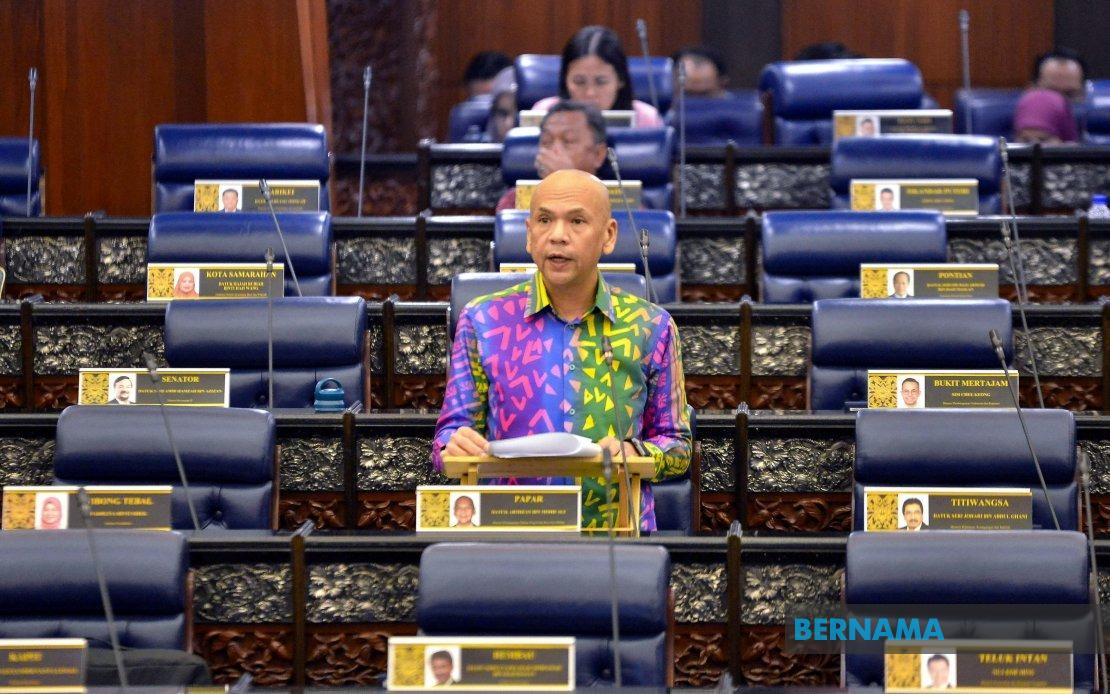
The Malaysia Competition Commission has moved a step closer to wielding significantly enhanced enforcement capabilities against anti-competitive cartel behaviour, with lawmakers approving the Competition (Amendment) Bill 2026 at the policy stage in parliament. The legislative package introduces a suite of investigative tools and incentive mechanisms designed to make detecting and prosecuting cartel arrangements faster, more cost-effective, and ultimately more effective at deterring companies from engaging in price-fixing and market manipulation schemes that harm Malaysian consumers and businesses.
Domestic Trade and Cost of Living Minister Datuk Armizan Mohd Ali unveiled the core provisions during parliamentary debate, emphasising that the amendments fundamentally reshape how MyCC approaches cartel detection and prosecution. The most significant innovation establishes a dedicated whistleblower framework with financial incentives, addressing a critical gap in Malaysia's competition enforcement infrastructure. Industry insiders have long noted that the existing Whistleblower Protection Act 2010 provides no meaningful coverage for civil competition matters, creating a barrier to information-sharing from employees or competitors aware of cartel schemes but uncertain of their legal standing or safety.
The new Section 64B provision directly addresses this vulnerability by authorising MyCC to offer cash rewards to whistleblowers whose disclosures result in the identification of cartel arrangements. This mechanism mirrors similar programmes in the United States, European Union, and other advanced jurisdictions, where financial incentives have proven instrumental in uncovering sophisticated pricing conspiracies and bid-rigging schemes that might otherwise remain hidden. For Malaysia, where cartels in sectors ranging from construction materials to shipping services have periodically drawn regulatory attention, the introduction of whistleblower bounties could substantially increase the volume and quality of intelligence reaching MyCC investigators.
Complementing the whistleblower framework is a novel Settlement Offer mechanism codified under Section 38A, which fundamentally alters the calculus for companies under investigation. The provision permits enterprises acknowledging liability at an early stage to receive penalty reductions of up to 40 per cent, providing meaningful financial incentives for cooperation and early admission. The rationale, as articulated by Minister Armizan, centres on optimising MyCC's investigative resources by reducing protracted fact-finding procedures and eliminating post-decision litigation disputes that drain agency budgets and extend resolution timelines. From a practical standpoint, this settlement approach mirrors enforcement strategies deployed successfully in competition authorities across Asia-Pacific, where early cooperation agreements have consistently shortened case resolution periods from years to months.
The legislative amendment also introduces protective provisions specifically tailored to competition matters. Unlike the blanket application of the Whistleblower Protection Act 2010, which targets disciplinary offences or criminal conduct, the new Sections 64A and 64B establish an independent safeguard framework recognising that competition violations are fundamentally civil in nature. This distinction is crucial for Malaysia's enforcement ecosystem, as it eliminates ambiguity surrounding whistleblower safety and ensures that individuals reporting cartel activity cannot be dismissed or retaliated against under the guise of contractual non-disclosure obligations or employment law doctrines. The protection extends beyond mere procedural safeguards to encompass identity confidentiality and witness security protocols.
A broader definitional shift expands MyCC's investigative jurisdiction by recasting the concept of "enterprise" to encompass all economic activities rather than limiting focus to purely commercial undertakings. This expansion carries particular significance for industry associations, professional bodies, and trade organisations that function outside traditional commercial structures but nonetheless wield substantial influence over pricing and market access. Malaysia has historically grappled with cartel-like behaviour within industry associations, where member agreements on pricing standards or service delivery terms effectively function as price-fixing conspiracies. The revised definition explicitly empowers MyCC to investigate such bodies where evidence indicates decision-making rooted in cartel arrangements involving price-fixing, market-sharing, or output restrictions.
The legislative pathway reflects recognition among policymakers that Malaysia's competition framework requires modernisation to match enforcement capabilities available to regulators in developed markets and to align with best practices evolving across Southeast Asia. Thailand, Indonesia, and Vietnam have progressively strengthened cartel enforcement mechanisms through amendments mirroring several features contained in the Competition (Amendment) Bill 2026. Malaysia's adoption of similar innovations positions the country as a regional leader in competition law sophistication while signalling commitment to protecting domestic businesses and consumers from anti-competitive conduct.
From a business perspective, the amendments carry significant implications for corporate compliance strategies. Enterprises with operations or supply relationships within Malaysia face heightened exposure to cartel investigations, with both whistleblower incentives and settlement mechanisms substantially altering enforcement dynamics. Companies currently engaged in pricing coordination or market allocation schemes face mounting risks, as employees and competitors now possess both financial motivation and legal protection to report conduct. Conversely, firms that proactively acknowledge participation in historical cartel schemes may access substantial penalty reductions through early settlement, incentivising voluntary compliance reviews and remediation.
The bill's progression to committee stage on Monday and subsequent second reading of the Competition Commission (Amendment) Bill 2026 signals parliamentary momentum toward finalisation. While the policy stage approval carries no surprises regarding ultimate passage, the committee stage deliberations will likely address technical refinements concerning whistleblower reward formulae, settlement offer procedures, and the scope of industry association investigations. Malaysian business chambers and professional organisations have expressed interest in clarifying how the expanded "enterprise" definition applies to their activities, and the committee proceedings may yield helpful interpretive guidance.
For Malaysia's integration into the regional economic architecture, particularly within the ASEAN framework and amid deepening trade integration with major economies, alignment with international competition enforcement standards carries strategic importance. Cartel enforcement capabilities directly influence foreign investor confidence, as multinational corporations increasingly scrutinise host-country competition regimes before committing to operations. The amendments signal to international business communities that Malaysia maintains sophisticated, well-resourced competition enforcement comparable to developed jurisdictions, enhancing the country's attractiveness as a regional business hub.
The broader policy rationale underpinning these amendments reflects economic reality that cartels impose substantial welfare costs on Malaysian consumers and businesses, particularly in concentrated industries where a handful of firms dominate supply. Construction materials, shipping, and financial services have experienced documented cartel conduct, with pricing coordination generating margin enhancements that flow away from productive economic activity toward cartel participants. Enhanced enforcement mechanisms translate directly to reduced consumer prices and expanded competitive pressure, ultimately supporting productivity growth and cost-competitiveness for downstream Malaysian industries.
MyCC will require substantial capability development to operationalise these amendments effectively, particularly regarding whistleblower programme administration and settlement negotiation protocols. The agency will likely develop detailed procedural rules governing reward calculations, claim adjudication, and identity protection procedures. Training programmes for investigation staff will need to incorporate settlement negotiation techniques and early-engagement approaches differing from traditional investigative methodologies. International technical assistance from competition authorities in advanced jurisdictions may prove valuable during implementation, drawing on established best practices from United States, European, and Australian whistleblower programmes.
Ultimately, the Competition (Amendment) Bill 2026 represents a fundamental recalibration of Malaysia's competition enforcement posture, transitioning from a relatively passive investigative model toward proactive cartel detection and prosecution. The whistleblower reward mechanism and settlement frameworks create powerful incentive structures encouraging information-sharing and early cooperation while substantially improving MyCC's capacity to identify and sanction anti-competitive conduct. As the legislative process advances through committee and final passage stages, Malaysian businesses and consumers can anticipate a substantially more assertive competition enforcement environment characterised by greater transparency, swifter resolution, and more effective cartel deterrence.

