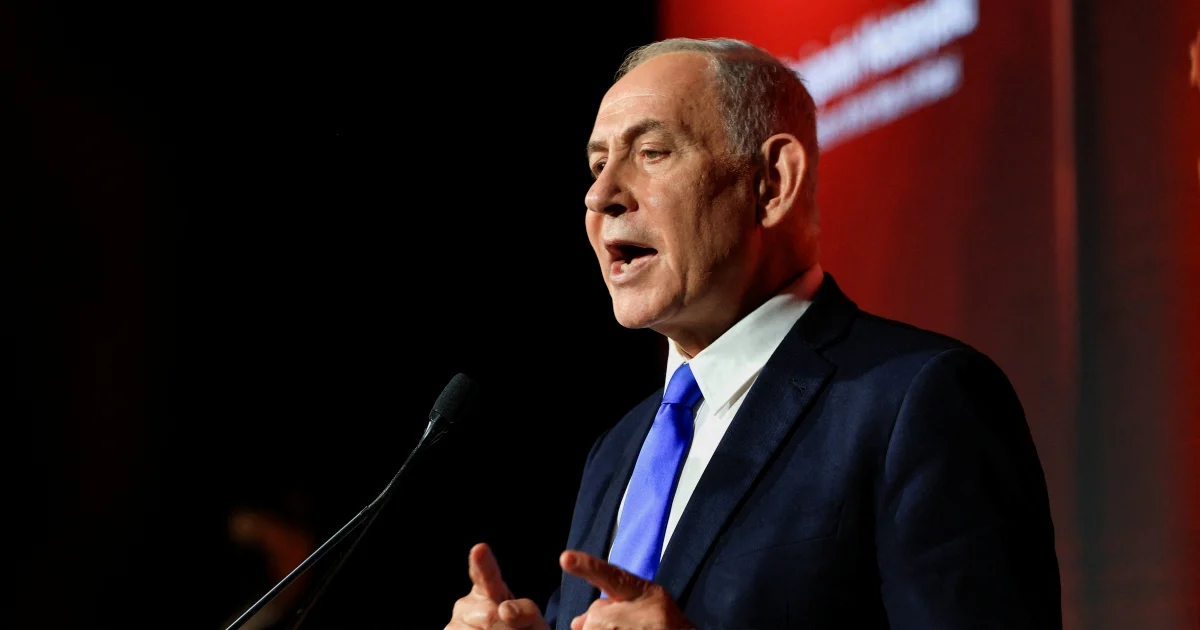
Israeli Prime Minister Benjamin Netanyahu has pledged that military forces under his command will maintain a presence in southern Lebanon for as long as the government deems necessary, marking another assertion of Israel's strategic intentions in the region during an increasingly complex period of Middle Eastern geopolitics.
Netanyahu's statement, delivered on Sunday, represents a continuation of Israel's hardline posture toward Lebanon and reflects the government's broader regional calculus. The commitment to an extended military footprint in Lebanon signals confidence in Israel's ability to sustain military operations while managing domestic and international pressure regarding the campaign.
The pledge to retain troops in southern Lebanon carries significant implications for Lebanon itself, which has been dealing with economic collapse, political dysfunction, and a security environment destabilised by various armed groups. Israel's decision to maintain military presence effectively extends its sphere of influence northward and complicates any potential diplomatic resolution in the border region.
Simultaneously, Netanyahu reiterated his administration's unwavering opposition to Iran's nuclear ambitions, framing this as a core security objective for Israel and, by extension, the broader region. This dual commitment—maintaining military pressure in Lebanon while confronting Iran's nuclear programme—encapsulates Israel's two-pronged security strategy that has dominated policy discourse for years.
The timing of Netanyahu's remarks comes amid fluctuating tensions along Israel's northern border and evolving regional alliances. For Southeast Asian observers, Israel's military activism in Lebanon underscores how Middle Eastern conflicts continue to reshape international trade routes, energy security, and investment patterns that affect regional economies.
Netanyahu's assertion that troops will remain "as long as necessary" deliberately avoids specifying timelines, allowing Israel maximum strategic flexibility. This vagueness permits the government to respond to changing circumstances without committing to predetermined withdrawal schedules that adversaries might exploit for tactical advantage.
The statement also reflects domestic political considerations within Israel. By maintaining a firm stance on both Lebanon and Iran, Netanyahu appeals to his political base while signalling resolve to international audiences. However, extended military commitments invariably entail financial costs, personnel losses, and diplomatic complications that eventually test public patience.
For Malaysia and the broader Association of Southeast Asian Nations, Israel's regional military posture warrants monitoring due to its potential spillover effects on global stability. Any escalation involving Lebanon, Iran, or broader Israeli-Arab tensions could further disrupt shipping lanes, increase energy costs, and create refugee crises that eventually reach Southeast Asian shores through migration pressures.
The Iran dimension of Netanyahu's comments connects to broader concerns about nuclear proliferation in a volatile region. Malaysia, as a signatory to the Non-Proliferation Treaty, maintains interests in preventing nuclear weapons development and has consistently advocated for peaceful resolution of regional disputes through international channels.
Netanyahu's dual messaging—projecting strength on Lebanon while confronting Iran—reflects Israel's struggle to maintain military superiority amid shifting regional power dynamics. The emergence of various non-state actors, the changing role of traditional Arab states, and evolving international alignments create an environment where traditional military deterrence faces mounting challenges.
The Lebanese dimension of Netanyahu's pledge particularly warrants attention given Lebanon's deteriorating situation. If Israeli troops remain indefinitely, they will occupy territory within another nation's borders, perpetuating a military occupation that historically generates resistance, limits Lebanese sovereignty, and prevents the country from stabilising its own security environment.
Netanyahu's statements serve multiple audiences simultaneously. Domestically, they reassure Israeli citizens that security threats are being addressed decisively. Regionally, they signal that Israel possesses both capability and willingness to project power unilaterally if necessary. Internationally, they establish parameters for how Israel frames its security requirements to friendly governments and international bodies.
Moving forward, the sustainability of Israel's Lebanon deployment depends on numerous variables including military casualty rates, economic strain, international pressure for withdrawal, and whether security objectives are being achieved. Netanyahu's confidence in an indefinite presence suggests Israeli assessment that current operations serve strategic purposes that justify continued military investment.


%22%2F%3E%3C%2Fpattern%3E%3C%2Fdefs%3E%3Crect%20width%3D%22100%25%22%20height%3D%22100%25%22%20fill%3D%22url(%23ph56g77g)%22%2F%3E%3Crect%20width%3D%22100%25%22%20height%3D%22100%25%22%20fill%3D%22url(%23ph56g77p)%22%2F%3E%3Ctext%20x%3D%2250%25%22%20y%3D%2250%25%22%20text-anchor%3D%22middle%22%20dominant-baseline%3D%22central%22%20fill%3D%22rgba(255%2C255%2C255%2C0.95)%22%20font-family%3D%22Georgia%2C%20'Times%20New%20Roman'%2C%20serif%22%20font-weight%3D%22700%22%20font-size%3D%22151%22%20letter-spacing%3D%22-0.02em%22%3EMalaysian%3C%2Ftext%3E%3C%2Fsvg%3E)