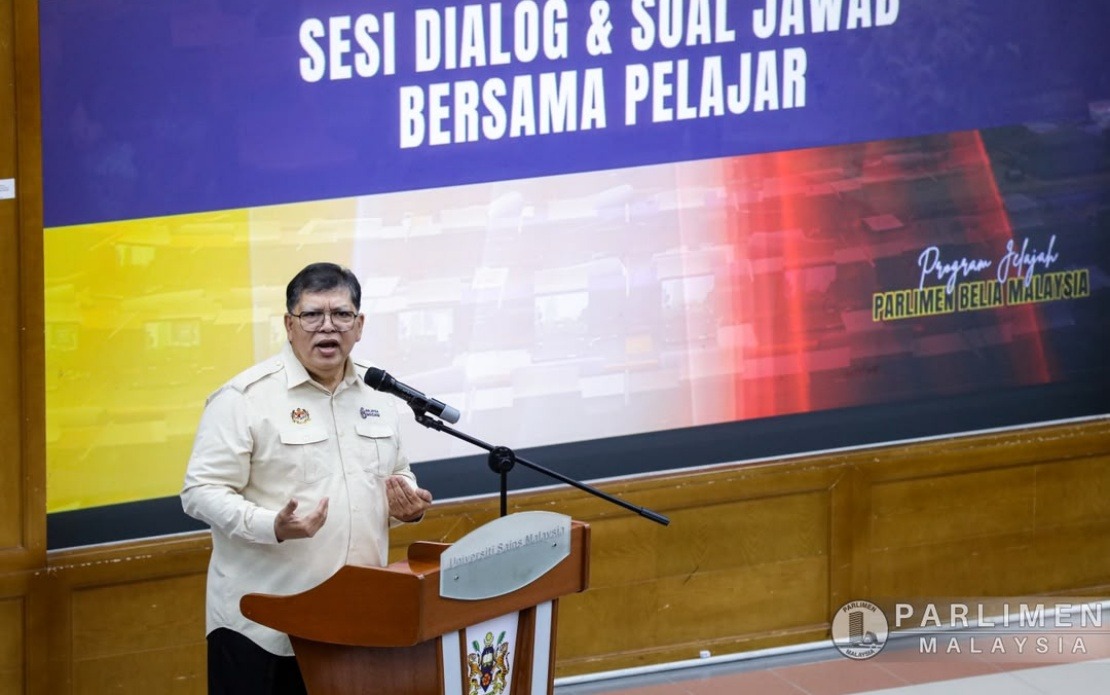
The health of Malaysia's parliamentary democracy depends fundamentally on the conduct of those who occupy the nation's highest legislative chamber, according to Dewan Rakyat Speaker Tan Sri Johari Abdul. With the Malaysian Youth Parliament set to commence its sitting on September 11, the Speaker has issued a pointed reminder that Members of Parliament bear responsibility for modeling democratic values to the country's future leaders. The timing is significant: as Parliament prepares to welcome young representatives from across the nation, the institution itself must demonstrate the standards of decorum, rational debate and public service that justify its role as the nation's premier lawmaking body.
Johari articulated a vision of Parliament that extends beyond the mechanics of legislation and political contest. Rather than viewing the Dewan Rakyat merely as an arena for competing interests and parliamentary maneuvers, the Speaker characterised it as the nation's supreme democratic school—an institution whose proceedings carry weight far beyond its immediate participants. Every utterance made within the chamber, every gesture of respect or disrespect extended across the aisle, functions as an instructional text for those watching. In the digital age, this educational dimension has become unavoidable. Parliamentary broadcasts and social media coverage ensure that the proceedings of the Dewan Rakyat reach far beyond the parliamentary galleries into living rooms, university campuses and social media feeds across the country.
The Speaker's emphasis on exemplary conduct reflects a deeper concern about democratic legitimacy. Young Malaysians participating in the Youth Parliament initiative will form impressions about how democracy actually functions—not from civics textbooks or theoretical instruction, but from direct observation of their elected representatives. If those representatives engage in personal attacks, resort to inflammatory rhetoric, or pursue factional advantage at the expense of national interest, they communicate a corrosive message about democracy's true nature. Conversely, when MPs conduct themselves with dignity and focus their interventions on substantive policy questions, they validate democratic practice itself. Johari's call for "mature, fact-based debates centred on the people's interests" represents an implicit acknowledgment that parliamentary conduct carries pedagogical consequences.
The Malaysian Youth Parliament represents an ambitious democratic experiment that has evolved significantly over recent years. Originally launched in 2015 under the Ministry of Youth and Sports, the initiative underwent a fundamental restructuring when the government transferred its management to Parliament Malaysia in October 2023. This shift signals increased institutional commitment to youth political engagement and suggests Parliament's growing recognition of its role in cultivating democratic participation among younger citizens. The initiative now operates with a formal structure mirroring the adult Parliament: it comprises 222 seats corresponding to parliamentary constituencies nationwide, with participating youths organised into non-partisan groupings based on youth organisations registered with Parliament Malaysia.
The scale of the current recruitment drive underscores Parliament's ambition for this initiative. Organisers are targeting 300,000 young Malaysians aged between 18 and 30 to register ahead of elections scheduled for August. This represents a substantial expansion from previous iterations of the programme. The logistical architecture supporting the election itself reflects modern democratic practice: nominations open on July 8, candidate lists are published on July 11, and a 27-day campaign period runs through August 7. Voting occurs through an online platform called e-PBMy, with balloting conducted over a 24-hour window on August 8-9. The decentralised, technology-enabled approach suggests organisers are aware of how to engage youth constituencies effectively.
Once established, the Youth Parliament will operate on a structured schedule. Members will serve two-year terms and participate in three sittings annually, each lasting two days. This cadence allows for substantive parliamentary work while remaining manageable for young people balancing studies or early careers. The opening ceremony on September 11 will formalise the new term and mark the beginning of an important democratic apprenticeship for several hundred young Malaysians. Their participation will expose them to parliamentary procedure, legislative processes, and the conventions that govern formal democratic debate—knowledge that many will carry into future roles in the public service, civil society, or electoral politics.
Johari's call for exemplary conduct from sitting MPs takes on additional resonance when considered against the backdrop of Malaysia's recent political volatility. The past decade has witnessed significant parliamentary instability, including changes in government, constitutional crises, and episodes of heated partisan conflict. While such turbulence is not uncommon in democracies, it can create cynicism among younger citizens about whether elected institutions genuinely serve the public interest. Youth observers monitoring the adult Parliament's deliberations will draw their own conclusions about whether MPs prioritise principle or partisan advantage, whether parliamentary institutions command respect or merely function as stages for political theatre. The Speaker's message implicitly acknowledges that Parliament's legitimacy ultimately rests on the conduct of its members, not merely on its constitutional powers.
The emphasis on integrity-driven proceedings and courteous debate reflects broader international discussions about parliamentary norms in the digital age. Across democracies, observers have noted a decline in parliamentary civility and an increase in personalised attacks and inflammatory rhetoric. This trend particularly concerns those focused on democratic renewal and youth engagement. If young citizens encounter parliaments characterised by rancour and disrespect, they may conclude that democratic institutions are inherently dysfunctional rather than merely imperfectly operated. Johari's insistence on factual, solution-oriented debate represents an effort to counter such impressions and reinvigorate faith in parliamentary governance.
For Malaysian readers and the broader Southeast Asian context, the Youth Parliament initiative carries particular significance. In a region where some democracies face pressure and younger generations express declining confidence in institutions, successful cultivation of engaged, informed youth participation offers a counterweight to democratic disengagement and cynicism. The Malaysian model, if executed with genuine commitment to inclusive participation and substantive youth voice, could serve as a template for other Southeast Asian democracies seeking to strengthen democratic participation among younger citizens. The success of this initiative ultimately depends on whether established politicians demonstrate through their own conduct that democracy remains a worthy endeavour deserving of youth commitment and engagement.
Registration for the Malaysian Youth Parliament remains open through established channels, with detailed information available via the official portal at https://pbmy.parlimen.gov.my/my/. The initiative welcomes Malaysian citizens aged 18 to 30, with particular efforts to ensure geographic and demographic diversity in recruitment. For young people seeking to engage directly with democratic processes and develop leadership experience, the programme offers a distinctive opportunity to participate in parliamentary proceedings and contribute to policy discussions affecting their generation's future.