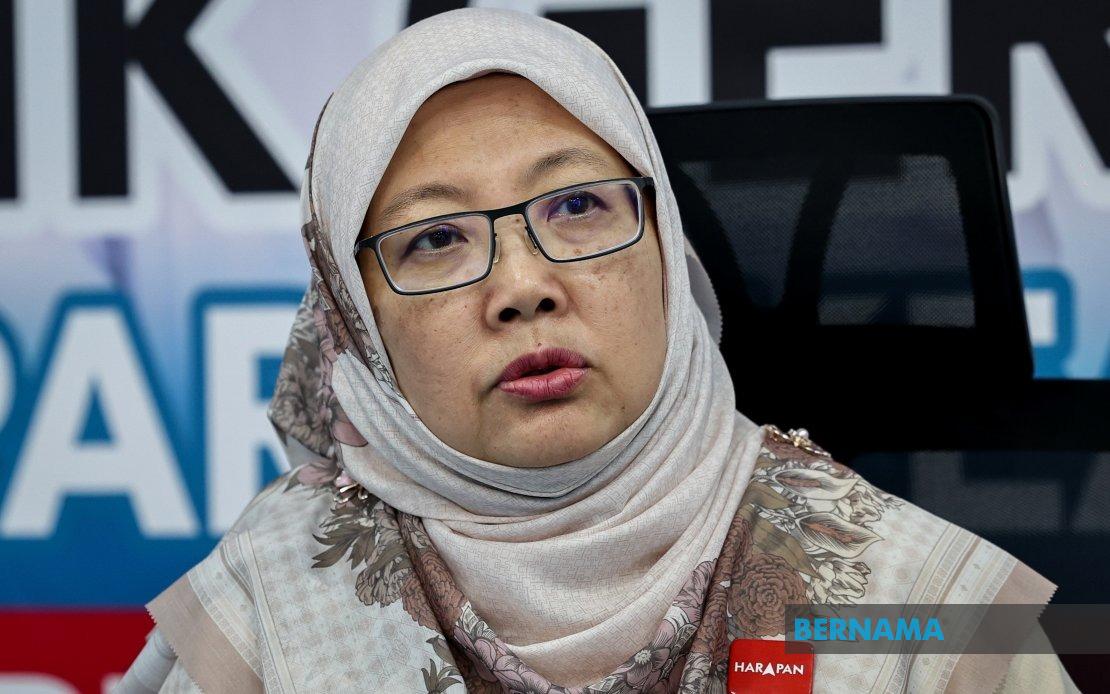
Pakatan Harapan has moved to reassure Johor's political establishment by formally committing itself to the constitutional framework governing the state's executive appointments. The coalition's pledge to uphold both the Johor State Constitution 1895 and the Sultan's prerogative powers reflects a careful political calculation as the region prepares for fresh elections. By emphasising the monarchy's institutional role, PH appears intent on neutralising a potential flashpoint in what is shaping up to be a closely contested electoral battle.
Johor PKR chairman Datuk Seri Dr Zaliha Mustafa articulated this position in measured terms, signalling that the coalition views the Menteri Besar selection as a matter best settled through established constitutional channels rather than campaign rhetoric. This stance represents a notable shift in Malaysian electoral dynamics, where questions of state leadership have traditionally dominated opposition messaging. The decision to downplay the appointment issue suggests PH strategists believe their electoral strength lies elsewhere—in the realm of governance promises and economic management.
The timing of PH's declaration carries significance, arriving as a direct response to incumbent Menteri Besar Datuk Onn Hafiz Ghazi's public challenge urging the opposition coalition to name a specific candidate for the chief minister's post. Such calls for transparency about leadership candidates have become a standard feature of Malaysian electoral contests, with governing coalitions attempting to force opposition parties into early commitments that can later be weaponised in campaign material. By refusing this bait, PH has opted for a strategy that preserves flexibility while grounding its position in constitutional propriety.
The coalition's willingness to defer the appointment question to the Sultan reflects broader constitutional principles that have long governed Malaysia's monarchical systems. Unlike Westminster models where elected parliaments automatically determine executive leadership, Malaysia's state constitutions explicitly vest appointment authority with the respective sultans. This distinction matters considerably for electoral politics, as it allows parties to campaign on governance merits while leaving formal leadership decisions within constitutional bounds. For PH, this approach sidesteps the potential liability of naming a candidate who might face unforeseen political complications.
Dr Zaliha's emphasis on policy substance over personalities signals PH's conviction that Johor voters are increasingly preoccupied with bread-and-butter issues rather than factional intrigue. She highlighted the coalition's intention to address living standards, employment generation, and economic dynamism—concerns that resonate across Malaysia's middle classes and working populations. This pivot toward substantive governance questions reflects lessons learned from previous campaigns, where detailed policy platforms have increasingly influenced voter behaviour, particularly among younger and more educated demographics increasingly sceptical of personality-driven politics.
The statement also underscores PH's confidence in the depth of its leadership bench within Johor. By asserting that numerous qualified figures stand ready to assume the Menteri Besar role, the coalition projects strength while maintaining strategic ambiguity. This approach serves multiple constituencies: it reassures potential coalition partners that capable succession options exist, signals to voters that competent governance awaits, and maintains negotiating flexibility with the Sultan should the electoral outcome favour PH formation of government. The implicit message is that PH's qualifications for office depend upon demonstrated competence rather than individual personalities.
For Malaysian observers of state-level politics, this dynamic illustrates how constitutional frameworks continue to shape electoral competition. Rather than weakening PH's position, deference to the Sultan's appointment prerogative might actually strengthen it by positioning the coalition as institutionally respectful and constitutionally sound. This carries particular weight in Johor, where the Sultanate commands deep historical significance and remains a significant political actor. By accepting established protocols, PH avoids the perception of challenging royal authority—a potentially damaging posture in any Malaysian state election.
The broader context matters too. Malaysia's political landscape has shifted considerably over the past half-decade, with voters demonstrating increased sophistication in distinguishing between campaign promises and governance delivery. Johor, as the nation's southern economic and political powerhouse, represents territory where voters are particularly alert to policy specifics. The state's economy, strategic position, and demographic diversity mean that election outcomes carry implications extending well beyond Johor's borders, influencing national coalition dynamics and parliamentary configurations. PH's strategy of foregrounding economic and social policy addresses this evolved electorate directly.
The opposition coalition's statement also contains an implicit acknowledgment that its previous campaigns may have focused excessively on leadership personalities at the expense of systematic policy articulation. By repositioning itself as a messenger of substantive governance proposals, PH appears to be learning from earlier strategic missteps. This recalibration reflects maturation within Malaysia's opposition movements, recognising that voter confidence ultimately derives from demonstrated competence in addressing concrete concerns rather than from charismatic individual personalities alone.
For the incumbent state government, PH's approach creates both opportunities and complications. While Datuk Onn Hafiz's challenge to name a Menteri Besar candidate sought to expose opposition vagueness, PH's constitutional framing neutralises this line of attack by invoking established institutional practice. The ruling coalition must now compete on governance record and policy offerings, terrain where electoral outcomes depend upon tangible performance metrics rather than campaign theatrics. This shift potentially advantages whichever coalition can most convincingly demonstrate capacity to generate jobs, improve infrastructure, and enhance service delivery across Johor's diverse communities.
Moving forward, the PH position establishes a template for how opposition parties might approach state elections while respecting constitutional limits on their authority. By committing to honour the Sultan's appointment role while simultaneously emphasising policy substance, the coalition attempts to thread a needle between institutional respect and electoral competitiveness. Whether this strategy ultimately succeeds depends significantly upon how effectively PH can translate abstract policy commitments into voter-mobilising campaign narratives, and whether the incumbent administration can effectively highlight gaps between opposition promises and practical governance challenges.
%22%2F%3E%3C%2Fpattern%3E%3C%2Fdefs%3E%3Crect%20width%3D%22100%25%22%20height%3D%22100%25%22%20fill%3D%22url(%23ph4p9rmg)%22%2F%3E%3Crect%20width%3D%22100%25%22%20height%3D%22100%25%22%20fill%3D%22url(%23ph4p9rmp)%22%2F%3E%3Ctext%20x%3D%2250%25%22%20y%3D%2250%25%22%20text-anchor%3D%22middle%22%20dominant-baseline%3D%22central%22%20fill%3D%22rgba(255%2C255%2C255%2C0.95)%22%20font-family%3D%22Georgia%2C%20'Times%20New%20Roman'%2C%20serif%22%20font-weight%3D%22700%22%20font-size%3D%22320%22%20letter-spacing%3D%22-0.02em%22%3EKTMB%3C%2Ftext%3E%3C%2Fsvg%3E)