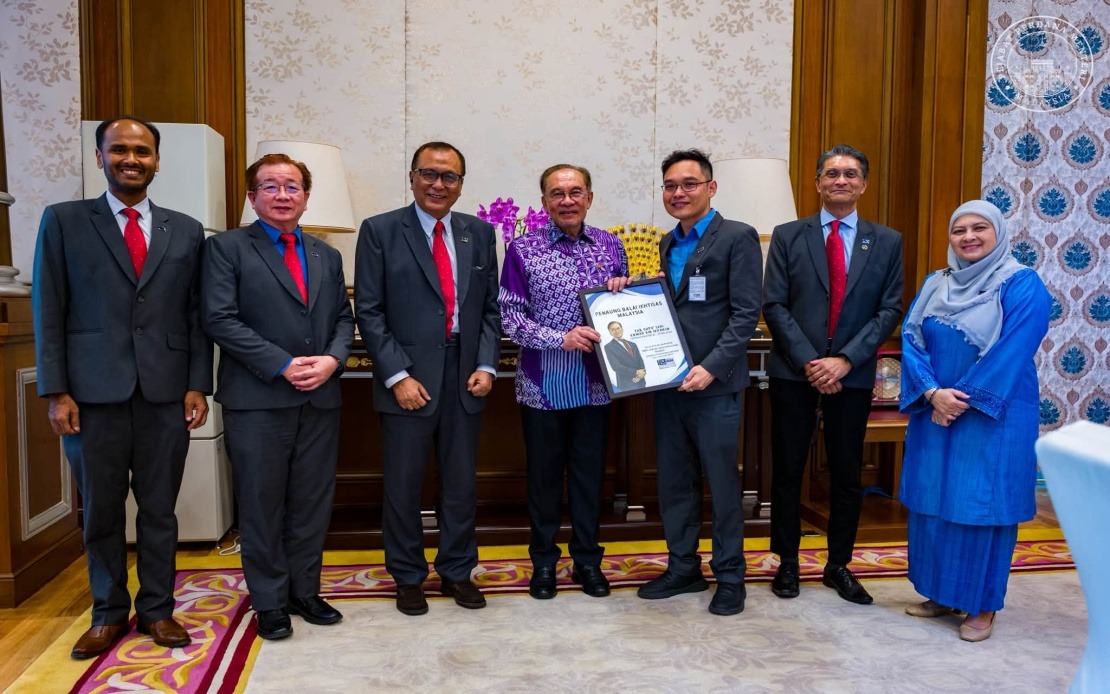
Prime Minister Datuk Seri Anwar Ibrahim has placed talent development and artificial intelligence preparedness at the centre of Malaysia's economic strategy, signalling their strategic importance during high-level consultations with Balai Ikhtisas Malaysia (BIM), the country's premier professional centre. The emphasis reflects growing government recognition that sustained competitiveness in an increasingly digital region hinges on equipping Malaysia's professional workforce with cutting-edge capabilities and forward-thinking expertise.
The meeting, which saw BIM President Prof ChM Dr Juan Joon Ching lead a delegation to the Prime Minister's office, centred on how Malaysia can strengthen its position as a regional destination for professional excellence. Anwar's endorsement of these twin priorities signals a coordinated push to address skills gaps and digital transformation challenges that have become pressing concerns for policymakers across Southeast Asia. The conversation underscores a broadening consensus within government circles that professional competitiveness extends beyond traditional sectoral expertise into emerging technologies that will shape industries over the coming decades.
The government's engagement with BIM reflects a wider strategic pivot toward leveraging professional communities as partners in national economic advancement. Rather than viewing professionals as isolated practitioners, the administration appears increasingly inclined to position them as integral drivers of innovation and competitive edge. This collaborative approach aligns with the broader MADANI agenda, the government's development framework focused on enhancing living standards and ensuring sustainable prosperity. By actively cultivating dialogue with professional bodies, the government signals commitment to inclusive policymaking that incorporates expert voices in shaping economic direction.
For Malaysia's professional sector, the timing of this emphasis carries particular significance. The region faces mounting competition from neighbouring economies that have invested heavily in AI infrastructure, digital workforce development, and professional upskilling programmes. Singapore, for instance, has rolled out comprehensive national strategies to position its workforce as AI-ready, while Vietnam and Thailand have launched ambitious digitalisation initiatives. Malaysia's explicit focus on these areas suggests policymakers recognise the urgency of matching or exceeding such regional efforts to prevent talent drain and maintain the country's appeal to multinational corporations and investors seeking skilled talent.
The conversation also highlights government perception of professionals as custodians of integrity and ethical practice during technological transitions. As artificial intelligence increasingly permeates professional disciplines—from law and finance to engineering and healthcare—questions of accountability, ethical deployment, and regulatory compliance have become central. By engaging BIM and its membership, the government appears to be tapping into the professional community's capacity to establish standards and best practices that ensure AI adoption enhances rather than undermines public trust and professional ethics.
Anwar's acceptance of an invitation to Hari Ikhtisas Malaysia, an annual celebration of the professional community's contributions to nation-building, represents more than ceremonial acknowledgement. The gesture demonstrates political commitment to elevating professional voices in public discourse and policy formation. As Malaysia navigates complex transitions in technology adoption, regulatory frameworks, and workforce development, the perspectives and expertise of established professional bodies become invaluable resources for informed decision-making. This visibility also serves to reinforce messaging that professional excellence ranks among government priorities.
The emphasis on nurturing talent with integrity and competitiveness carries implicit recognition that Malaysia's regional standing rests not merely on technological capacity but on the quality and ethical foundation of its human capital. This holistic approach contrasts with narrower interpretations that treat AI readiness purely as a technical or infrastructure challenge. By coupling AI preparedness with emphasis on integrity, the government signals that competitive advantage derives from combining technological sophistication with principled practice—a positioning that could appeal to multinational firms and international clients prioritising governance and ethics alongside innovation.
From a Southeast Asian perspective, Malaysia's articulation of these priorities positions it alongside regional peers attempting to harness professional talent as a vehicle for economic advancement during the artificial intelligence era. Thailand's Professional Corps and Vietnam's engineering associations have similarly featured in recent policy discussions centred on technological transition. Malaysia's deliberate engagement with BIM suggests it is charting a comparable course while potentially seeking to differentiate itself through emphasis on professional ethics and integrity as competitive assets rather than constraints.
The broader implications for Malaysian policymaking extend to education, immigration, and talent retention. If the government is serious about positioning Malaysia as a regional hub for professional excellence, policies governing professional education curricula, recognition of foreign qualifications, and incentives for retaining local talent will require alignment with stated ambitions around AI readiness. Current visa regimes, professional licensing frameworks, and educational standards may require calibration to reflect the accelerated transformation that AI adoption implies across traditional professions.
Looking forward, the dialogue between government and professional bodies will likely shape how Malaysia approaches regulatory sandboxes for AI applications, professional standards for deploying algorithmic tools, and continuing education requirements that keep practitioners current with technological change. The success of these collaborative efforts will substantially influence whether Malaysia succeeds in retaining its position as an attractive destination for professional talent or loses momentum to regional competitors more visibly committed to bridging the AI readiness gap. The Prime Minister's explicit endorsement of BIM's contributions suggests the government recognises these stakes and intends to move beyond rhetorical support toward substantive partnership.

