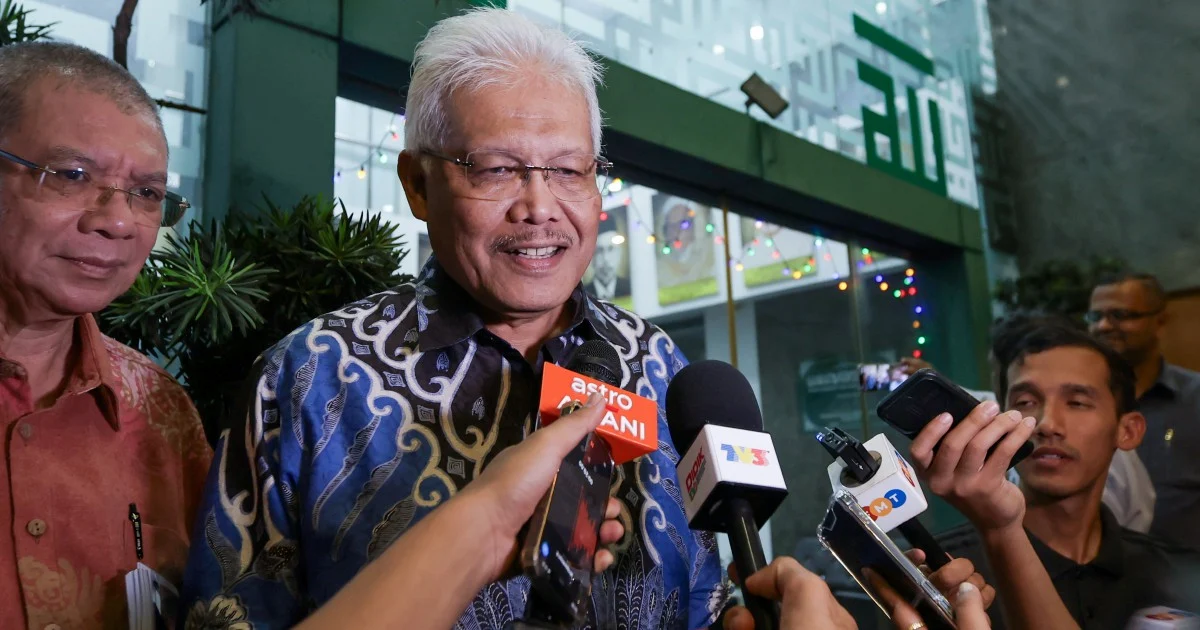
The chief whip of Perikatan Nasional, Datuk Seri Takiyuddin Hassan, has completed the formal procedural requirement to reappoint Datuk Seri Hamzah Zainudin to his position as opposition leader by submitting the necessary documentation to the Speaker's office at the Dewan Rakyat in Kuala Lumpur. This administrative move represents an important step in maintaining institutional clarity about parliamentary representation and leadership structures ahead of ongoing legislative sessions.
The reappointment comes at a significant moment for Malaysian politics, as Perikatan Nasional has solidified its position as the primary opposition bloc following the 2022 general election results and subsequent political realignments. Hamzah Zainudin's continuation in the opposition leadership role signals the coalition's intention to present a unified front in scrutinising government policies and holding the ruling administration accountable during parliamentary proceedings.
Formal notification of the opposition leader to the Speaker's office is a constitutional requirement that establishes the official parliamentary record and ensures all members are aware of the designated spokesperson for the opposition bloc. This procedural step carries significance beyond mere paperwork, as it determines parliamentary speaking rights, question time allocations, and the opposition leader's access to certain government briefings and parliamentary privileges. Without such formal notification, there could be ambiguity regarding who represents the opposition coalition in legislative debates.
Peikatan Nasional, which encompasses the Malaysian Islamic Party, the Pan-Malaysian Islamic Party, and Bersatu, has emerged as a substantial parliamentary force. The coalition's commitment to the opposition leadership structure under Hamzah Zainudin reflects internal agreement on governance and strategy during this term of Parliament. The fact that this reappointment required formal notification suggests either routine procedural renewal or potentially a reshuffle that needed crystallisation through official channels.
Hamzah Zainudin's track record as opposition leader has involved directing parliamentary criticism toward the government's economic policies, governance standards, and legislative priorities. As opposition leader, he has leveraged parliamentary platforms to articulate Perikatan Nasional's policy alternatives and mobilise party members during crucial votes. His reappointment indicates confidence within the coalition that he remains the appropriate figurehead for representing their interests and providing leadership continuity.
The role of opposition leader carries responsibilities that extend beyond Parliament's confines. The position involves managing coalition dynamics, coordinating messaging across multiple political parties with sometimes divergent interests, and serving as the primary media spokesperson during critical political moments. For Malaysian democracy to function effectively, robust opposition leadership is essential, as it enables proper scrutiny of executive actions and legislation while providing the electorate with clear alternative policy perspectives.
From a parliamentary perspective, the opposition leader's status affects everything from the assignment of committee positions to opportunities to table motions and shape legislative agendas. The formal notification ensures that the Speaker's office, government whips, and all parliamentary officials recognise Hamzah Zainudin as the authorised representative of the opposition coalition, eliminating any procedural confusion that might arise during parliamentary sessions or crisis moments requiring swift institutional responses.
For Southeast Asian observers watching Malaysian politics, the steady institutional functioning demonstrated through proper notification procedures reflects a democratic system functioning according to constitutional norms despite underlying political tensions. Many regional parliaments struggle with opposition recognition and parliamentary privileges, making Malaysia's adherence to these formalities noteworthy. The act of formally notifying the Speaker represents respect for institutional frameworks that distinguish healthy democracies from systems where power is exercised outside constitutional channels.
The timing of this notification may also signal preparation for intensive parliamentary activity ahead. Whether triggered by an upcoming legislative session, budgetary debates, or anticipated government policy announcements, the formal reconfirmation of opposition leadership ensures all parliamentary machinery is properly calibrated for robust political contest. This procedural thoroughness prevents legal challenges or procedural objections that opposition members might otherwise exploit to disrupt parliamentary business.
Looking forward, Hamzah Zainudin's reaffirmed position as opposition leader will shape parliamentary dynamics for the foreseeable future. His effectiveness in this role will depend on maintaining coalition cohesion, crafting compelling policy critiques, and translating parliamentary opposition into public political capital that influences voters' perceptions ahead of the next general election. The reappointment represents Perikatan Nasional's confidence that Hamzah can effectively perform these demanding functions while managing the complex relationships required to keep diverse coalition partners aligned.