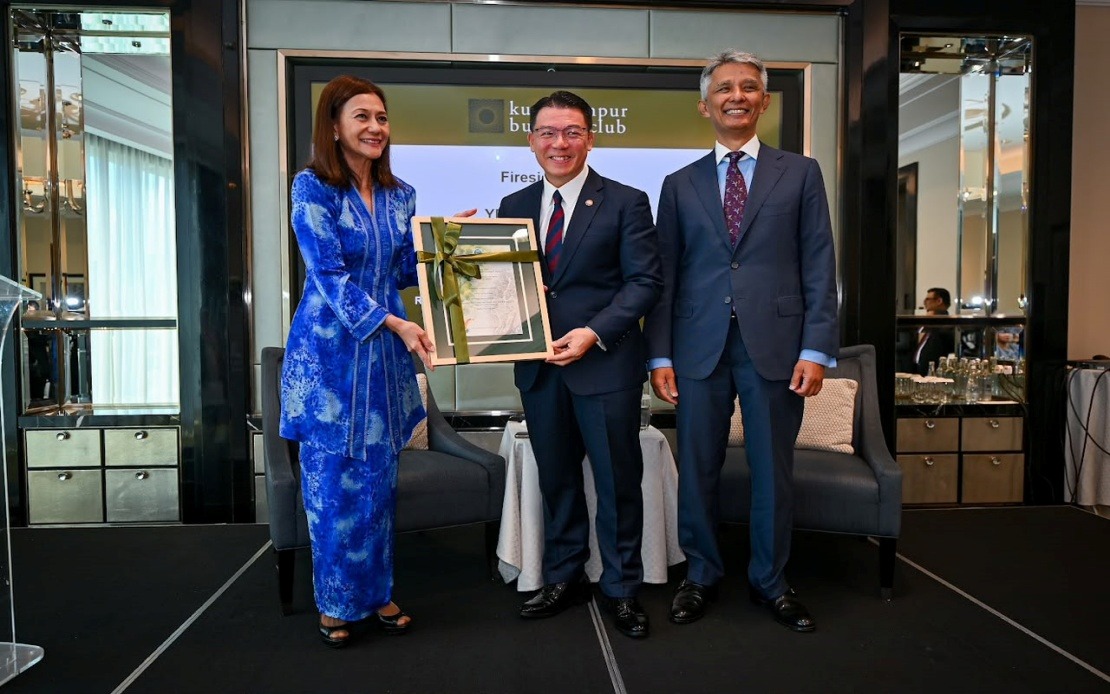
Malaysia's economic transformation hinges on maintaining unwavering commitment to the MADANI framework, according to Housing and Local Government Minister Nga Kor Ming, who underscored the government's determination to see through structural reforms and institutional strengthening initiatives already in motion. Speaking at a fireside chat organised by the Kuala Lumpur Business Club, Nga articulated how sustained governance consistency and a clear reform trajectory are foundational to retaining foreign investor interest whilst positioning the country as a resilient, competitive economy capable of meeting future challenges.
The minister's remarks came during a discussion titled "Future Cities, Future Growth: How MADANI Reforms Are Reshaping Malaysia's Urban Economy," which convened Malaysian business leaders and development stakeholders to examine the government's overarching economic strategy and its implications for urban development. Nga emphasised that predictability in policy execution represents a critical variable in the investment calculus of multinational corporations and institutional capital, allowing market participants to formulate long-term strategies with confidence in Malaysia's regulatory environment and strategic direction.
A second electoral mandate, Nga suggested, would furnish the administration with the political capital and temporal bandwidth necessary to deepen institutional reforms, enhance the operational capacity of government agencies, and fully operationalise the comprehensive economic transformation roadmap already being executed. This framing reflects broader concerns within policymaking circles that discontinuity in governance can derail ambitious structural reforms, creating uncertainty that undermines both private sector expansion plans and foreign direct investment pipelines. The minister's emphasis on continuity implicitly acknowledges that meaningful economic transformation requires sustained implementation spanning multiple years, with premature policy reversals capable of negating prior progress.
Under Prime Minister Datuk Seri Anwar Ibrahim's leadership, the MADANI government has delivered tangible outcomes across several dimensions of economic performance, according to Nga's assessment. These achievements encompass improved governance standards, more disciplined economic management practices, and a recalibrated international diplomatic stance that has broadened Malaysia's bilateral and multilateral partnerships. Such progress has translated into demonstrable improvements in how external actors perceive Malaysia's investment climate and macroeconomic stability, metrics that directly influence capital allocation decisions by institutional investors managing multi-billion-dollar portfolios.
The government's Corruption Perceptions Index ranking has improved, signalling to international investors that institutional checks against graft are functioning more effectively than previously perceived. Simultaneously, Malaysia's credit ratings from major international rating agencies have strengthened, reflecting greater confidence in the government's fiscal discipline and debt management trajectory. These technical indicators matter considerably for Malaysian companies seeking to access international capital markets, as improved sovereign ratings typically translate into lower borrowing costs and broader investor appetite for Malaysian corporate debt instruments.
Malaysia's merchandise trade performance has remained comparatively robust despite persistent global economic volatility stemming from geopolitical tensions and disrupted supply chains. The nation's capacity to maintain healthy export volumes and diversified trading partnerships reflects both underlying structural competitiveness in manufacturing and services sectors, as well as the government's diplomatic acumen in navigating between major trading blocs and maintaining market access across multiple regions. This trade resilience provides a buffer against external shocks and demonstrates the economy's fundamental robustness.
The government has also cultivated strategic international partnerships that carry significant economic dimensions. The RM52.73 billion strategic partnership framework with Turkmenistan encompasses investment commitments and technology transfer arrangements expected to generate employment opportunities and strengthen Malaysia's position within Central Asian trade networks. Similarly, long-term energy collaboration initiatives with Russia position Malaysia as a participating actor in global energy markets whilst diversifying the nation's energy supply base and creating downstream opportunities for Malaysian companies in energy-related services and technologies.
Nga framed these international arrangements as manifestations of a coherent foreign policy architecture centred on strategic partnerships and mutual prosperity rather than zero-sum competition. This diplomatic philosophy reflects Malaysia's geographic location, which positions the country as a bridge between major global power centres and multiple economic blocs. By cultivating partnerships across diverse geopolitical alignments, Malaysia reduces its vulnerability to any single external actor's policy shifts and maximises its ability to extract developmental benefits from competing great-power interests in Southeast Asia.
The emphasis on policy continuity extends beyond macroeconomic management into urban development strategy, which formed the thematic centrepiece of the Kuala Lumpur Business Club discussion. Urban centres constitute the primary engines of economic growth and employment generation in modern Malaysia, whilst also concentrating environmental challenges and infrastructure demands. Sustained commitment to coordinated urban development policies, zoning frameworks, and infrastructure investment programmes enables local authorities and private developers to undertake the multi-year planning horizons necessary for transformative projects that reshape metropolitan landscapes and enhance quality of life.
For Malaysian businesses and entrepreneurs, policy consistency translates into reduced regulatory uncertainty and enhanced predictability in operating conditions. Companies evaluating investment decisions, particularly those requiring substantial capital commitments and extended payback periods, fundamentally depend on confidence that the policy and regulatory environment prevailing at the time of investment will remain stable throughout the investment lifecycle. Abrupt policy reversals or regulatory reinterpretations can render previously sound investment decisions commercially unviable, creating a chilling effect on entrepreneurial risk-taking and capital deployment.
The government's track record of reform implementation demonstrates sufficient institutional capacity to execute its stated agenda, though maintaining momentum requires continued political will and administrative focus. Competing demands for fiscal resources, shifting electoral pressures, and inevitable bureaucratic inertia all threaten to dilute reform intensity over time. Nga's public emphasis on policy continuity may therefore represent an attempt to signal both domestic constituencies and international observers that the government views economic transformation as a multi-term commitment rather than an episodic initiative vulnerable to disruption through electoral cycles or leadership transitions.
For regional observers in Southeast Asia, Malaysia's experience demonstrates that sustained policy consistency, coupled with judicious international engagement and transparent governance improvements, can strengthen a nation's competitive position despite global economic headwinds. Other ASEAN members pursuing economic transformation may draw lessons from Malaysia's experience regarding the importance of maintaining reform momentum across political transitions and the value of international partnerships in supplementing domestically-generated capital and technological capabilities.