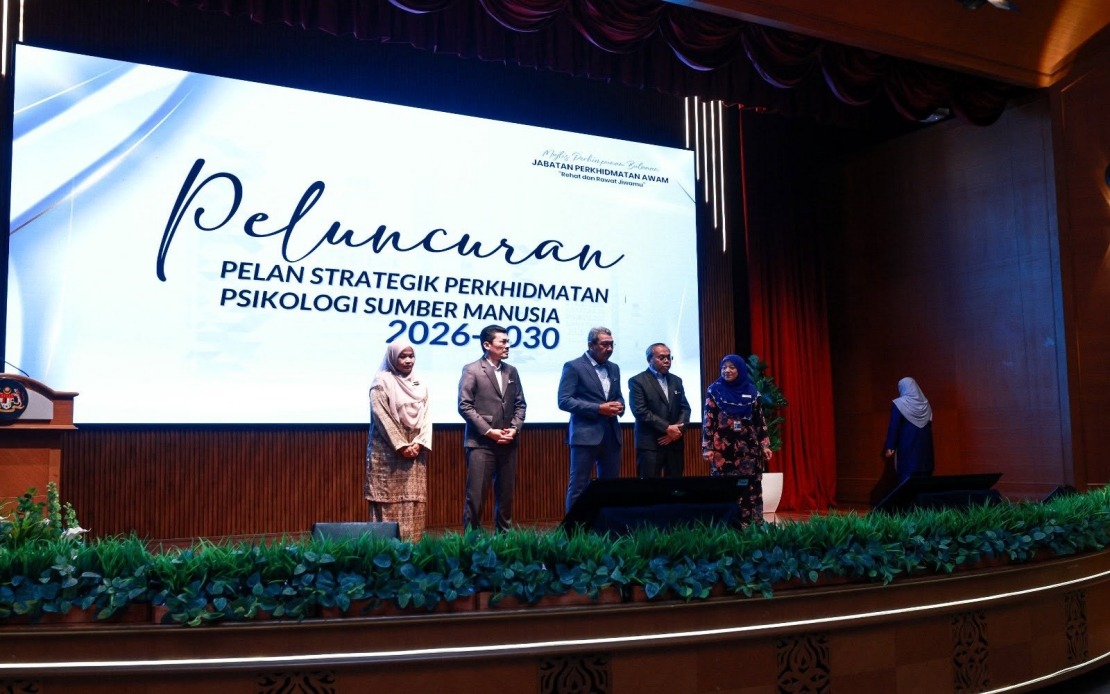
Malaysia's Public Service Department unveiled a comprehensive five-year strategic blueprint on June 19 aimed at transforming how the civil service approaches mental health and psychological support for its employees. The Human Resources Psychology Services Strategic Plan 2026-2030 represents a significant institutional commitment to addressing worker well-being, incorporating 12 distinct strategies, 22 programmatic initiatives, and 48 key performance indicators to gauge progress. The plan was formally launched during PSD's monthly assembly with Tan Sri Wan Ahmad Dahlan Abdul Aziz, the Director-General of Public Service, officiating the event under the symbolic theme "R&R (Rest and Treat) Your Soul".
The initiative reflects growing recognition within Malaysia's bureaucracy that employee psychological health directly correlates with organisational effectiveness and public service delivery. Rather than treating mental health as a peripheral concern, PSD positions well-being as foundational to institutional success. Tan Sri Wan Ahmad Dahlan articulated this philosophy through the concept of "Treat," emphasising that civil servants must adopt a proactive stance toward their own mental health by actively seeking professional support, voicing concerns without fear, and dismantling deeply entrenched cultural stigma surrounding psychological intervention. This messaging challenges a persistent dynamic in many Asian workplaces where admitting mental health struggles remains culturally fraught.
The strategic approach centres on what PSD terms "Rawat," a Malay concept denoting careful, intentional care and treatment. This framework operationalises mental health support through structured intervention mechanisms designed to identify and address psychological challenges before they escalate into acute crises. The Rawat concept complements PSD's broader organisational culture initiative known as H.E.M.A.T, which encompasses governance transformation, public empathy, progressive institutional mindset, innovation appreciation, and transparent administration. By integrating mental health within this wider reform agenda, PSD signals that psychological support represents not an isolated welfare function but an integral component of modernising the civil service.
The timing of this initiative holds particular significance for Malaysia's public sector, which employs hundreds of thousands across federal, state, and local government levels. Civil servants in Malaysia often experience substantial occupational pressures, ranging from rapid digital transformation demands to evolving public expectations regarding service quality and responsiveness. These systemic pressures, combined with bureaucratic hierarchies that traditionally discourage vulnerability, create environments where mental health challenges frequently remain unaddressed until they precipitate serious consequences including burnout, performance deterioration, and attrition. PSD's strategic plan acknowledges these realities by creating institutional frameworks that normalise psychological support rather than marginalising it.
The 48 key performance indicators embedded within the strategy serve crucial accountability functions. Rather than relying on anecdotal reports of improved morale, PSD has constructed measurable benchmarks against which implementation success can be objectively evaluated. These indicators likely encompass metrics such as employee uptake of counselling services, reduction in stigma-related barriers to care, training completion rates for mental health literacy among managers, and employee satisfaction scores regarding available support systems. This data-driven orientation distinguishes the plan from aspirational declarations lacking enforcement mechanisms, establishing mechanisms through which progress becomes trackable and departments answerable for achieving specified outcomes.
The emphasis on destigmatisation deserves particular analytical attention. In many Southeast Asian contexts, seeking psychological help carries implicit association with weakness or inability to manage personal challenges independently. This stigma operates at multiple levels: individual employees fear career consequences if vulnerability becomes visible, supervisors may interpret mental health disclosures as performance deficiencies rather than health needs requiring accommodation, and organisational cultures historically rewarded stoicism and emotional restraint. PSD's explicit commitment to eliminating these stigmatic barriers through the "R&R Your Soul" messaging and institutional endorsement from the Director-General attempts to recalibrate these deeply embedded attitudes. Success requires sustained cultural messaging, training for managers on mental health competence, and visible senior leadership modelling psychological wellness practices.
The 22 programmes component of the strategy likely encompasses diverse interventions reflecting evidence-based approaches to workplace mental health. These might include mandatory mental health awareness training for supervisory personnel, establishing accessible counselling services through both in-house and external providers, developing peer support networks among civil servants, implementing stress-reduction and resilience-building workshops, creating clear pathways for employees experiencing psychological distress to access help without bureaucratic obstacles, and designing flexible work arrangements that accommodate mental health needs. Comprehensive strategies recognising that mental health support requires multi-faceted approaches rather than singular interventions typically achieve superior outcomes.
For Malaysian policymakers and public administration scholars, this initiative exemplifies how governments can leverage their role as major employers to drive social change regarding mental health attitudes. The civil service employs substantial numbers across diverse sectors and hierarchies, making it a powerful vehicle for normalising psychological support. When government employees openly access mental health services without career penalties and when supervisors receive training in compassionate support, ripple effects extend throughout the broader labour market as private sector employers respond to shifting norms and expectations regarding workplace mental health accommodation.
The strategic plan also carries implications for Malaysia's demographic and economic positioning. As the nation navigates increasingly complex governance challenges—from climate adaptation to digital economy transition—civil service effectiveness becomes strategically vital. Psychologically supported, mentally healthy workers demonstrate superior productivity, enhanced problem-solving capacity, stronger teamwork, reduced absenteeism, and greater resilience facing organisational change. By investing in this psychological infrastructure, PSD simultaneously invests in the human capital foundations underlying Malaysia's developmental trajectory and regional competitiveness.
Looking forward, the plan's success will depend substantially on implementation fidelity and resource allocation. Strategic documents remain inert without adequate funding for counselling infrastructure, training programmes, and administrative systems facilitating programme delivery. Additionally, cultural transformation rarely follows predetermined timelines; genuine destigmatisation of mental health will require persistent reinforcement over years, not months. Departments must maintain momentum despite potential setbacks, political transitions, or budgetary fluctuations. The establishment of clear performance indicators, however, creates accountability mechanisms and documentation systems essential for sustaining commitments across leadership changes.
Malaysia's civil service mental health initiative also situates the country within regional and global trends prioritising worker psychological well-being as fundamental to organisational success and social stability. Advanced economies increasingly recognise mental health as occupational health issue requiring systematic attention rather than individual responsibility. Malaysia's proactive adoption of comprehensive psychological support strategy positions the nation as progressive in human resource management approaches while addressing genuine needs within its sprawling public service infrastructure.