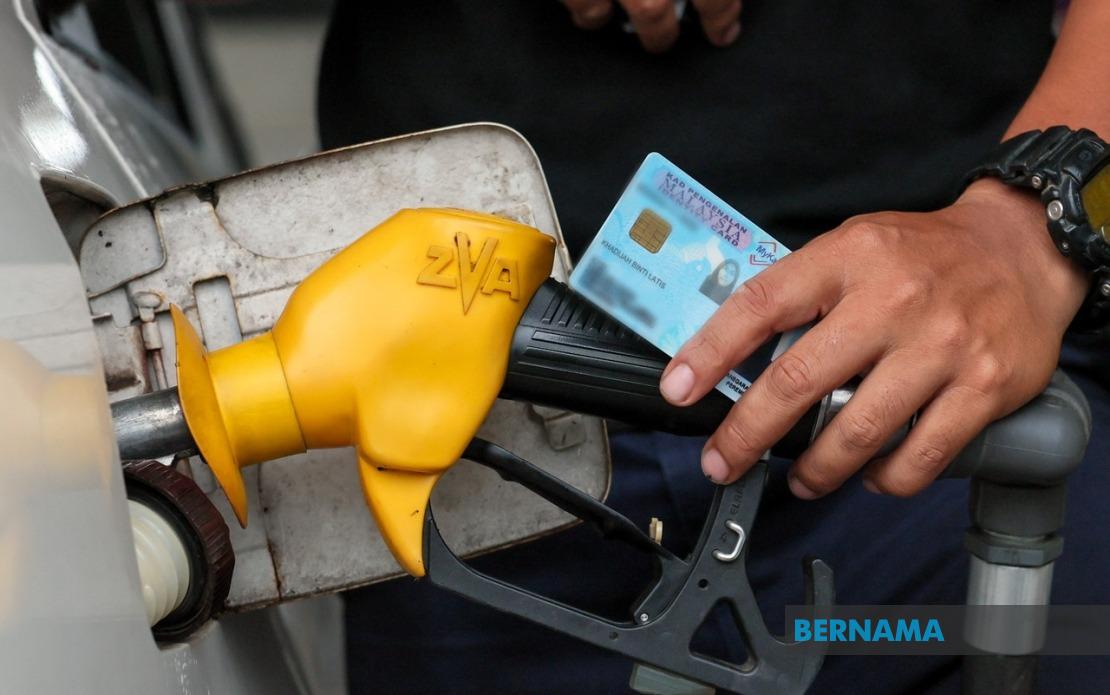
Prime Minister Datuk Seri Anwar Ibrahim announced during the 2026 National Day address in Putrajaya that the government has agreed to increase the basic BUDI95 RON95 fuel quota back to 300 litres per month, reversing the previous reduction to 200 litres. The measure will benefit more than 16 million users of the subsidised fuel programme, with the changes taking effect from September 1st. Additionally, owners of diesel-powered pickup trucks and jeeps who qualify for the scheme will receive up to 400 litres of BUDI Diesel monthly, providing support to a segment of the population that depends on these vehicles for commercial and personal use.
The restoration of the higher fuel quota directly addresses ongoing affordability challenges faced by Malaysian households, particularly those in lower and middle-income brackets who spend disproportionately large shares of their monthly income on transportation. Herniza Roxanne Marcus, an economics lecturer at Universiti Teknologi MARA (UiTM) Sabah branch, points out that the additional 100-litre monthly allowance offers meaningful flexibility for families managing fuel costs alongside other essential expenses. For B40 and M40 households, fuel expenditure represents a significant component of disposable income, making such assistance programmes critical to household financial stability.
The geographical context of Malaysia makes this fuel subsidy extension particularly relevant for workers and families in regions with limited public transportation infrastructure. In states like Sabah, where travel distances can be substantial and mass transit options remain underdeveloped compared to urban centres, private vehicle usage remains essential for commuting to work, accessing medical services, and maintaining family connections across dispersed communities. The additional fuel allowance thus enables residents in these areas to maintain mobility without depleting household budgets destined for food, education, healthcare, and other pressing needs.
According to Marcus, the psychological and practical benefits of the quota restoration extend beyond simple arithmetic. The measure provides breathing room for household budgets that have been squeezed by accumulated cost-of-living pressures over the past several years. By reducing the likelihood that families will exhaust their fuel allowance before month's end, the government indirectly supports overall purchasing power and consumer confidence, allowing households to direct resources to other areas of the economy rather than scrambling to find additional funds for essential transportation.
The economic impact of this decision should be understood within the framework of managed inflation rather than direct price reduction. While the quota increase will not immediately lower inflation rates, Marcus suggests it can help contain the spillover effects that transportation cost pressures exert on other sectors. When households must divert additional funds to fuel beyond their subsidised allowance, the resulting squeeze often translates into reduced spending on food, retail goods, and services, which in turn affects pricing dynamics throughout the economy. By addressing the fuel cost burden, the government mitigates these secondary inflationary pressures.
The timing of this announcement also reflects shifting assessments of Malaysia's fiscal capacity and global energy market conditions. The previous reduction to 200 litres occurred during a period of heightened geopolitical uncertainty and volatile international oil prices, when the government faced significant constraints on subsidy expenditure. Marcus emphasizes that the current decision does not necessarily signal a dramatic improvement in fiscal positions, but rather a strategic recalibration based on changed external circumstances. As geopolitical risks and market volatility have evolved, and as the government has gathered data on actual consumption patterns and household impact, officials have determined that the fiscal space exists to provide additional support without destabilizing public finances.
Real-world experiences illustrate why this restoration matters for working Malaysians. Rozainah Abdul Rahim, a 36-year-old journalist, describes how the previous 200-litre quota proved insufficient for her professional and personal needs. Her work requires daily vehicle use for news gathering assignments, while weekly travel between Port Dickson in Negeri Sembilan and Kuala Lumpur for family responsibilities adds to her fuel consumption. Under the reduced quota, she frequently exhausted her monthly allowance before the final week, forcing her to purchase fuel at market rates and incurring unexpected expenses. Her situation exemplifies why professional workers and those with dispersed family responsibilities have struggled most under the constraints of the lower quota.
The expanded quota also recognises the structural realities of employment patterns in Malaysia, where many workers commute significant distances between residential areas and job centres. Urban sprawl, relatively affordable housing in peripheral locations, and the concentration of employment opportunities in major urban corridors mean that countless Malaysians face daily commutes of 50 kilometres or more. Public transportation, while improving in urban cores, remains inadequate for workers in secondary cities and states, making private vehicle ownership not a luxury choice but a practical necessity for maintaining employment and earning capacity.
The inclusion of diesel vehicle owners in the expanded subsidy programme addresses another important demographic: small business operators, agricultural workers, and commercial vehicle users who depend on pickup trucks and jeeps for their livelihoods. These individuals often operate within tight profit margins, and fuel costs directly reduce their business viability and income. By extending up to 400 litres of diesel monthly through BUDI Diesel, the government provides direct support to this segment of the informal and semi-formal economy, helping sustain small enterprises and protect employment in sectors that depend on light commercial vehicles.
Market observers note that the decision represents a careful balancing act between competing policy objectives. The government must sustain fuel subsidies to protect household welfare and purchasing power, while simultaneously managing fiscal constraints and avoiding long-term subsidy dependency that could create economic distortions. The restoration to 300 litres, rather than returning to pre-reduction levels, suggests officials are calibrating support carefully, providing meaningful relief without committing to expenditures that future economic conditions might render unsustainable.
The broader policy context reveals how targeted subsidy schemes have become central to Malaysia's social support architecture. Rather than implementing across-the-board price controls or universal allowances, the government uses means-tested programmes like BUDI95 and BUDI Diesel to direct support to identified vulnerable groups. This approach aims to maximise the impact of government resources while maintaining market mechanisms for price signals. The success of such programmes depends on accurate identification of beneficiaries and appropriate quantum of support, both areas that the government appears to be reassessing based on accumulated experience and changing circumstances.
Looking ahead, the restoration of the 300-litre quota may influence broader public sentiment regarding government responsiveness to household concerns. During periods of economic pressure, visible measures that ease daily living costs can significantly affect public confidence and political perceptions, even when the cumulative impact is modest in macroeconomic terms. By addressing a grievance that affected millions of Malaysians directly and repeatedly, the government signals recognition of citizen concerns and commitment to supporting vulnerable populations during economically challenging periods. For households operating on tight budgets, such measures represent tangible government support that connects policy decisions to lived experience.

