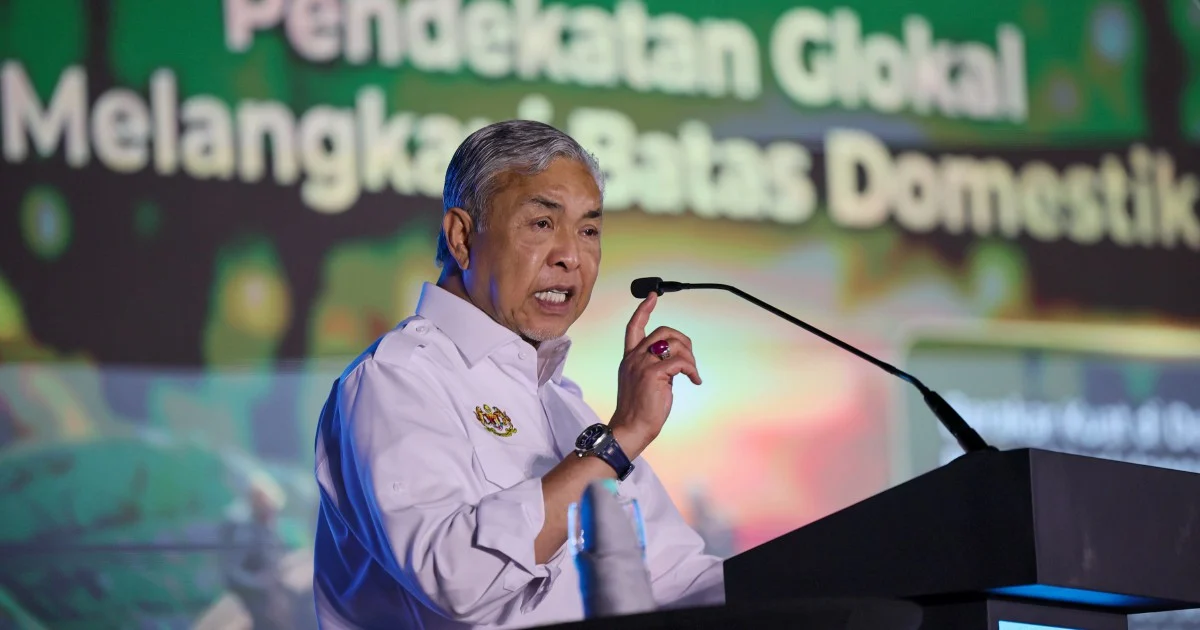
Deputy Prime Minister Datuk Seri Dr Ahmad Zahid Hamidi has underscored the critical importance of synchronising rural development initiatives with broader international economic frameworks, positioning Malaysia's domestic agenda as integral to global progress. Speaking in Maran, Zahid characterised the National Rural Economic Agenda as more than a domestic policy document—rather, as a foundational blueprint capable of steering rural communities into a new phase of sustainable and inclusive growth.
The statement reflects a growing recognition within Malaysia's leadership that rural advancement cannot occur in isolation from worldwide economic currents and policy directions. As developing economies increasingly face pressure to integrate with global supply chains, adhere to international standards, and participate in multilateral trade agreements, the coordination between local rural initiatives and international frameworks has become essential. Zahid's emphasis suggests that policymakers view the prosperity of rural Malaysia as contingent upon its ability to capitalise on global opportunities while maintaining resilience against external shocks.
Rural economies across Southeast Asia have historically lagged their urban counterparts in income, infrastructure access, and economic diversification. Malaysia's rural sector, which encompasses significant agricultural production, natural resource extraction, and small-scale manufacturing, remains vulnerable to commodity price volatility and climate variability. By anchoring the National Rural Economic Agenda to international benchmarks, Zahid's government signals an intention to modernise rural productivity, improve market integration, and ensure that agrarian communities are not left behind in the global transition toward digital and green economies.
The Deputy Prime Minister's framing of rural development as aligned with a global agenda carries implications for policy prioritisation. It suggests investment in rural broadband infrastructure, agricultural technology adoption, and skills development programmes that prepare rural workers for participation in emerging sectors. Such alignment also implies adherence to environmental standards and sustainability practices increasingly demanded by international markets, particularly as consumer preferences and regulatory requirements in developed nations shift toward ethically-sourced and environmentally responsible products.
Southeast Asian rural regions face distinctive challenges that differ from their global counterparts. Whereas rural development in mature economies often focuses on amenities and quality-of-life enhancements for existing populations, Southeast Asian rural areas must simultaneously address poverty reduction, livelihood diversification, and integration into modern value chains. Malaysia's positioning of its National Rural Economic Agenda within this global context suggests awareness that rural competitiveness depends on access to technology, capital, and markets far beyond provincial boundaries.
The connection between rural and global agendas also touches on critical contemporary issues such as climate change adaptation and food security. Rural communities, which depend directly on natural resources, are among the most vulnerable to environmental degradation and climatic instability. International development frameworks increasingly embed climate resilience and sustainability objectives, and Zahid's statement implies that Malaysia's rural agenda should incorporate these priorities—ensuring that development trajectories do not undermine long-term environmental viability or contradict global commitments to emissions reduction and biodiversity conservation.
Malaysia's experience with rural development over recent decades offers instructive lessons for this integrated approach. Previous initiatives, from the Felda land settlement schemes to various agricultural modernisation programmes, have produced mixed results, sometimes generating short-term employment gains while struggling to build sustainable competitive advantages. A more globally-oriented framework, if implemented with sufficient investment and institutional capacity, could enable rural enterprises to access international markets, benefit from knowledge transfer, and participate in high-value production networks currently dominated by urban centres and developed nations.
The human dimension of this policy direction warrants attention. Rural populations, which comprise roughly half of Malaysia's demographic base in many states, represent both consumers and workers whose futures depend on effective economic governance. Zahid's emphasis on alignment with global agendas must translate into tangible improvements in agricultural yields, manufacturing competitiveness, and service-sector opportunities accessible to rural residents. Without careful attention to equitable benefit distribution, policies framed in global terms risk entrenching existing urban-rural disparities or creating new dependencies on external markets and capital.
Implementation challenges loom large. Rural governance structures, infrastructure deficits, and human capital constraints in many Malaysian rural areas require substantial remedial investment before the National Rural Economic Agenda can meaningfully engage with global economic platforms. Coordination between federal and state governments, private sector participation, and community buy-in all prove essential for translating Zahid's vision into sustainable outcomes. The government must also navigate potential tensions between rural communities' preferences for traditional livelihoods and the economic pressures driving transition toward globally-competitive sectors.
The Deputy Prime Minister's statement arrives as Malaysia positions itself within evolving regional and global trade frameworks, including the Regional Comprehensive Economic Partnership and various bilateral agreements. Rural enterprises capable of meeting international quality standards and supply-chain expectations could capture significant opportunities through these mechanisms. Conversely, rural sectors unable to upgrade face marginalisation as trade barriers decline and competition intensifies.
Looking forward, the success of this integrated approach will depend on whether policymakers translate principles into programmes with adequate financing, technical support, and accountability mechanisms. The National Rural Economic Agenda must move beyond aspirational language to address concrete barriers preventing rural communities from participating fully in the globalised economy while preserving the social and cultural dimensions that define rural identity and cohesion.

