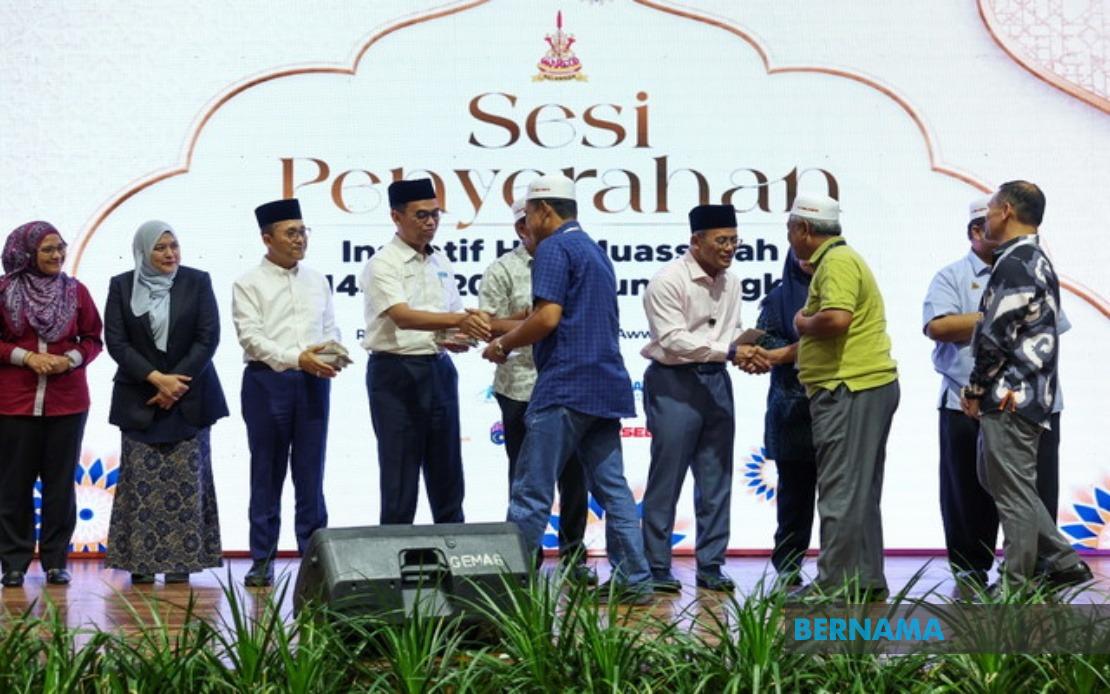
Selangor has distributed preparation assistance to nearly 4,800 haj pilgrims out of a planned 6,000 recipients for the 2026 pilgrimage, with state authorities working to complete all payments by the end of September. Menteri Besar Datuk Seri Amirudin Shari disclosed the progress during a ceremony presenting the Selangor Muassasah Haj Incentive to 259 recipients in Dengkil, underscoring the state government's commitment to easing the financial burden on Muslims undertaking this significant religious obligation.
The initiative, rolled out through the Selangor Menteri Besar Incorporated Foundation (Yayasan MBI) with a RM9 million allocation, targets Muassasah pilgrims throughout the state. Each recipient receives RM1,500 to offset preparation expenses, including religious attire, prescribed medications, educational materials on pilgrimage rituals, and other necessities required before departing for the holy cities of Mecca and Medina. This financial support addresses a genuine concern among middle and lower-income Muslim families who face substantial costs when preparing to fulfil one of Islam's five pillars.
State officials are actively pursuing the remaining 1,200-plus recipients to finalise payments within the established timeframe. Amirudin indicated that administrative processes to identify and contact outstanding beneficiaries are advancing smoothly, with the expectation that all designations would receive their allocations within weeks. This phased approach demonstrates the state's organisational capacity to manage large-scale assistance programmes affecting thousands of households across Selangor's diverse districts.
The ceremony in Puchong, attended by Deputy Housing and Local Government Minister Datuk Aiman Athirah Sabu, reflects broader political attention to haj-related support in Malaysia. Such assistance programmes carry cultural and electoral significance, particularly in states like Selangor where Muslim-majority populations value practical government backing for religious observances. The visible presence of senior federal and state officials at distribution events signals alignment between different levels of governance on prioritising pilgrimage accessibility.
Selangor's leadership has articulated ambitions to enhance the incentive structure beyond its current level. Amirudin outlined intentions to raise individual allocations to RM2,000 within the next two to three years, pending fiscal circumstances and budgetary allocations. This upward trajectory reflects recognition that inflation and rising travel-related costs necessitate periodic programme adjustments to maintain meaningful support. However, the caveat regarding financial constraints indicates realistic acknowledgment of competing state expenditure demands across education, infrastructure, healthcare, and other sectors.
The timing of this initiative carries relevance for the broader Southeast Asian context. Malaysia's approach to subsidising religious observances demonstrates how Muslim-majority nations balance religious accommodation with fiscal prudence. Neighbouring countries observing Selangor's programme may consider comparable mechanisms within their own governance frameworks. The RM1,500 per-person structure, while modest internationally, represents substantial support in the Malaysian economic context, particularly for families with limited savings.
The Muassasah Haj Incentive constitutes part of Selangor's wider social support architecture. Such targeted assistance programmes distinguish state governments that prioritise direct financial transfers to citizens over other policy approaches. The RM9 million investment, while significant, represents a focused application of resources toward a defined demographic and objective. The measurable benefit—enabling thousands to undertake religious pilgrimage—creates tangible demonstrable outcomes that resonate with constituents.
The administrative mechanics of distributing assistance to 6,000 recipients across a populous state like Selangor present logistical complexities often overlooked in policy discussions. Ensuring accurate identification, preventing duplicate payments, managing communication with geographically dispersed beneficiaries, and processing multiple disbursement tranches requires coordinated effort across government agencies. The reported progress toward completion suggests functional implementation systems, though occasional delays remain inevitable with programmes of this scale.
Future programme expansion to RM2,000 per recipient would increase total state expenditure to RM12 million annually for this initiative alone. Such growth trajectories require sustained revenue performance and political commitment across electoral cycles. Incoming state administrations might prioritise differently, making continuation of enhanced support contingent upon maintaining electoral mandates and fiscal health. For potential pilgrims, however, the stated intention provides planning clarity regarding anticipated assistance levels in coming years.
The convergence of religious observance and government assistance reflects Malaysia's distinctive governance model, where state institutions actively facilitate Muslim religious practice. This contrasts with secular approaches in some democracies but aligns with constitutional provisions and electorate expectations in Malaysian federalism. Selangor's programme exemplifies how state-level governments can exercise fiscal autonomy to address constituent priorities within constitutionally defined domains.
For Malaysian pilgrims, particularly those with constrained finances, such assistance meaningfully reduces barriers to undertaking the haj. The RM1,500 allocated per person, when combined with personal savings and potentially family contributions, often provides sufficient support for basic requirements. This layered approach—government contribution supplemented by individual effort—encourages shared responsibility while acknowledging genuine hardship cases where government support proves decisive in enabling pilgrimage participation.
The programme's success metrics extend beyond simple disbursement statistics. Evaluating outcomes requires assessing whether assistance recipients successfully complete their pilgrimages, whether the incentive amount proves adequate, and whether beneficiary satisfaction justifies programme continuation. Annual reviews of recipient feedback could inform future refinements, ensuring that government support remains responsive to actual costs and emerging needs within pilgrimage preparation cycles.

