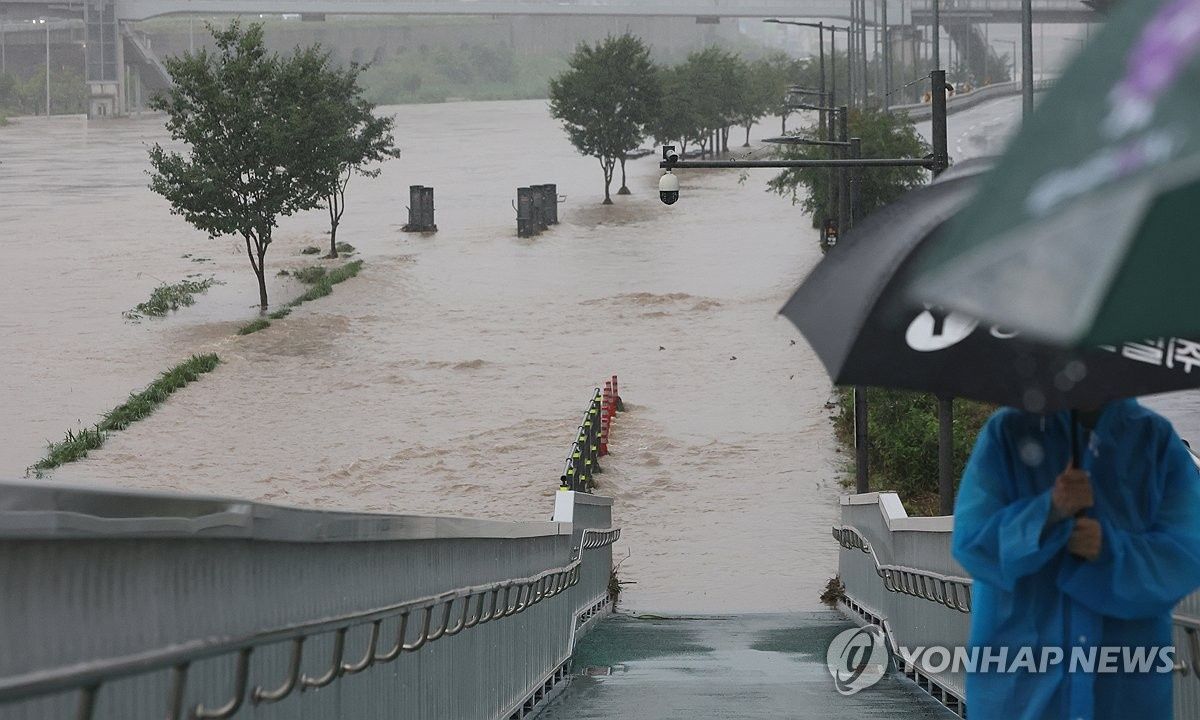
South Korea's capital and eastern regions experienced severe weather disruptions overnight as intense rainfall swept across the Seoul metropolitan area and Gangwon Province, leaving a trail of flooded properties and suspended transport links in its wake. The Central Disaster and Safety Countermeasure Headquarters confirmed that approximately 540 cases of property damage were recorded by Saturday morning, though fortunately no deaths have been reported despite the scale of destruction.
The downpour unleashed nearly 200 millimetres of precipitation across vulnerable zones between midnight and 10 am local time, with certain locations recording particularly severe accumulations. Paju registered 192.5 mm, while Dongducheon measured 189.5 mm, Pocheon 179 mm, Gimpo 166.5 mm, and Cheorwon 159.5 mm. These measurements underscore the uneven geographic distribution of the rainfall intensity, creating pockets of extreme flooding in some areas whilst others experienced comparatively lighter conditions.
The immediate impact on residential and transportation infrastructure proved substantial. Authorities logged 148 separate incidents involving inundated homes and roads, whilst an additional 392 cases involved collapsed trees and accumulated debris blocking access routes. Seven maritime ferry services operating along the west coast were suspended to ensure passenger safety, whilst seven major highways and regional roads faced temporary closures due to water accumulation and visibility issues.
Government authorities demonstrated swift response protocols by evacuating 95 individuals from 44 households across six municipalities as a precautionary measure, even though displacement remained limited relative to the overall scale of the weather event. This measured approach reflected preparedness frameworks developed following previous flooding incidents that had impacted the region more severely. Nonetheless, the overnight exodus highlighted the continued vulnerability of certain low-lying residential communities to rapid water accumulation.
Tourist and recreational infrastructure sustained significant disruption as authorities imposed access restrictions across a broad swathe of the national park system. Ten national parks were shuttered to visitors, encompassing approximately 275 separate hiking pathways and trails. Mount Bukhan, one of the capital region's most visited recreational destinations, joined the closure list, effectively preventing weekend outdoor activities for Seoul's residents and visitors during what would typically be a peak tourism period.
Meteorological forecasts indicated that the severe weather pattern would persist through Sunday, with rainfall intensity potentially escalating to rates of 300 millimetres per hour in some zones. This projection raised significant concern among emergency management officials, particularly regarding secondary hazards such as landslides and mudslide formations in terrain already saturated by overnight precipitation. Pocheon had already triggered mudslide warnings as of 11 am Saturday, whilst heavy rain alerts remained active across ten Gangwon Province administrative districts.
Prime Minister Han Seong-sook convened an emergency response meeting to coordinate interagency disaster management efforts and mobilise additional equipment and personnel to affected regions. During the session, she acknowledged the fortunate absence of fatalities whilst expressing sympathy for residents confronting property losses and displaced living conditions. Her statement reflected the government's dual concerns: gratitude that precipitation intensity had not resulted in loss of life, alongside recognition that economic and social disruptions demanded immediate attention and resource allocation.
The prime minister specifically directed officials to enhance vigilance against landslide risks in the central Chungcheong Province and northeastern Gangwon Province, where meteorological models predicted further heavy precipitation during the evening and early Sunday morning hours. This forward-looking directive demonstrated awareness that the most destructive phase of the weather system might yet materialise, requiring prepositioned response assets and personnel readiness in zones vulnerable to gravity-driven terrain failures.
For Malaysian and Southeast Asian observers, the Seoul flooding episode offers instructive insights into urban infrastructure vulnerability when confronted by extreme precipitation events. South Korea's sophisticated early warning systems, established evacuation protocols, and rapid resource mobilisation prevented casualty figures from escalating despite the magnitude of property and service disruptions. The closure of recreational facilities and suspension of transport links, whilst economically costly, reflected risk-averse management philosophy prioritising public safety over commercial convenience. In the Malaysian context, where monsoon seasons regularly produce comparable or greater rainfall accumulations, Seoul's measured response framework and investment in disaster readiness infrastructure merit comparative analysis regarding applicability to major urban centres across the region.

