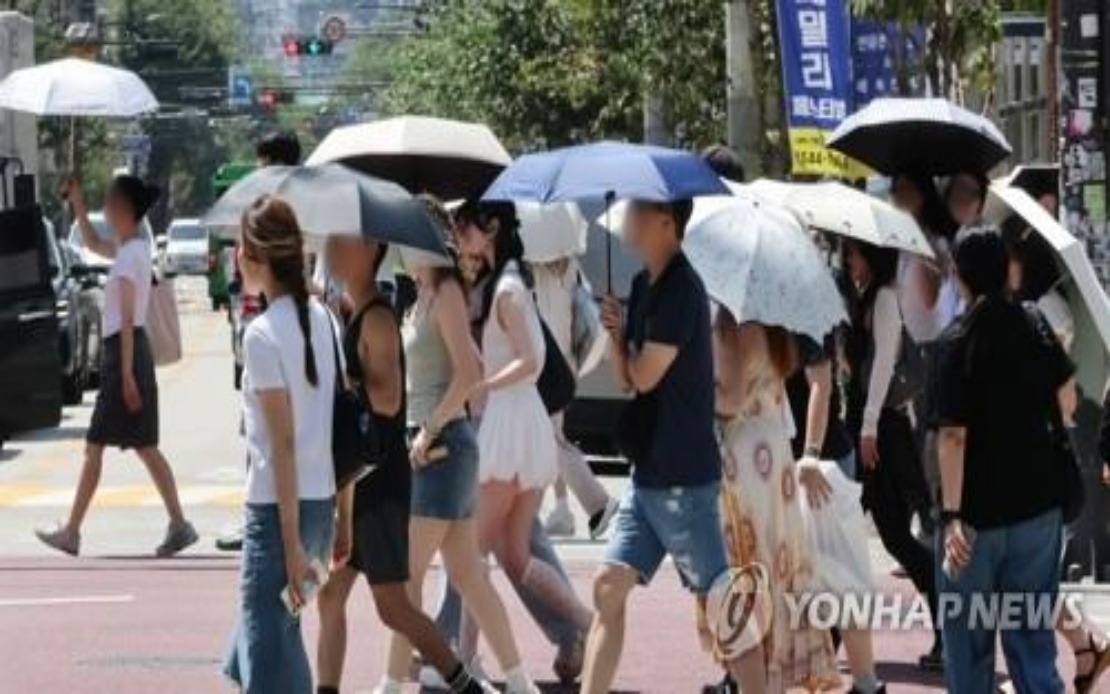
South Korea endured another punishing day of extreme heat on Friday when three major cities, including the capital Seoul, recorded temperatures surpassing 40 degrees Celsius. The Korea Meteorological Administration confirmed that the Nowon district in northern Seoul reached 40.2°C at 3.28 pm, making it the hottest reading the capital has experienced in six years. The last time Seoul approached such dangerous levels was on August 1, 2018, when the thermometer climbed to 41.8°C. This latest spike underscores the severity of the ongoing heat wave gripping the nation and raises concerns about public health and infrastructure strain during summer months.
Two other locations proved even hotter than Seoul, with forecasters recording particularly intense conditions in the southern and southeastern regions. Hanam's Deokpung district, situated just southeast of the capital, registered 40.7°C at 2.32 pm, making it the day's highest temperature reading across the country. Further south, Gwangyang, a city approximately 300 kilometres from Seoul, also breached the 40°C threshold by reaching 40.2°C at 2.37 pm. Meanwhile, inland areas including Yeongweol in Gangwon Province and Yeoju in Gyeonggi Province hovered just below this dangerous mark, reaching 39.8°C. The geographical spread of these extreme readings reveals that the heat wave is not confined to any single region but has developed into a nationwide phenomenon affecting multiple provinces simultaneously.
The meteorological data reveals troubling trends in how heat patterns have shifted across South Korea's summer season. From June 1 through Thursday, the country averaged 14.8 days of heat wave conditions, defined as periods when daytime temperatures reach 33°C or higher. This represents the fourth highest count for this time period since the nationwide weather observation network was established in 1973, suggesting a concerning upward trajectory over the past five decades. More alarming still is the record for tropical nights—periods when overnight temperatures fail to drop below 25°C. Such nights totalled 13 days, representing a historical peak and indicating that even when the sun sets, residents and workers experience no meaningful relief from the oppressive heat.
The implications of these sustained high temperatures extend far beyond simple discomfort. Tropical nights impose particular strain on vulnerable populations including the elderly, those with cardiovascular conditions, and outdoor workers who cannot escape the heat during their shifts. The lack of temperature relief during evening hours prevents the body's natural cooling mechanisms from functioning effectively and disrupts sleep patterns essential for health and cognitive function. Prolonged exposure to such conditions increases hospital admissions, strains emergency services, and can prove fatal without adequate access to cooling facilities, clean water, and medical support. For a densely populated nation like South Korea, the public health consequences of sustained heat waves represent a serious policy concern that extends beyond meteorological interest.
In response to the threat, South Korea's meteorological authorities have implemented and adjusted their alert system throughout the week. Seoul had been operating under the top-tier serious heat wave warning since Tuesday, a classification reserved for the most dangerous conditions. The serious heat warning is triggered when apparent temperatures—a measure that factors in humidity, wind speed, and radiation in addition to raw temperature—reach 38°C or higher, or when daily maximum temperatures climb to 39°C or above. These thresholds must be expected to persist for two or more consecutive days in areas where the highest perceived temperature typically exceeds 35°C. The sustained nature of these warnings reflected official concern about the crisis unfolding across the peninsula.
By Friday evening, however, the Korea Meteorological Administration indicated that conditions would moderate slightly, prompting an adjustment to the alert system. At 6 pm on Friday, the administration downgraded serious heat warnings covering Seoul and the eastern and southwestern regions of the country to ordinary heat warnings. This shift reflected confidence that weekend weather patterns would provide marginal relief, though meteorologists cautioned that sweltering conditions would persist rather than disappear. The distinction between warning levels, while seemingly technical, carries practical importance for public agencies, employers, and individuals making decisions about work schedules, outdoor activities, and precautions during the hottest hours.
The forecast for the immediate weekend offered limited encouragement to residents and businesses hoping for substantial relief. Saturday's weather would bring morning lows ranging between 21°C and 26°C nationwide, a modest improvement that would at least allow some nocturnal cooling. Daytime highs, however, would range from 26°C to 35°C, meaning that while not reaching the extreme 40-degree readings of Friday, conditions would remain uncomfortably warm and potentially dangerous for susceptible groups. This pattern—cooler mornings but still-warm afternoons—provides incomplete respite and requires continued vigilance from public health authorities and community support networks.
South Korea's experience with extreme heat waves reflects broader climate trends affecting East Asia and the wider region. The recurring nature of these events, with major heat episodes occurring frequently enough to set new records, aligns with scientific projections about warming patterns in a changing climate. The combination of continental heat waves, maritime moisture, and urbanization effects creates conditions in which record-breaking temperatures become increasingly common rather than exceptional anomalies. For Malaysia and other Southeast Asian nations, South Korea's experience offers both a cautionary example and relevant data about how extreme heat waves develop and impact densely populated, economically advanced societies.
The broader significance of South Korea's heat wave extends to implications for regional weather patterns and climate resilience. The intensity of this heat event and the record-breaking statistics it produced may indicate shifts in atmospheric circulation patterns that could have cross-border effects. Understanding how developed nations with advanced meteorological monitoring and sophisticated alert systems manage extreme heat provides valuable lessons for Southeast Asian countries grappling with their own heat challenges. The vulnerability of major urban centres even in nations with robust infrastructure and early-warning systems underscores the magnitude of climate-related heat challenges facing the region.
Looking beyond the immediate weekend, South Korean authorities and residents alike remain attentive to longer-term heat projections. While the meteorological administration forecast slight moderation by Saturday, the underlying drivers of extreme heat typically persist throughout summer months before gradually easing toward autumn. The public response to extreme heat warnings in South Korea reflects mature institutional frameworks for crisis communication and resource mobilization, yet even these systems face strains when heat records accumulate. For Malaysian observers monitoring this situation, the South Korean experience demonstrates that extreme heat remains a dynamic threat requiring sustained attention, adaptive management strategies, and community preparedness even in technologically advanced societies with established heat response protocols.

