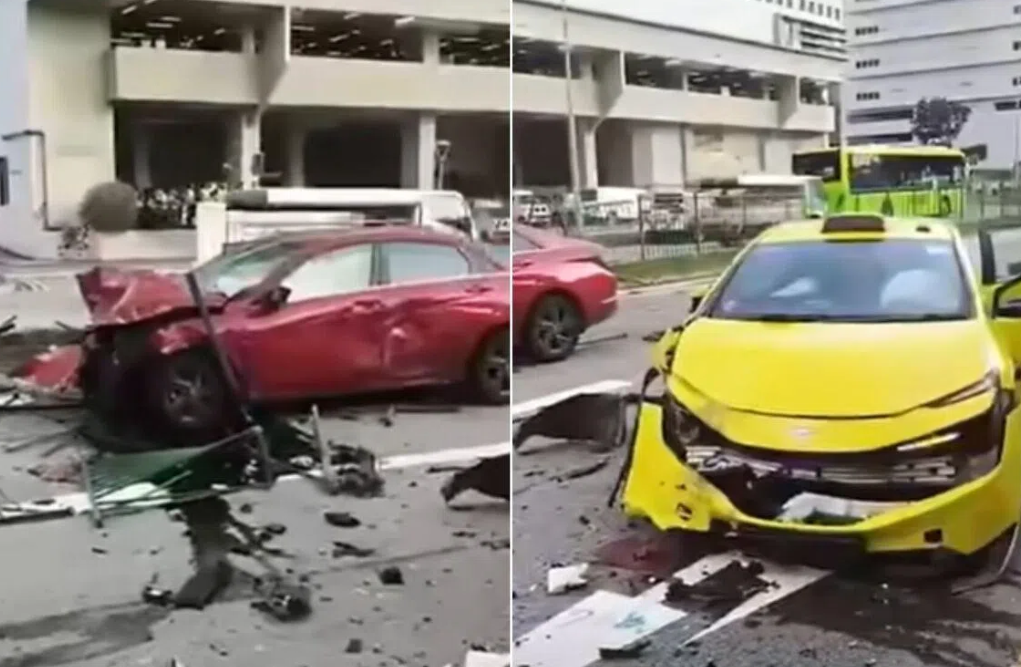
A 36-year-old Singapore man has entered the court system facing serious charges stemming from a vehicular collision in Kallang on June 17 that left two people injured. Mohamed Firdouz Mohamed Akram appeared in court on June 19 to hear multiple offences read against him, including operating a motor vehicle while impaired by methamphetamine, commonly known as Ice, as well as driving without the appropriate Class 3 licence classification.
The incident unfolded in the early morning hours when Firdouz allegedly piloted a car along Kallang Bahru at approximately 8am. Court testimony revealed that his vehicle struck a taxi during the journey, resulting in injuries to both the vehicle's operator and a passenger aboard the cab. The taxi driver, aged 60, sustained chest pain from the impact, while his 43-year-old passenger reported tailbone discomfort consistent with blunt force trauma. These injuries form the basis of charges related to dangerous driving causing bodily harm to others.
Police investigations indicated that Firdouz had consumed Ice prior to getting behind the wheel, establishing a clear nexus between drug intoxication and the motor vehicle operation. The failure to maintain proper vehicle control during the Kallang Bahru journey resulted in the collision with the cab, suggesting that substance impairment played a direct role in the dangerous driving behaviour. For Malaysian readers familiar with similar enforcement patterns in their own jurisdiction, Singapore's approach reflects the broader regional concern about drug-facilitated traffic violations and their public safety implications.
Following the collision, Firdouz did not remain at the scene. Police records indicate he abandoned his vehicle at the accident location and fled before law enforcement personnel arrived to document the incident. This decision to absent himself from the scene constitutes an additional factor in judicial assessment, demonstrating consciousness of guilt and potential obstruction of investigation protocols. Within five hours of the initial police report, however, officers had successfully identified him and taken him into custody.
Searches of the vehicle revealed a concerning cache of items seized as evidence. Suspected drugs, apparatus associated with drug consumption including vaporisers, and a knuckleduster were recovered from inside the car. The presence of such materials underscores a pattern of behaviour extending beyond isolated drug use. Further investigation uncovered additional evidence: court documents confirm that at approximately 1pm on the same day, police located two knives in Firdouz's possession within a room at the Village Hotel Katong located on Marine Parade Road. These discoveries led to separate weapons possession charges being filed against him.
The cumulative nature of the charges reflects a multi-faceted legal response to conduct that Singapore authorities viewed as presenting substantial public danger. The drug-driving offence carries potential penalties of up to one year imprisonment, a financial penalty reaching S$10,000, or a combination of both sanctions. The charge of causing injuries through dangerous driving carries comparable sentencing frameworks, with possible jail time of up to one year coupled with fines ranging between S$2,000 and S$10,000. The weapons charges add further layers of criminal liability to his overall case burden.
For Malaysian observers, the Kallang incident illustrates enforcement dynamics in a neighbouring jurisdiction with notably strict drug policies and traffic safety regulations. Singapore's rapid response—apprehension within five hours—demonstrates resource allocation to serious motor vehicle offences, particularly those involving substance impairment. The decision to prosecute the weapons discoveries alongside the primary driving offences reflects comprehensive law enforcement strategy rather than narrow focus on isolated incidents.
The case also highlights regional concerns about methamphetamine circulation and accessibility. The presence of a vaporiser and drug paraphernalia indicates established consumption patterns rather than situational use, suggesting established networks of supply and demand within Singapore's drug market. Such patterns mirror challenges documented across Southeast Asia, where synthetic drug availability and adoption among mobile populations remains a persistent law enforcement priority.
Public health dimensions of the matter warrant consideration alongside criminal justice aspects. Substance-impaired driving represents a documented risk factor for serious traffic incidents throughout the region. The injuries sustained by the taxi driver and passenger, though not described as life-threatening based on available information, demonstrate the tangible human costs of such behaviour. Road safety campaigns across Southeast Asia increasingly emphasise the incompatibility between drug or alcohol consumption and vehicle operation.
Firdouz's case has been adjourned for further court mention scheduled for July 17, meaning the judicial process remains in preliminary stages. The coming weeks will see additional evidence presented, defence submissions considered, and potential negotiations regarding plea arrangements. The timeline suggests that resolution may extend considerably beyond the July mention, particularly given the multiple distinct charges requiring individual consideration.
The incident carries implications for traffic safety discourse across the region. Malaysia, with its own substantial vehicle population and ongoing concerns about road safety, can observe Singapore's enforcement mechanisms and outcomes as reference points for policy evaluation. The coordination between drug detection operations and motor vehicle enforcement demonstrated in this case reflects integrated approach increasingly common among developed Asian jurisdictions wrestling with similar public safety challenges.

%22%2F%3E%3C%2Fpattern%3E%3C%2Fdefs%3E%3Crect%20width%3D%22100%25%22%20height%3D%22100%25%22%20fill%3D%22url(%23ph5q5h7g)%22%2F%3E%3Crect%20width%3D%22100%25%22%20height%3D%22100%25%22%20fill%3D%22url(%23ph5q5h7p)%22%2F%3E%3Ctext%20x%3D%2250%25%22%20y%3D%2250%25%22%20text-anchor%3D%22middle%22%20dominant-baseline%3D%22central%22%20fill%3D%22rgba(255%2C255%2C255%2C0.95)%22%20font-family%3D%22Georgia%2C%20'Times%20New%20Roman'%2C%20serif%22%20font-weight%3D%22700%22%20font-size%3D%22272%22%20letter-spacing%3D%22-0.02em%22%3EAnwar%3C%2Ftext%3E%3C%2Fsvg%3E)