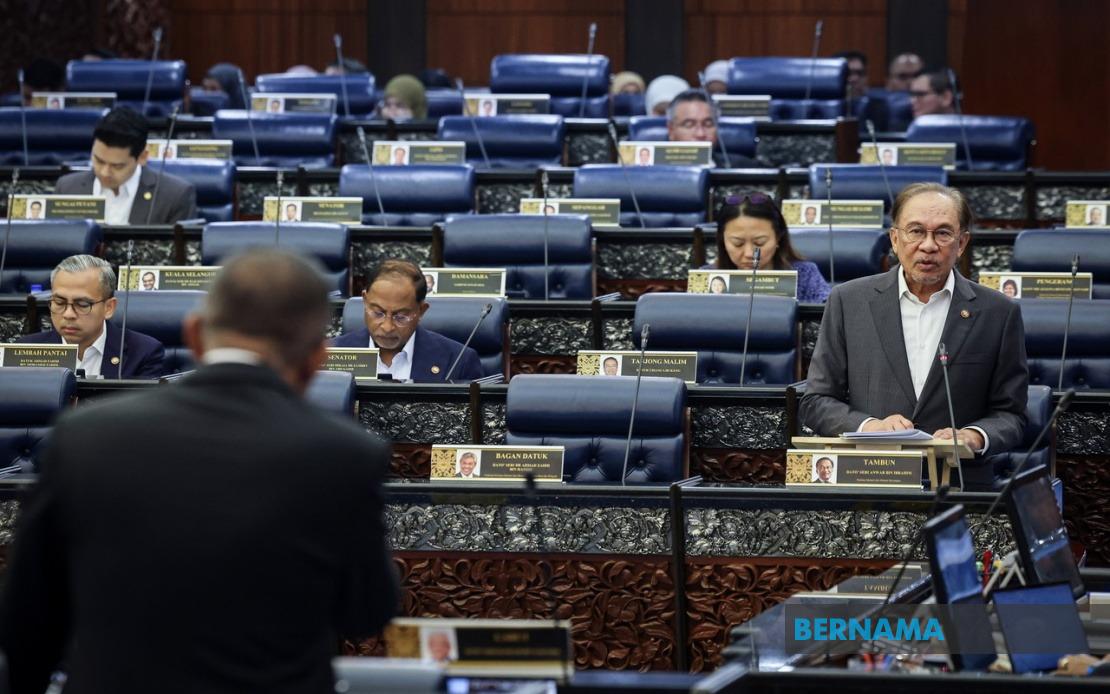
The Malaysian government has channelled RM4.9 billion in financing through the Syarikat Jaminan Pembiayaan Perniagaan (SJPP) to support more than 6,000 micro, small and medium enterprises during the first six months of 2026, according to Prime Minister Datuk Seri Anwar Ibrahim. Speaking in parliament during ministerial question time, the Prime Minister highlighted these approvals as a direct response to mounting pressures facing business operators in an increasingly complex global economic landscape.
As both Prime Minister and Finance Minister, Anwar framed the financing initiative within the broader MADANI government agenda to strengthen Malaysia's entrepreneurial ecosystem. The approvals represent a deliberate policy thrust to reduce friction in accessing capital for small business operators, who typically face steeper borrowing hurdles than larger corporations. By removing financing barriers, the government aims to sustain operational continuity among enterprises that collectively employ a substantial share of Malaysia's workforce and contribute meaningfully to gross domestic product growth.
The SJPP, a subsidiary wholly owned by the Ministry of Finance (Incorporated), functions as the primary vehicle for risk mitigation in small business lending. When commercial banks face heightened uncertainty about loan recovery from smaller borrowers, the guarantee corporation steps in to absorb portions of lending risk, thereby encouraging financial institutions to extend credit more readily. This mechanism has proven particularly valuable during periods of economic volatility, when traditional lending criteria tighten and cash-strapped businesses struggle to meet stringent collateral requirements.
Anwar's parliamentary response emerged during discussion of persistent challenges confronting the business sector, particularly regarding the sustainability of MSME operations amid turbulent international conditions. Lawmaker Lee Chuan How from Ipoh Timor had directly questioned whether the government fully appreciated these difficulties and what concrete steps were being implemented. The Prime Minister's detailed answer signalled official acknowledgment that economic pressures require active intervention rather than passive market reliance.
Beyond the RM4.9 billion in SJPP approvals, the government has committed more than RM15 billion in total loans and financing guarantees specifically targeting MSME working capital needs. This substantially larger pool demonstrates a multi-layered approach to capital provision, with various schemes and instruments deployed across different borrower segments and business categories. The cumulative commitment underscores official recognition that small enterprises face genuine capital constraints that market mechanisms alone cannot resolve.
Within the RM15 billion overall allocation, RM5 billion has been specifically reserved for Bumiputera-owned businesses, reflecting constitutional commitments to indigenous economic participation. This targeted allocation acknowledges that Bumiputera entrepreneurs frequently encounter additional barriers to capital access, whether through limited collateral bases, restricted networks within traditional lending circles, or historical underrepresentation in formal banking relationships. By designating substantial resources for this segment, the government seeks to broaden wealth distribution and economic opportunity across community lines.
For Malaysian MSMEs, particularly those engaged in retail, manufacturing, and services sectors, access to affordable financing remains persistently constrained. Many operators lack sophisticated financial management systems, audited accounts, or recognizable business track records that would satisfy conventional bank lending criteria. The SJPP model addresses this gap by accepting government-backed guarantees as partial security, thereby enabling lenders to justify loans to borrowers who would otherwise remain excluded from formal financial channels.
The timing of these announcements carries significance for Southeast Asian business policy discourse. As regional economies navigate competing pressures from trade tensions, supply chain restructuring, and inflation, small enterprise sustainability has emerged as a priority concern across ASEAN member states. Malaysia's demonstrated commitment to active financing intervention may influence policy discussions elsewhere in the region, particularly among countries with comparable MSME-dependent economic structures.
The implications extend beyond immediate borrowing facilitation. By stabilizing MSME cash flows through better capital access, the government indirectly supports consumer spending, local supply chains, and employment stability. MSMEs that successfully navigate early-stage capital constraints are more likely to expand operations, hire additional workers, and invest in productivity improvements. This multiplier effect means that financing guarantees generate returns well beyond direct loan volumes.
However, the sustainability of such financing support depends on effective deployment and repayment discipline. If approved loans consistently default or fund unviable ventures, guarantee schemes accumulate losses that ultimately burden the public balance sheet. Accordingly, SJPP approvals must be complemented by business advisory services, financial literacy programs, and transparent monitoring mechanisms to ensure capital reaches genuinely promising enterprises rather than perpetuating zombie businesses or financing speculative activity.
For Malaysian policymakers, the challenge lies in calibrating financing assistance to genuinely address market failures while avoiding moral hazard or fiscal overextension. The RM15 billion commitment represents substantial mobilization of public resources, warranting rigorous evaluation of outcomes, repayment rates, and enterprise survival metrics. Regular parliamentary reporting on scheme performance would enhance accountability and enable evidence-based refinement of MSME support architecture.
The government's integrated approach—combining SJPP guarantees with Bumiputera-targeted allocations and broader working capital support mechanisms—reflects nuanced understanding that MSME capital constraints vary across borrower characteristics and business contexts. Continued refinement of these instruments, informed by rigorous performance data and entrepreneurial feedback, will determine whether current initiatives successfully translate into sustained small business growth and expanded economic participation across Malaysian society.

