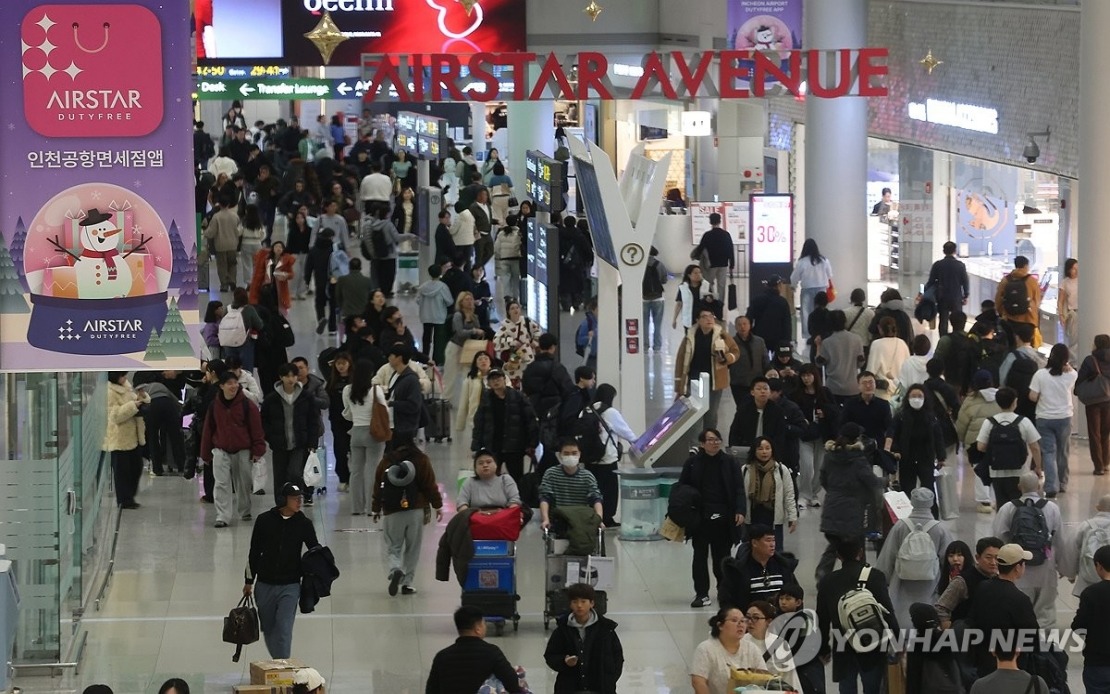
South Korea's tourism sector is experiencing a remarkable resurgence that has caught even optimistic projections off guard. The country welcomed its 10 millionth foreign visitor during the third weekend of June, marking the first time this milestone has been reached before the year's halfway point. This acceleration—roughly a month ahead of the same benchmark in 2023—suggests the South Korean tourism industry is positioned for its strongest annual performance on record, contingent upon maintaining current momentum through the remainder of the year.
The recovery reflects a fundamental shift in international travel patterns as the post-pandemic recovery matures and confidence in leisure tourism rebuilds across major source markets. According to South Korea's Ministry of Culture, Sports and Tourism, the acceleration is particularly noteworthy given external headwinds. Despite elevated fuel surcharges tied to instability in the Middle East—costs that typically suppress discretionary travel—visitor volumes climbed 21 per cent year-on-year through May. This resilience indicates that South Korea's appeal as a destination has strengthened considerably, suggesting the nation's tourism assets and cultural offerings are capturing traveller imagination in ways that transcend mere price sensitivity.
May data provided the most granular picture of the recovery's character. The month drew 1.95 million international arrivals, representing a 19.4 per cent increase compared to May of the previous year. This figure underscores the consistency of the rebound rather than a sudden spike dependent on isolated factors. Chinese visitors dominated the composition, with 560,000 arrivals—an indication of the critical importance of Chinese outbound tourism to South Korea's recovery strategy. Japanese travellers represented the second-largest cohort at 360,000 visitors, while Americans contributed 210,000, establishing a clear geographic hierarchy that will inform tourism marketing and hospitality resource allocation decisions.
Beyond aggregate visitor numbers, the distribution of tourism across South Korea's geography reveals strategic shifts in the sector's development. Regional airports, which serve areas beyond Seoul's gravitational pull, have experienced pronounced growth that contrasts sharply with pre-pandemic concentration patterns. Arrivals through these gateways expanded progressively from 230,000 in January to 360,000 by May, indicating a meaningful decentralisation of tourism flows. This geographic spread carries particular significance for Malaysia and other Southeast Asian nations seeking to diversify their own tourism infrastructure, as it demonstrates how intentional policy and private-sector coordination can redistribute visitor benefits beyond capital regions, potentially generating greater inclusive economic growth across provincial economies.
The financial dimension of this recovery proves equally compelling. Foreign visitors' card expenditure in May, encompassing both physical transactions and online purchases, reached 2.12 trillion won, equivalent to approximately 1.38 billion US dollars. This figure holds historic significance: it marks the first occasion since South Korea began tracking such metrics in 2018 that monthly spending has exceeded the 2 trillion won threshold. The distinction matters considerably because spending patterns often reveal traveller intent and satisfaction more accurately than raw visitor counts. High card spending suggests visitors are extending stays, engaging with premium experiences, and purchasing goods at price points indicating confidence in value perception.
South Korea's tourism renaissance emerges within a specific geopolitical and economic context that carries lessons for the broader Southeast Asian region. The nation's government has strategically leveraged cultural exports—particularly the global phenomenon of Korean popular music, or K-pop—as a tourism draw. This soft power approach, which transforms entertainment industry assets into destination marketing tools, represents an increasingly important component of competitive tourism positioning in an era when experiential and cultural factors often outweigh traditional attractions in traveller decision-making. For Malaysia, which possesses comparable cultural assets and a growing entertainment industry, the South Korean model offers a template for monetising creative sectors through tourism synergies.
Kang Jung-won, heading the Ministry of Culture, Sports and Tourism's policy office, articulated the government's forward-looking strategy explicitly. Officials intend to expand collaborative arrangements with private entities, including entertainment companies and export businesses, to amplify South Korea's international brand positioning. This public-private partnership approach acknowledges that state resources alone cannot sustain competitive tourism development in an increasingly crowded marketplace. By mobilising K-pop artists and commercial enterprises as brand ambassadors, South Korea essentially converts its broader economic and cultural ecosystem into an integrated marketing apparatus—a sophistication that many emerging tourism destinations have yet to achieve.
The timing of South Korea's recovery trajectory matters within Southeast Asian competitive dynamics. As Thailand and Indonesia grapple with balancing tourism growth against sustainability concerns, and as the region competes for a finite pool of affluent Asian travellers, South Korea's ability to attract high-spending visitors from China, Japan, and North America indicates sophisticated positioning and execution. The country's emphasis on geographic diversification and premium spending also suggests an approach prioritising visitor quality over raw volume—a calculus that increasingly appeals to destination marketers conscious of overtourism impacts and infrastructure strains.
Looking forward, South Korea's trajectory will depend substantially on maintaining appeal across source markets while managing potential supply-side constraints. The Chinese market, which provided more than 25 per cent of May visitors, remains subject to policy shifts and economic cycles in China itself. Japanese and American markets, conversely, display more predictable patterns and higher spending propensities. Sustaining growth will require continued investment in attractions, hospitality training, and digital infrastructure that facilitates seamless visitor experiences. For regional observers, particularly Malaysian tourism stakeholders, the South Korean example underscores how strategic cultural positioning, geographic diversification, and deliberate public-private coordination can transform tourism into a robust economic engine even amid challenging external circumstances.

