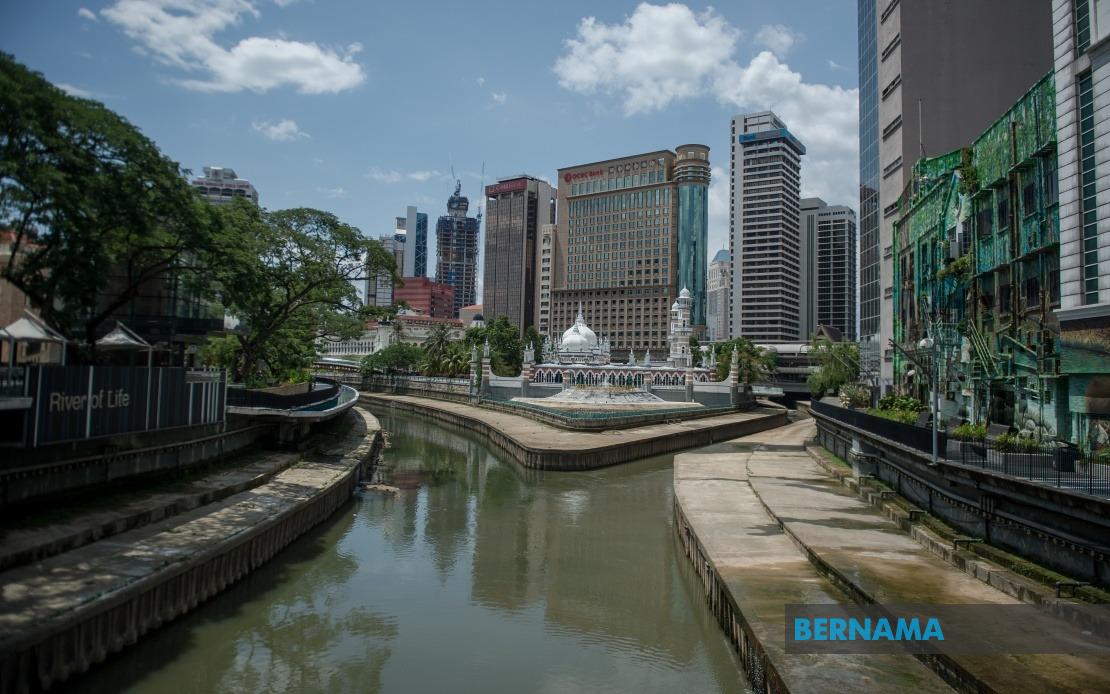
The Klang Valley's most significant waterway has undergone a substantial upgrade in its ability to handle monsoon flows and prevent catastrophic overflow, according to Landasan Lumayan Sdn Bhd, the state-backed authority overseeing the critical infrastructure work. Capacity at Sungai Klang has climbed to 22 per cent from earlier measurements below five per cent, representing a dramatic improvement in the river's resilience against the seasonal flooding that has historically plagued Shah Alam, Petaling Jaya, Kuala Lumpur and surrounding communities. The transformation stems from an ambitious 56-kilometre dredging and riverbank reinforcement initiative that has already consumed more than half of its project timeline.
Syaiful Azmen Nordin, managing director of Landasan Lumayan Sdn Bhd, unveiled the progress metrics during a briefing at the Sultan Salahuddin Abdul Aziz Shah Building in Shah Alam on August 12, emphasizing that the removal of accumulated sediment and silt represents the backbone of the enhancement strategy. Since the programme commenced in 2017, crews have extracted approximately 1.2 million cubic metres of material from the riverbed and banks, creating a wider and deeper channel capable of accommodating larger water volumes during peak rainfall events. This mechanized clearing operation has concentrated particularly on vulnerable zones such as Taman Sri Muda, where historical flood incidents have caused substantial property damage and displacement of residents.
The historical context underscores why such infrastructure investments matter for Malaysia's most urbanized state. The devastating 2021 floods that inundated numerous Selangor neighbourhoods served as a watershed moment, prompting authorities to reassess whether existing river capacity could withstand increasingly erratic weather patterns associated with climate change. Syaiful Azmen highlighted that recent waterlogging incidents were attributable to localized drainage inadequacies rather than Sungai Klang overflowing—a crucial distinction that points to the multi-layered nature of urban flood management, where river capacity forms only one component of a comprehensive system that must also include stormwater infrastructure, culvert maintenance and land-use planning.
Beyond mechanical dredging, the integrated cleanup programme has transformed the river's ecological and hydraulic condition. Over eight years, crews have recovered more than 98,000 tonnes of waste materials—ranging from discarded household items and construction debris to industrial offcuts that accumulated on the riverbed and wedged against bridge pilings. This cleanup operation, undertaken at an investment of RM19.6 million, directly improves water flow by eliminating blockages that impede the river's ability to discharge volume efficiently. The tangible results are evident in waste reduction trends: annual rubbish inflow has plummeted from 16,000 tonnes to between 5,000 and 6,000 tonnes, suggesting either improved public discipline or more effective enforcement of waste disposal regulations upstream.
Water quality metrics have correspondingly improved, climbing from the unfavourable Class 5 rating to the marginally healthier Class 3 and Class 4 classifications. While these figures may appear technical to the general public, they carry genuine implications for ecosystem resilience, reducing the river's capacity to harbour disease vectors and promoting the return of aquatic flora and fauna that had been eliminated by heavy siltation and organic pollution. For riverside communities and commercial operators dependent on the river's health, such environmental recovery translates into reduced odour complaints and improved amenity value.
The dredging initiative currently stands at 68 per cent completion, with project completion targeted for the final quarter of 2025. This timeline assumes no major delays from weather disruptions, supply chain constraints or unforeseen geological obstacles—realistic assumptions given the project's maturity and established operational protocols. The state government's role will transition once these works finish, with the Federal government assuming responsibility for the Shah Alam to Mid Valley stretch, indicating a shared governance model that reflects the political boundaries and funding mechanisms that segment large infrastructure projects across Malaysia's federal-state framework.
The ultimate objective is to elevate Sungai Klang's water-carrying capacity to 40 per cent by the time all planned dredging concludes. This 40 per cent target represents a substantial improvement over historical baseline capacity and would position the river to accommodate a significantly larger proportion of the monsoon rainfall that drains into its basin. For property owners in flood-prone areas—particularly in Shah Alam, parts of Kuala Lumpur, and low-lying Selangor suburbs—this enhancement directly correlates with reduced insurance premiums, lower risk of repeated inundation, and potentially increased property valuations.
The broader context involves Malaysia's growing awareness that climate change is intensifying precipitation events, meaning static infrastructure designed decades ago cannot adequately protect modern urban populations. The Klang Valley remains the nation's economic engine, and repeated flooding disrupts commerce, damaging inventory, disrupting supply chains and undermining investor confidence. By proactively increasing river capacity, Selangor authorities signal a commitment to protecting this critical economic region from preventable disasters, though critics might argue that such engineering solutions must be paired with stricter planning controls that prevent construction in flood-prone zones.
Public awareness campaigns launched alongside the physical improvements have contributed to behavioural change, encouraging residents and businesses to dispose of waste responsibly rather than using the river as a dumping ground. This cultural dimension complements the engineering; a 56-kilometre waterway cannot be kept clean through dredging alone if upstream pollution continues unchecked. The reduction in annual waste influx from 16,000 to 5,000–6,000 tonnes suggests that sustained messaging has produced measurable behavioural shifts, though maintaining this improvement will require permanent commitment to education and compliance monitoring.
For Malaysian policymakers and regional counterparts in Southeast Asia facing similar urbanization and climate pressures, Sungai Klang's transformation offers both a template and a cautionary tale. The template demonstrates that decades of accumulated riverbed sediment can be methodically removed at manageable cost, producing tangible capacity improvements. The cautionary element involves the time lag—eight years into a nine-year programme—and the substantial capital outlay required to move the needle on what had become a chronically challenged waterway. As other Malaysian states and regional cities confront rising flood risks, the Sungai Klang model suggests that avoiding crisis management requires sustained, multi-year commitment and integrated approaches combining engineering, environmental remediation and public engagement.

