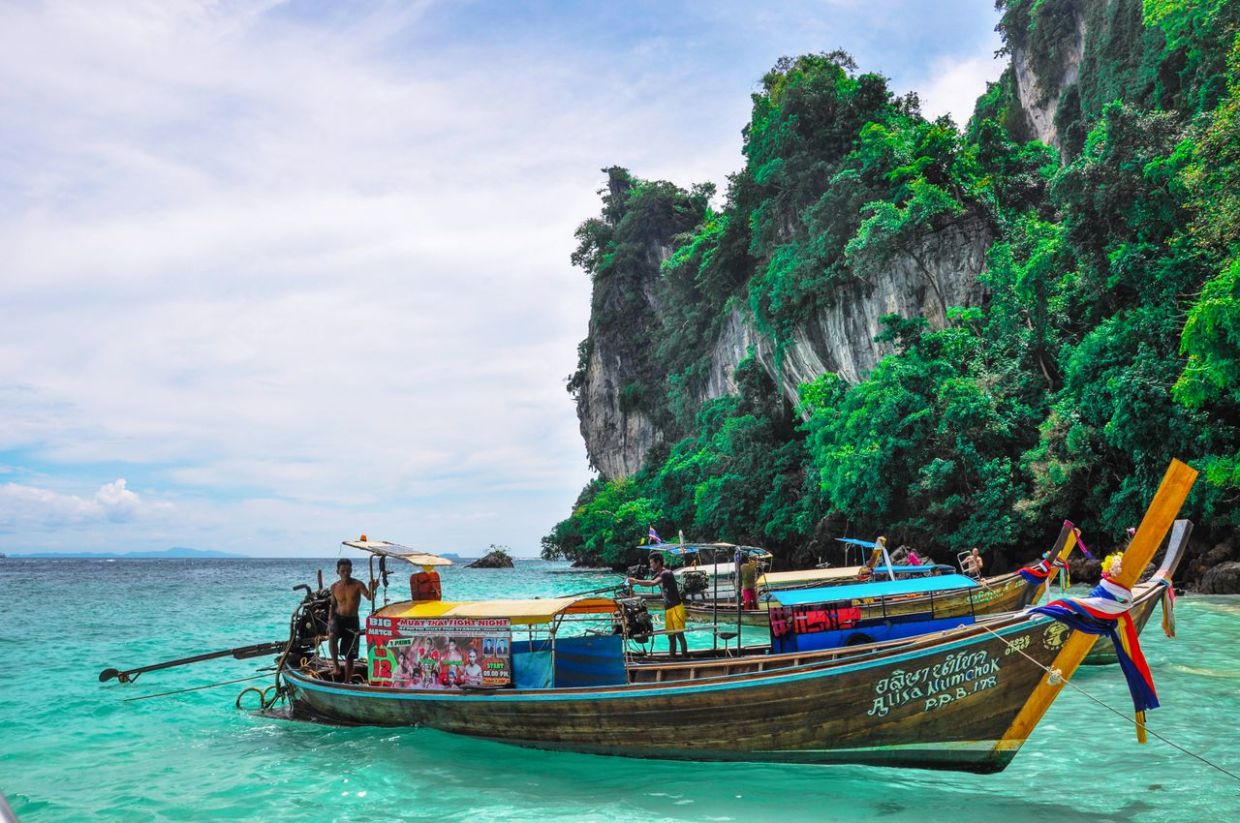
Thailand has fundamentally altered its approach to tourism after decades of pursuing volume-driven growth, now explicitly prioritising revenue per visitor over raw arrival statistics. This strategic reorientation represents a watershed moment for a nation that built one of the world's most expansive mass-tourism economies and has long measured success by climbing visitor numbers. The Tourism Authority of Thailand is targeting roughly 33 million foreign arrivals this year, a significant step down from the nearly 40 million recorded in 2019 and potentially signalling a consecutive year of decline if the figure falls below 2024's 32.97 million—a rare occurrence outside the pandemic period in nearly three decades.
The impetus behind this dramatic reversal stems from multiple converging pressures reshaping the global tourism landscape. According to Nithee Seeprae, Deputy Governor of the Tourism Authority of Thailand, deteriorating geopolitical conditions and intensifying competition across Southeast Asia have rendered the traditional mass-tourism model increasingly untenable. Rather than engaging in a costly race to the bottom with neighbouring destinations, Thailand is deliberately positioning itself in the premium segment, acknowledging that each international visitor should ideally generate significantly more economic activity and tax revenue than before.
Currently, the average foreign tourist spends approximately US$1,500 per trip, translating to roughly RM6,141. The government's aspirational target is nearly US$2,400, or approximately RM9,826, per visit—a 60 percent increase that would fundamentally reshape the tourism sector's economic profile. Despite this ambition, international tourism receipts are projected to grow only marginally this year, climbing from THB1.54 trillion in 2025 to THB1.55 trillion, equivalent to RM188.95 billion and RM190.17 billion respectively. This modest growth underscores the considerable challenge ahead: pivoting an entire industry requires time, infrastructure adaptation, and sustained strategic consistency.
The Tourism Authority is actively restructuring its international marketing efforts to reflect this philosophical shift. Recent promotional campaigns have targeted affluent population centres in Britain, specifically Oxford and Manchester, rather than the mass-market tourist hubs traditionally prioritised. Rather than generic beach and nightlife messaging, the authority is now emphasising niche tourism products with higher per-visitor spending patterns: medical tourism and wellness retreats, which attract visitors seeking healthcare and recovery experiences; cultural and sporting events including concerts, festivals, golf tournaments, and marathons; and premium leisure experiences that naturally encourage extended stays and elevated expenditure. This portfolio approach acknowledges that wealthy tourists tend to spend proportionally more during longer visits and seek bespoke, curated experiences rather than standardised packages.
The visual branding of Thailand's tourism proposition has similarly transformed. The official tourism website now prominently features luxury and wellness themes, with promotional imagery and messaging centred around personal transformation and healing, inviting visitors to "heal and become a warmer, happier you." This represents a deliberate departure from decades of imagery emphasising beaches, street food, and affordable indulgence—the historical cornerstones of Thailand's appeal to middle-income international travellers.
Perhaps the most telling manifestation of this policy reorientation involves Thailand's reversal on visa liberalisation measures. Following the Covid-19 pandemic, the government introduced various visa-friendly initiatives designed to stimulate tourism recovery through simplified entry procedures. However, authorities have now systematically rolled back these measures after identifying direct correlations between relaxed immigration controls and rising incidents of illegal employment, visa overstaying, and criminal activities involving foreign nationals. This pragmatic recalibration reveals governmental willingness to sacrifice short-term volume metrics to reduce socioeconomic friction, including crime and labour market distortions. A high-profile case exemplifying this concern involved Australian authorities being accused of attempted flight after a 17-year-old Thai girl's death in Pattaya, highlighting how mass tourism can create security vulnerabilities.
However, implementing this transition presents formidable structural challenges. Tourism now represents approximately one-fifth of Thailand's national economy—a figure exceeding 20 percent of GDP—and the entire ecosystem has evolved around high-volume operations. Hotels, restaurants, street food markets, transport operators, diving companies, and tour guides across destinations like Phuket and Chiang Mai were systematically developed to serve massive tourist populations through economies of scale. Expecting this infrastructure to pivot toward serving smaller numbers of higher-spending visitors requires fundamental business model recalibration, potentially rendering existing investments inefficient and necessitating substantial retraining of tourism workers.
Thailand's competitive position in the global tourism marketplace has simultaneously deteriorated. The nation once dominated the value-for-money tourism segment through combination of currency advantage, global cultural penetration via film and television exposure, and pre-pandemic waves of Chinese visitors. Vietnam and Indonesia have progressively captured market share in the budget-conscious traveller category, while Thailand's baht has strengthened in recent years, eroding the traditional price advantage that historically attracted middle-income international visitors. This currency appreciation, though beneficial for certain economic sectors, has directly undermined the primary mechanism through which Thailand once attracted volume tourism.
Nithee emphasises that this strategic recalibration should not be mischaracterised as exclusionary toward budget travellers. Instead, he reframes luxury tourism through a distinctly Thai lens, defining it as experiences that are personally meaningful and exclusive rather than simply expensive. This linguistic reorientation attempts to bridge ideological gaps between those concerned about tourism democratisation and those advocating for premium positioning. By emphasising experiential exclusivity rather than financial exclusivity, the Tourism Authority seeks to maintain tourism's role as an inclusive economic engine while simultaneously justifying reduced volume targets to workers dependent on tourism employment.
The implications of Thailand's reorientation extend beyond its borders. For Malaysia and other Southeast Asian nations competing for international tourism revenue, Thailand's pivot signals a recognition that mass-tourism models face increasing sustainability challenges—environmental, infrastructural, and social. If Thailand's experiment proves successful in generating higher per-capita tourism revenue with fewer arrivals, other regional destinations may reconsider their own volume-focused strategies. Conversely, if Thailand's infrastructure struggles to absorb lower volumes while maintaining profitability across the sector, the reorientation could expose vulnerabilities in attempting structural economic transformation without comprehensive industrial adaptation policies.

