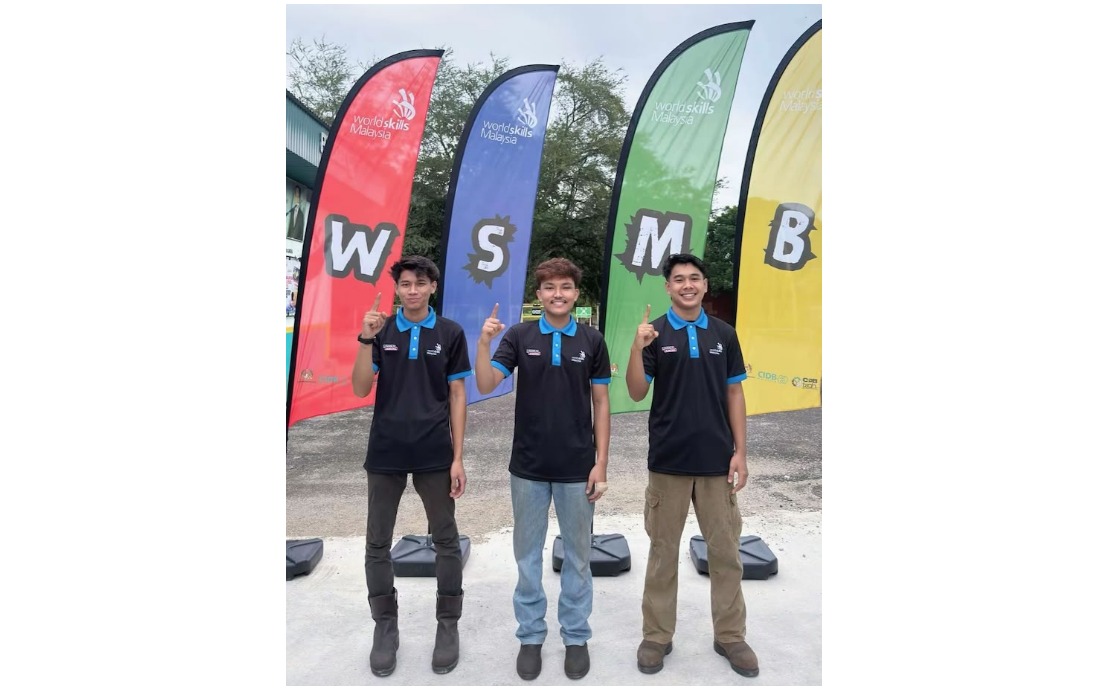
Malaysia's longest-running vocational excellence programme has quietly transformed the landscape of the construction industry for more than three decades, nurturing thousands of workers who now occupy pivotal roles across multiple economic sectors. WorldSkills Malaysia Belia (WSMB) originated from a vision set forth by fourth Prime Minister Tun Dr Mahathir Mohamad in 1990, initially branded as the Malaysian Skills Champion Competition before evolving through several iterations including the Anugerah Tangan Emas Perdana Menteri era and the MySkills phase, finally settling on its current designation in 2014.
The competition functions as far more than a showcase of technical prowess. Rather, it operates as a talent incubation system designed to identify exceptional individuals and channel them through structured development pathways that culminate in representation at WorldSkills international competitions. This progression model ensures that Malaysia's finest vocational practitioners gain exposure to global standards and international best practices, positioning them as ambassadors for the nation's technical capabilities on the world stage. The entire ecosystem is anchored by accredited training institutions including the Malaysian Construction Academy and CIDB Technologies, both of which maintain facilities and instructional infrastructure aligned with international benchmarks.
According to Mohd Hafiz Dasahi, chief executive officer of CIDB Technologies Sdn Bhd, the organisation views WSMB as fundamentally transformative for Malaysia's industrial future. Rather than simply celebrating current skills, the initiative explicitly targets the creation of professional cohorts equipped to drive systemic change within the construction sector. Dasahi emphasised that contemporary talent investment directly correlates with Malaysia's capacity to sustain competitive advantage, particularly as regional economies accelerate their adoption of advanced technologies. The training philosophy underlying WSMB deliberately integrates cutting-edge technological systems with market-validated curricula, ensuring that graduates possess both theoretical knowledge and practical readiness required by employers seeking international-standard workers.
The welding specialisation within WSMB demonstrates the granular sophistication of the evaluation framework. Zarulhakim Abdul Rahim, heading welding operations at CIDB Technologies, outlined a comprehensive assessment methodology encompassing dimensional precision, workmanship quality, procedural compliance, temporal management, analytical problem-solving capabilities, and occupational safety adherence. Beyond technical competency, participants develop psychological attributes including confidence, self-discipline, determination, and intrinsic motivation toward continuous improvement—qualities that employers consistently identify as critical differentiators in high-performing workforces.
Industry participation extends beyond passive endorsement. Lincoln Energy Sdn Bhd and affiliated enterprises recognise their institutional responsibility to support emerging talent within their sector. Sales engineer Putra Faisal Ashraf Idris articulated this commitment through active resource allocation, whereby participating companies supply welding apparatus, consumables, and expert guidance throughout competition phases. This direct industry engagement ensures that participants train on equipment configurations and methodologies reflecting authentic workplace scenarios, effectively bridging the traditional gap between academic preparation and industrial application.
Young competitors themselves articulate how WSMB accelerates their career trajectories beyond conventional apprenticeship pathways. Ahmad Syafie Dasuki, aged 20 and already boasting nearly two years of workshop experience in Terengganu, described the competition as an intensive catalyst for skill refinement. His participation exposed him to contemporary welding technologies whilst simultaneously validating that his development aligned with concrete industry requirements—a reassurance that proves psychologically significant for workers transitioning from informal training environments into formal competitive structures. For Dasuki, originating from a large family in Kelantan, the programme represented a structured mechanism for converting raw experience into recognised competency.
Muhammad Fazran Md Rashid @ Yusoff, currently employed by a welding enterprise in Kedah, articulated similar motivations centred on skill advancement and psychological development. His participation enabled simultaneous cultivation of technical expertise and personal attributes including resilience and ambition. Rather than viewing WSMB solely as a competitive endpoint, participants demonstrate sophisticated understanding of the programme's broader value proposition encompassing professional network formation and long-term career trajectory enhancement. This perspective reflects mature vocational consciousness increasingly evident among Malaysian youth engaging with skills-based advancement pathways.
Mohd Sahmi Irfan Sulaimi, representing Terengganu, actively advocates for broader youth participation, framing WSMB as a comprehensive professional development vehicle transcending simple competition participation. His articulation of programme benefits—encompassing skill consolidation, expert mentorship, professional networking, and career pathway expansion—suggests that word-of-mouth advocacy from successful participants functions as a powerful recruitment mechanism. Sulaimi's encouragement that fellow youths embrace challenges as learning opportunities reflects a psychological resilience cultivated through the competition structure itself.
From a sectoral perspective, WSMB addresses a critical manpower challenge confronting Malaysia's construction, manufacturing, energy, and maritime industries. Zarulhakim identified the competition as instrumental in producing genuinely competent workers meeting substantive industry specifications rather than merely credential-holding graduates. This distinction proves consequential: employers consistently report that WSMB-affiliated workers demonstrate superior practical capability and cultural fit compared to conventionally trained peers. The programme thereby functions as a quality-filtration mechanism, substantially reducing employer investment in remedial training and accelerating time-to-productivity for newly hired personnel.
The institutional architecture supporting WSMB reflects deliberate coordination between government training apparatus, private sector stakeholders, and international standards bodies. This tripartite structure ensures continuous curricular alignment with technological evolution and market demand fluctuations. Rather than static competency definitions, WSMB curricula incorporate dynamic industry input, ensuring that participants develop skills reflecting contemporary rather than obsolescent workplace requirements. This responsiveness to market signals distinguishes WSMB from more rigid vocational systems that frequently produce graduates whose capabilities misalign with actual employer needs.
For Malaysian policymakers and industry leaders, WSMB's sustained success over three decades provides empirical validation of skills-based workforce development as a foundational economic strategy. As regional competition intensifies and technological disruption accelerates, nations with robust talent development ecosystems—particularly those bridging vocational training and international competency standards—will increasingly attract capital investment and sophisticated manufacturing operations. WSMB's trajectory suggests that Malaysia possesses institutional capacity to sustain this competitive differentiation through continued refinement of its vocational excellence frameworks.
Looking forward, the programme's relevance appears likely to deepen rather than diminish. Demographic patterns indicate sustained labour market demand for skilled technical workers across construction-adjacent sectors, whilst advancing automation simultaneously elevates skill requirements for remaining manual and semi-manual positions. WSMB's emphasis on technology integration, continuous learning orientation, and international-standard competencies positions it as increasingly valuable within this evolving landscape. The personal testimonies of young participants suggest that vocational excellence remains an attractive pathway for ambitious Malaysian youth, particularly those seeking rapid skill monetisation and professional advancement without prolonged academic prerequisites.

