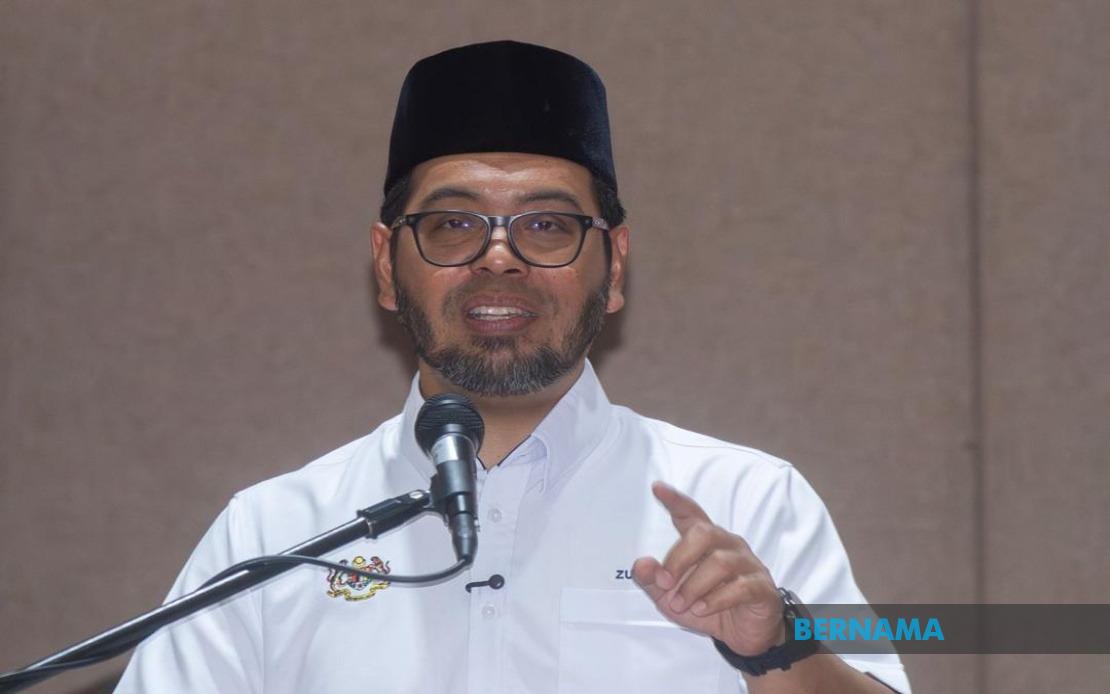
Religious Affairs Minister Dr Zulkifli Hasan has issued a stark warning about the cascading consequences of unregistered marriages, highlighting how couples who have cohabited for decades without formalising their unions through official channels expose themselves and their children to a maze of legal and practical complications. Speaking at the launch of the 2026 Federal Territories Syariah Law Literacy Programme in Labuan, Zulkifli underscored that the ramifications extend far beyond administrative inconvenience, touching every aspect of family life from fundamental identity documentation to inheritance rights.
The minister's concerns reflect a persistent gap in compliance across Malaysia's Muslim communities, where some couples have either married outside their administrative jurisdiction, utilised unauthorised marriage registrars, or simply neglected to follow the formal procedures mandated by the Islamic Family Law (Federal Territories) Act 1984 (Act 303). This regulatory oversight creates a shadow population of legally unrecognised unions, leaving vulnerable family members without the protections that official marriage registration provides. For Malaysian policymakers and legal experts, the situation represents both a bureaucratic challenge and a fundamental breach in the social safety net designed to protect citizens, particularly children.
Children born to unregistered couples face perhaps the most acute consequences. Without formal marriage documentation, obtaining birth certificates becomes an arduous process fraught with bureaucratic obstacles. This documentary gap cascades through children's lives, affecting their ability to enrol in schools, access healthcare services, and establish verified citizenship status. In Malaysia's context, where identity documentation is intrinsically linked to accessing government services and social benefits, such deficiencies can effectively render children invisible to state institutions. The psychological and practical impact on a child's development and future opportunities cannot be overstated.
Beyond education and health access, unregistered marriages create profound uncertainties about a child's legal status and lineage. Zulkifli highlighted how the absence of official recognition can cast doubt on the legitimacy of a child's parentage, raising questions that could haunt them throughout their lives. For a society where family structure and lineage hold both cultural and legal significance, these ambiguities represent a departure from established social norms and create potential social stigma. The minister's emphasis on this point suggests growing recognition within government circles that unregistered marriages undermine the foundational certainties upon which family law operates.
Wives in unregistered marriages face their own precarious circumstances. Without legal documentation of their marital status, women lose the ability to formally claim nafkah, the Islamic maintenance obligation a husband owes to his spouse. Similarly, entitlements to mutaah, the mandatory gift or compensation provided to a divorced wife, become practically unenforceable when the marriage itself lacks official recognition. These gaps create particular vulnerability for women, who may lack financial recourse should their relationship deteriorate or their husband become incapacitated. For Malaysian women's rights advocates, this remains a significant concern in efforts to strengthen spousal protections.
The inheritance complications arising from unregistered marriages represent another significant concern. When a death occurs, the absence of documented marriage creates legal ambiguity about succession rights and the application of Islamic inheritance laws (faraid). Family members may find themselves embroiled in prolonged disputes over property distribution and estate settlement, with unclear legal standing complicating the resolution process. These inheritance disputes can damage family relationships irreparably and create financial instability for surviving dependents. The government's acknowledgment of these complications suggests growing awareness that marriage registration serves as foundational documentation for orderly wealth transfer and family protection.
Recognising the scale of the problem, the Prime Minister's Department (Religious Affairs) has adopted a pragmatic, non-punitive approach to outstanding registration cases. Zulkifli emphasised that the government's intention is not to penalise couples but rather to assist them in resolving their documentation gaps. This reframing positions marriage registration as a facilitative exercise rather than a regulatory enforcement action, potentially encouraging greater voluntary compliance. The 2026 Federal Territories Syariah Law Literacy Programme exemplifies this softer approach, offering interactive counters where residents can obtain guidance and assistance in addressing their marriage registration concerns without fear of legal sanctions.
The collaborative framework supporting this initiative demonstrates institutional commitment to resolving the issue systematically. The programme brings together the Federal Territories Syariah Prosecution Department, JAWI (Federal Territories Islamic Religious Department), MAIWP (Federal Territories Islamic Religious Council), the Labuan Member of Parliament's Office, the Federal Territories Syariah Court, the Legal Aid Department, the Federal Territories Mufti Department, Tabung Haji, and YAPEIM (Yayasan Pembangunan Ekonomi Islam Malaysia). This multi-agency coordination reflects recognition that marriage registration issues often require diverse expertise spanning religious law, civil documentation, legal assistance, and administrative support.
The minister's framing of Islamic Family Law compliance as protection rather than burden represents a strategic reorientation of how religious legal requirements are communicated to the public. By emphasising that formal marriage registration safeguards family interests and prevents disputes rather than imposing unnecessary restrictions, Zulkifli attempts to shift public perception toward viewing compliance as beneficial. This messaging strategy acknowledges that cultural and religious resistance to formalisation may stem partly from misperceptions about the purpose and function of official registration. For Southeast Asian governments similarly grappling with informal marriage practices, this communication approach offers useful lessons.
For Malaysian readers and observers across the region, the minister's warnings carry particular relevance given Malaysia's diverse family law landscape. The Federal Territories operate under distinct Islamic family law provisions, yet similar issues affect other states with Muslim-majority populations. The visibility Zulkifli brings to unregistered marriage consequences may prompt similar initiatives in other jurisdictions facing comparable challenges. Furthermore, the implications extend beyond religious law to encompass citizenship verification, healthcare administration, and educational access—domains affecting Malaysia's broader population regardless of religious affiliation.
The underlying concern reflects mounting recognition that informal marriage practices, while perhaps historically tolerated within certain communities, increasingly create incompatibilities with modern state administration and citizen protection mechanisms. As Malaysia develops more sophisticated digital identity systems and integrated social services, the paper trail created by formal marriage registration becomes increasingly critical. Couples who resist registration now may eventually find themselves unable to access services, obtain loans, or resolve property disputes—creating retrospective pressure to formalise previously casual unions.
Moving forward, the success of programmes like the 2026 Federal Territories Syariah Law Literacy initiative will depend on whether the promised non-punitive approach translates into genuine accessibility and simplified procedures for resolution. If couples perceive bureaucratic obstacles, financial costs, or hidden penalties, voluntary compliance may remain limited. Conversely, if the government genuinely removes procedural barriers while maintaining supportive messaging, the initiative could significantly reduce outstanding registration cases. The stakes for Malaysia's most vulnerable citizens—unregistered children seeking basic services and documentation—could hardly be higher.

