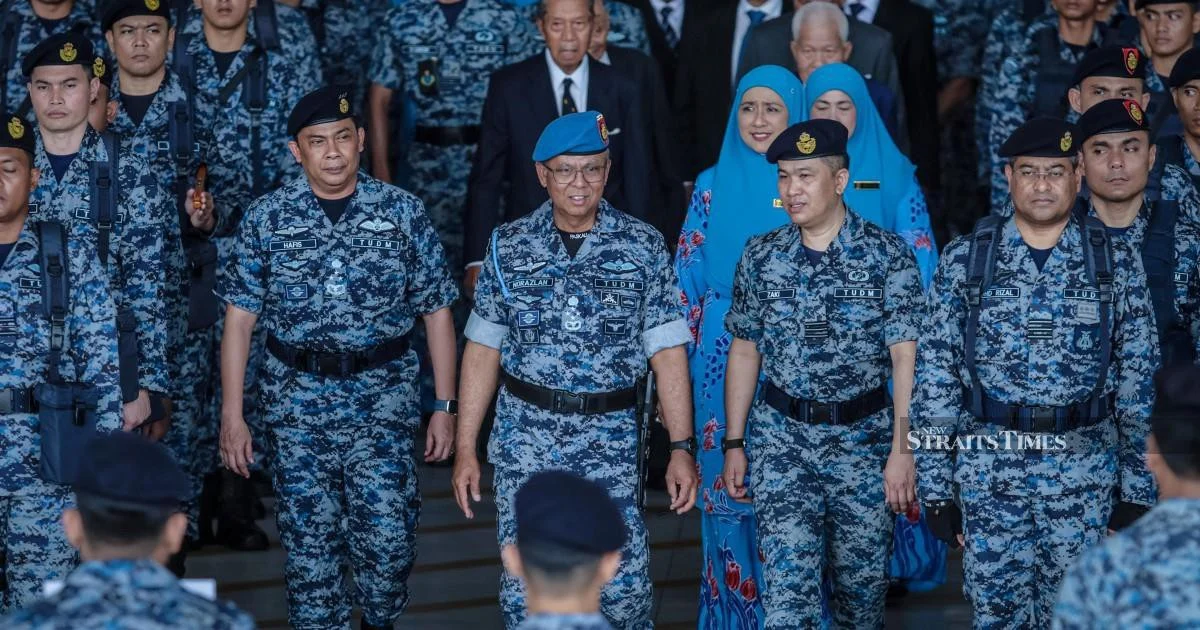
The Royal Malaysian Air Force chief has underscored the growing importance of aerial capabilities in defending the country's strategic shipping corridors, pointing to the complex security environment unfolding across Southeast Asia. Speaking from Subang, General Tan Sri Muhamad Norazlan Aris argued that military planners must treat air power as a cornerstone element of Malaysia's broader maritime security framework, particularly as geopolitical dynamics continue to shift in unpredictable ways throughout the region.
Malaysia's maritime domain presents a formidable protection challenge. The country's waters constitute some of the world's busiest shipping lanes, through which trillions of ringgit in annual commerce passes. From the Straits of Malacca to the waters off Sabah and Sarawak, Malaysian territorial seas support critical trade flows and serve as vital conduits for regional economic activity. Any disruption to these routes would reverberate throughout Southeast Asia's trading networks and expose Malaysia to significant strategic vulnerability.
The RMAF chief's statement reflects growing concern within defence circles about the adequacy of current air defence infrastructure. Contemporary maritime security threats extend beyond traditional naval confrontation. Modern vessels, advanced surveillance systems, and evolving maritime dispute dynamics mean that airborne surveillance and rapid-response aerial units have become indispensable to coastal protection. Without sufficient air capabilities, Malaysian authorities face blind spots in monitoring vast stretches of territorial and international waters where merchant shipping congregates.
Regional geopolitical tensions provide immediate context for this assessment. The ongoing competition for influence and resources among major powers creates a complex security environment that Malaysian policymakers must navigate carefully. The presence of multiple military actors, competing territorial claims, and intensified strategic competition means that maintaining effective air defence capacity serves as a deterrent against potential maritime incursions and provides essential early-warning capabilities.
Sabah and Sarawak's maritime zones demand particular attention within national defence planning. These eastern Malaysian waters have experienced recurring security incidents, ranging from foreign fishing vessel incursions to more concerning criminal activities. The vast distances involved and the limited infrastructure available place enormous demands on monitoring systems. Enhanced air power allows Malaysian forces to project presence more effectively across these expansive areas and respond rapidly to emerging threats.
Investment in air defence capabilities carries significant budgetary implications for the defence ministry. Acquiring modern fighter aircraft, conducting pilot training, maintaining sophisticated radar systems, and sustaining operational readiness require sustained financial commitment. Nevertheless, the RMAF leadership argues this expenditure represents essential investment in national security rather than discretionary spending. The cost of inadequate maritime defence—measured in economic losses, security breaches, and compromised territorial integrity—would dwarf the investment required for robust air capabilities.
The Malaysian defence establishment has grappled for years with resource constraints that limit force modernisation. Ageing aircraft, competing demands across military branches, and tight government budgets have forced difficult prioritisation decisions. The RMAF chief's statement may signal intensified advocacy within defence circles for increased air force funding and accelerated procurement programmes. Such messaging often precedes detailed defence reviews and budget allocation decisions.
International partnerships and technology transfer arrangements offer potential pathways to enhance Malaysian air capabilities without proportionally escalating defence spending. Regional defence cooperation initiatives, including information sharing with allied navies and air forces, complement domestic capabilities. Training exchanges and joint exercises build interoperability and strengthen relationships with countries sharing similar maritime security concerns.
The statement arrives amid broader regional discussions about maritime security architecture. Southeast Asian nations collectively face pressures to strengthen coastal defences while managing relationships with larger powers conducting military activities throughout the region. Malaysia's approach—emphasising air power as a defensive rather than offensive tool—aligns with regional norms and contributes to stable strategic competition.
Domestic political considerations also influence defence priorities and public messaging. The RMAF chief's emphasis on protecting economic interests through maritime security resonates with civilian populations dependent on sea trade. Framing air defence investment as essential protection for national prosperity rather than militarisation helps build public support for defence expenditure.
Looking forward, the Malaysian government faces strategic choices about force structure and capability development. The RMAF chief's assessment suggests institutional momentum toward prioritising air power within overall defence planning. Whether this translates into concrete procurement decisions and budget allocations will become apparent during defence ministry announcements and parliamentary discussions.
The broader implication extends across Southeast Asia, where several nations navigate similar maritime security challenges and budgetary constraints. Malaysia's experience in balancing defence needs with financial realities offers lessons for regional partners pursuing comparable strategic objectives. As geopolitical complexity deepens and economic interdependence through maritime trade intensifies, air power's role in coastal protection will likely receive increasing emphasis throughout the region.