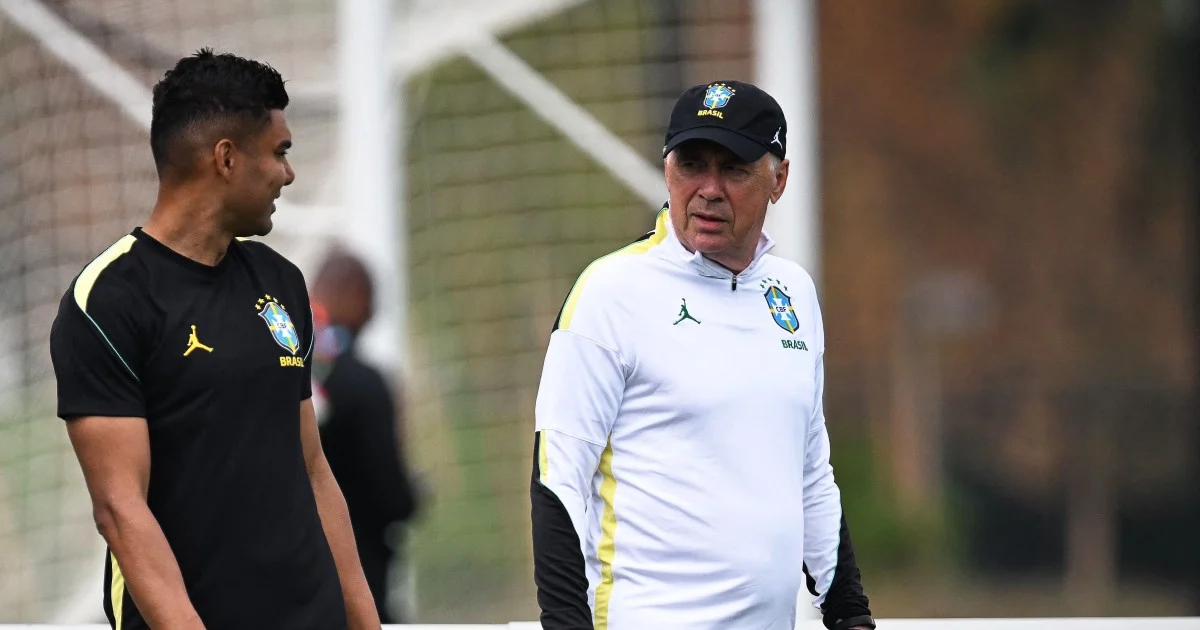
Brazil's manager Carlo Ancelotti displayed composure rather than concern following his side's underwhelming start to their World Cup campaign in Philadelphia, where the South Americans drew 1-1 with Morocco in an encounter that exposed several tactical shortcomings. The decorated Italian coach framed the forthcoming Group C encounter with Haiti as an opportunity to methodically dissect and remedy the deficiencies that were laid bare in that opening fixture, signalling a measured approach to tournament progression rather than alarm at an imperfect beginning.
The goalless first half against Morocco had proven particularly frustrating for Brazil, whose attacking prowess ordinarily dominates qualifying competitions throughout South America and beyond. While Brazil ultimately equalized through a second-half strike, the narrow margin of error demonstrated by the team suggested that their offensive machinery required fine-tuning. For supporters accustomed to witnessing their nation's typically fluid, expansive football, the display represented a departure from the standards established during regional qualifying rounds and recent friendly encounters.
Ancelotti's decision to treat the Haiti match as a corrective exercise rather than a continuation of defensive struggles underscores a pragmatic managerial philosophy. By explicitly positioning the fixture as a chance to implement adjustments and rebuild momentum, the coach signalled his conviction that the Morocco result, while disappointing, need not derail their tournament ambitions. This approach carries significant weight in World Cup football, where psychological confidence following an opening match often determines subsequent performance trajectories across a compressed group stage schedule.
The Haiti fixture presents Brazil with a considerably different tactical proposition compared to the defensive structure Morocco deployed. Haiti, typically an outsider in international competition, would be expected to approach their encounters with world powers in a more directly challenging manner rather than the cautious, counter-attacking blueprint Morocco employed. This stylistic contrast offers Brazil the opportunity to deploy their strengths without the same level of tactical constraint they experienced in their opening engagement.
For Malaysian and broader Southeast Asian observers, Brazil's situation carries instructive lessons about tournament football dynamics. The region has witnessed its own national teams participate in World Cup campaigns where opening results—whether positive or disappointing—set psychological frameworks for subsequent matches. Ancelotti's measured response demonstrates how experienced coaching staff navigate the psychological minefield of group stage football, where momentum, confidence, and tactical adjustment intertwine with technical execution.
Brazil's depth of talent across midfield and attack positions provides Ancelotti with multiple strategic options for recalibrating his team's approach. The squad roster includes versatile playmakers capable of orchestrating possession-based football or transitional sequences, giving the manager flexibility in how his side constructs attacking phases. The Morocco encounter had suggested that finding the optimal balance between possession security and incisive final-third movement remained a work in progress, a challenge frequently encountered by traditional powerhouses accustomed to dominating weaker opponents.
The broader context of Brazil's World Cup history reveals a programme often characterized by confident recovery from opening stumbles. Multiple previous campaigns have demonstrated the squad's capacity to absorb early setbacks and rebuild through successive group matches, ultimately reaching the knockout stages as a confident, fully functional unit. Ancelotti's calm demeanour reflects confidence in this historical precedent and his own tactical acumen to effect necessary adjustments.
Haiti's presence in the tournament itself represents significant achievement for Caribbean football, making them a formidable psychological opponent regardless of relative quality levels. Brazil must navigate the challenge of maintaining tactical discipline whilst implementing offensive adjustments, avoiding the complacency that sometimes afflicts superior sides when facing perceived underdog opponents. The Haiti encounter therefore serves multiple purposes: fixing Morocco-exposed flaws whilst maintaining the psychological edge necessary for tournament progression.
Ancelotti's refusal to panic also reflects modern championship football's premium on stability and process-oriented improvement over reactive desperation. Coaching staff at this level understand that early tournament pressure often produces suboptimal decision-making when managers respond emotionally to opening results. By maintaining equilibrium and positioning the Haiti match as a structured opportunity for tactical enhancement, Ancelotti models the composure expected of experienced tournament operators.
For Brazil's supporters and analysts across South America and the wider football world, Ancelotti's response provided reassurance that temporary performance dips need not trigger wholesale team reconstruction or panic-driven tactical overhauls. The challenge now lies in converting this measured confidence into concrete improvements during the Haiti fixture, ensuring that identified weaknesses against Morocco become subjects of genuine correction rather than merely forgotten frustrations displaced by the next match.