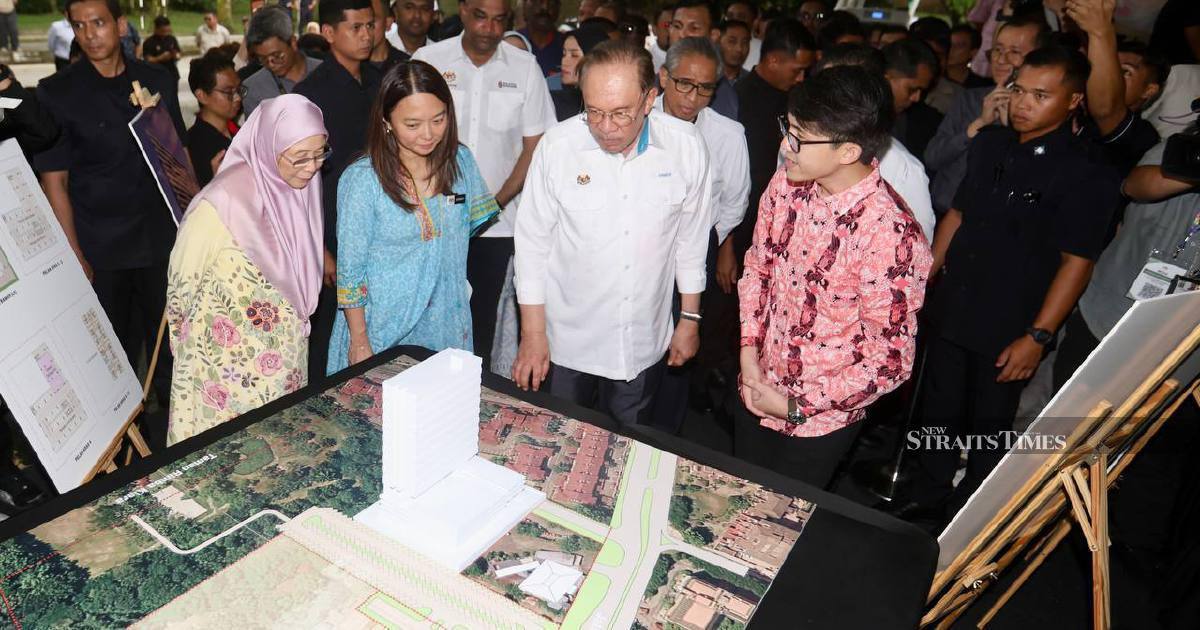
Prime Minister Datuk Seri Anwar Ibrahim has pushed back against criticism that his government neglects the welfare of the urban poor, arguing that recent development initiatives demonstrate a genuine commitment to safeguarding the rights and dignity of Malaysia's most economically vulnerable citizens. The Prime Minister's remarks come amid broader policy debates surrounding rapid urbanisation and property development across the nation's major cities.
The Bukit Kiara project has become a focal point in this discourse, serving as the government's flagship example of how large-scale urban development can proceed while simultaneously protecting the interests of existing communities. Rather than displacing low-income residents without recourse, the initiative is framed as evidence that contemporary development policies integrate social considerations into planning frameworks. This messaging is particularly significant given persistent complaints from urban settlements about inadequate consultation and insufficient compensation when development projects encroach on residential areas.
The government's position reflects an attempt to reconcile the competing pressures of economic modernisation with social equity. Malaysia's rapid urban growth has created tensions between property investors seeking prime city land and long-established communities often comprising lower-income households who cannot afford spiralling property values. For administrations balancing development ambitions with electoral support in urban centres, finding this equilibrium remains persistently challenging. The Bukit Kiara project represents an explicit effort to demonstrate that this middle ground is achievable.
Anwar's emphasis on this particular development scheme underscores the political salience of urban poverty in Malaysian politics. Low-income urban dwellers, though numerically smaller than rural populations, represent crucial voting blocs in federal territories and major city councils where political margins often prove razor-thin. Consequently, how the government manages their interests carries disproportionate electoral weight compared to the actual size of this demographic group. Recent elections have shown that urban voters increasingly prioritise bread-and-butter issues including housing affordability, cost of living, and protection from displacement.
The framing of Bukit Kiara as a proof-of-concept for rights-conscious development also addresses international narratives about Malaysia's developmental trajectory. As the country seeks to attract foreign investment and maintain credibility with multilateral institutions, demonstrating ethical urban governance matters beyond domestic politics. The government appears conscious that poor reviews of its social policies could impact perceptions of Malaysia's business environment and governance standards in the eyes of international actors.
However, the government's assertion requires scrutiny against a broader backdrop. Urban poverty in Malaysia persists despite decades of development, manifesting in sprawling informal settlements, inadequate public housing supply, and precarious employment in the gig economy. Whether individual projects, however well-intentioned, can address systemic challenges remains debatable. Critics argue that isolated initiatives cannot substitute for comprehensive housing policy reform and living wage standards that would structurally improve conditions for the urban poor.
The Bukit Kiara project itself exemplifies both the promise and limitations of project-based solutions. When implemented properly with genuine community consultation and fair compensation mechanisms, such initiatives can demonstrate that development need not be zero-sum. Yet individual successes do not automatically translate into systemic change across Malaysia's many neighbourhoods and communities facing similar pressures. The government's reliance on highlighting specific projects suggests awareness that comprehensive urban poverty reduction remains incomplete.
For Malaysian readers and regional observers, Anwar's emphasis on protecting the urban poor carries additional significance given his historical positioning as a reformer concerned with equity and accountability. His premiership has been watched closely as a test of whether substantive policy shifts toward more inclusive development can materialise. The government's heavy promotion of Bukit Kiara as evidence of these commitments indicates ongoing efforts to translate reform rhetoric into visible outcomes that constituent communities can point to as tangible improvements.
Looking forward, the government faces pressure to expand and replicate whatever protections and inclusive mechanisms the Bukit Kiara project implements across other development sites. Urban poor communities elsewhere will watch closely to determine whether this project represents genuine policy reorientation or merely public relations management. For policymakers across Southeast Asia grappling with similar tensions between urban growth and social inclusion, Malaysia's approach offers useful lessons in both the possibilities and pitfalls of attempting rights-conscious development in increasingly expensive city centres.