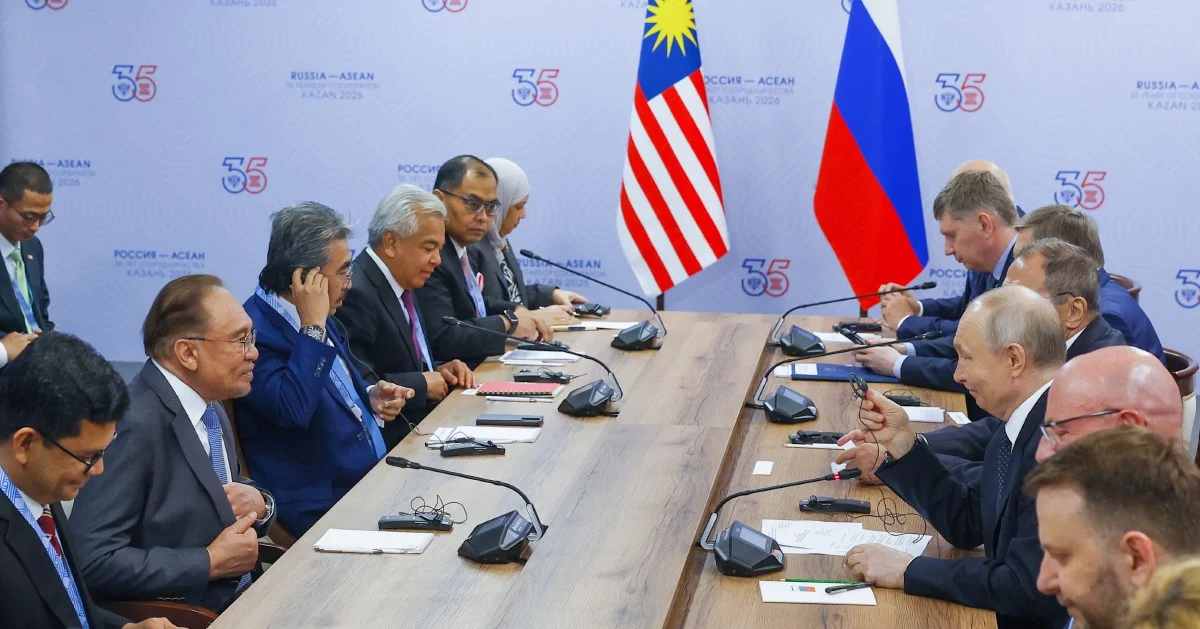
Prime Minister Datuk Seri Anwar Ibrahim has conveyed Malaysia's appreciation to Russian President Vladimir Putin for Moscow's willingness to strengthen energy sector cooperation, with particular emphasis on collaboration involving Petroliam Nasional Bhd, the country's national oil and gas corporation. The expression of thanks came during discussions in Kazan, where the Malaysian leader sought to solidify ties between two nations with significant roles in global energy markets.
The acknowledgement reflects Malaysia's strategic pivot toward diversifying its energy partnerships beyond traditional Western markets. For a country whose economy remains substantially dependent on petroleum revenues and where Petronas functions as a critical revenue generator, cultivating relationships with major energy-producing nations like Russia takes on heightened significance. The emphasis on Putin's personal backing suggests high-level political commitment to removing bureaucratic obstacles that might otherwise impede bilateral energy ventures.
Malaysia's engagement with Russia in the energy domain carries implications for Southeast Asian energy security and pricing dynamics. As global oil markets remain volatile and geopolitical tensions continue to reshape supply chains, stronger connections between Kuala Lumpur and Moscow could provide Malaysia with alternative channels for energy-related investments, technology transfer, and market access. This is particularly relevant given Malaysia's own substantial oil and gas reserves and its ambitions to maintain competitive positioning in regional and global markets.
Petronas itself stands to benefit considerably from enhanced cooperation frameworks. The national corporation has historically pursued international expansion, particularly in upstream exploration and production activities across multiple continents. Russian expertise in Arctic drilling, deepwater technologies, and liquefied natural gas production could offer valuable learning opportunities and potential joint ventures that strengthen Petronas's technical capabilities and global footprint.
The timing of these discussions reflects broader geopolitical realignments occurring across Asia. Malaysia, like many Southeast Asian nations, has sought to maintain pragmatic relationships across different global blocs rather than aligning exclusively with any single power. This balancing approach has allowed the country to preserve economic opportunities while managing diplomatic relationships. Energy cooperation with Russia exemplifies this balanced foreign policy, particularly as Malaysia simultaneously maintains robust energy partnerships with Western nations, China, and other regional players.
From a Malaysian domestic perspective, expanded energy cooperation could yield tangible economic benefits. Joint ventures, technology partnerships, and investment flows in the energy sector create employment opportunities, generate government revenues, and stimulate related industries including petrochemicals, manufacturing, and services. Infrastructure development required to support enhanced energy cooperation might also catalyze broader economic activity across different regions of Malaysia.
The energy sector remains fundamental to Malaysia's economic strategy, particularly as the nation transitions toward becoming a high-income country. Petronas, as the primary vehicle for capturing energy wealth, requires continuous renewal of international partnerships to remain globally competitive. Cooperation with Russia could enhance Petronas's ability to access new reserves, deploy advanced technologies, and participate in emerging energy markets, thereby ensuring the corporation's relevance as global energy transitions accelerate.
Regional stability considerations also underpin Malaysia's energy diplomacy. Southeast Asia's geographical position between major energy producers and consumers makes the region inherently connected to global energy security. Malaysia's efforts to deepen energy ties with diverse partners contribute to creating more resilient regional supply chains and reducing dependency on any single source or corridor. This approach aligns with broader Southeast Asian aspirations for reducing vulnerability to external disruptions.
The reference to Putin's specific backing is noteworthy, suggesting that energy cooperation may extend beyond corporate-level dealings to encompass state-level strategic initiatives. Such elevated engagement typically facilitates faster resolution of regulatory issues, preferential treatment in licensing arrangements, and clearer frameworks for long-term investment. For Malaysian entities like Petronas, having explicit government-to-government support substantially reduces transaction costs and regulatory uncertainty when negotiating with Russian counterparts.
Looking forward, the strengthening of Malaysia-Russia energy ties raises questions about the specific domains of cooperation that will be prioritized. These could range from exploration and production partnerships to downstream refining collaborations, from technology development initiatives to trading arrangements for oil and gas products. Each avenue presents distinct opportunities and challenges, requiring careful calibration of Malaysia's strategic interests against potential geopolitical complications.
The broader context involves Malaysia's energy transition planning. As global pressure mounts for decarbonization, energy cooperation must accommodate both traditional hydrocarbon production and emerging renewable and clean energy initiatives. Whether Malaysia-Russia collaboration encompasses only conventional energy or extends to technologies supporting the global energy transition remains an important consideration for policymakers assessing long-term strategic alignment.
This renewed emphasis on energy cooperation demonstrates Malaysia's continued determination to leverage its natural resources effectively on the international stage. For Petronas and the Malaysian economy, strengthened institutional linkages with Russia represent opportunities to access new markets, technologies, and investment capital that could drive sustainable growth in the energy sector for years to come.