Prime Minister Datuk Seri Anwar Ibrahim has publicly commended Russian President Vladimir Putin and Chinese President Xi Jinping for their advocacy of peaceful resolution and their condemnation of atrocities affecting civilians in Gaza, Iran and Lebanon. The remarks underscore Malaysia's diplomatic positioning as it navigates geopolitical tensions whilst maintaining what officials describe as principled independence from superpower influence.
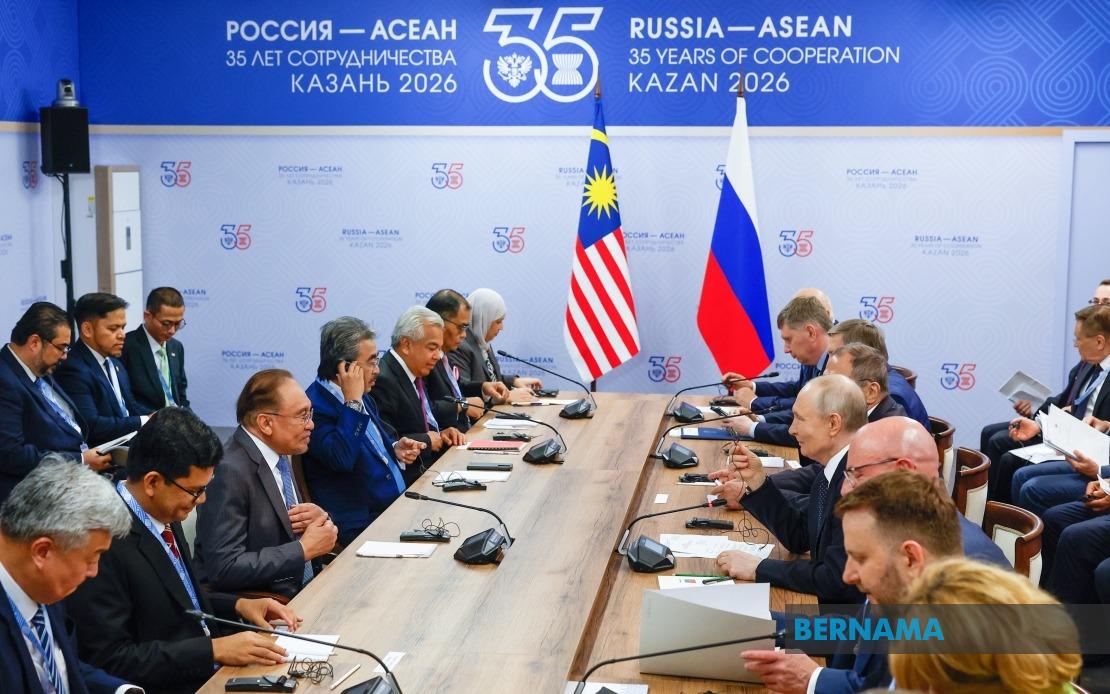
Anwar articulated Malaysia's approach during an exclusive interview with Russia's international broadcaster RT, held whilst attending the Commemorative Summit in Kazan marking 35 years of ASEAN-Russia diplomatic ties. The timing reflects Kuala Lumpur's strategic engagement with Moscow and broader efforts to build consensus among nations advocating restraint in Middle Eastern conflicts. Malaysia has consistently opposed what it characterises as aggressive regional actions, securing bipartisan parliamentary backing for its foreign policy stance on these issues.
The Malaysian leader outlined his extensive diplomatic consultations across multiple regions, noting that he has engaged counterparts from the Gulf Cooperation Council states, Pakistan, Türkiye and Iran in pursuit of what he terms a fair and equitable resolution. This multi-track engagement strategy demonstrates Malaysia's commitment to dialogue-based solutions rather than alignment with particular blocs. The breadth of these engagements reflects Kuala Lumpur's positioning as a bridge-builder among diverse regional and international players with varying strategic interests.
Crucially, Anwar distinguished between what Malaysia describes as "centrality" and neutrality, a conceptual distinction that carries significant implications for how Southeast Asian nations navigate great power competition. Under this framework, Malaysia does not claim to be impartial observers standing apart from conflicts, but rather principled actors who refuse ideological commitment to any superpower whilst reserving the right to speak against human rights violations and atrocities. This formulation allows Malaysia to maintain diplomatic flexibility whilst avoiding accusations of indifference to humanitarian crises.
The Prime Minister directly critiqued what he characterised as Western inconsistency in its application of international principles. He highlighted the apparent contradiction between declared support for national sovereignty and international law when applied to Western-aligned nations versus others, particularly regarding Israel's military actions and American backing for those operations. This critique resonates with longstanding Southeast Asian frustrations about the selective application of global governance standards by powerful nations claiming to uphold universal values.
Anwar specifically addressed the lack of international censure directed toward Iran's own responses to regional aggression, contending that whilst Iran's actions merit scrutiny, the silence surrounding attacks against Iranian interests constitutes a troubling double standard. He framed this disparity as symptomatic of a broader hypocrisy in how the international community evaluates state behaviour depending on geopolitical alignments. For Malaysian audiences, this argument connects to deeper concerns about whether international law genuinely protects smaller nations or merely serves the interests of powerful countries.
The tension between maintaining independent foreign policy and managing relationships with major powers represents a persistent challenge for Malaysia and other ASEAN members. Anwar's comments reflect awareness that Southeast Asia increasingly faces pressure to choose sides as Sino-American rivalry intensifies. By publicly acknowledging Russia and China's peace advocacy whilst criticising Western positions, Malaysia signals that it will evaluate international conduct on principle rather than through partisan loyalty, though this balancing act carries inherent risks.
For the broader ASEAN region, Malaysia's articulated position reinforces collective anxieties about the bloc's capacity to maintain centrality amid superpower competition. Anwar's distinction between refusing superpower ideology while condemning atrocities represents an attempt to occupy middle ground that preserves both principled engagement and diplomatic maneuverability. However, whether major powers will respect ASEAN's claimed centrality remains uncertain, particularly as regional conflicts increasingly intersect with great power interests.
The Malaysian leader's framing also reflects domestic political considerations. Positioning Malaysia as an independent actor defending humanitarian principles appeals to constituencies concerned about foreign intervention whilst addressing public sentiment regarding Middle Eastern conflicts. The bipartisan parliamentary support Anwar mentioned indicates that opposition parties have largely aligned with government positions on these issues, suggesting genuine consensus rather than partisan manoeuvring.
Moving forward, Malaysia faces the challenge of translating rhetorical commitment to centrality into concrete diplomatic outcomes. Anwar's engagement with multiple regional stakeholders suggests Kuala Lumpur aims to facilitate dialogue and prevent escalation, though the complexity of Middle Eastern politics and the depth of great power involvement limit any single nation's influence. For Southeast Asia broadly, Malaysia's approach represents a model for how smaller nations might assert principled positions whilst avoiding confrontation with major powers, though the sustainability of this approach depends on international circumstances beyond regional control.