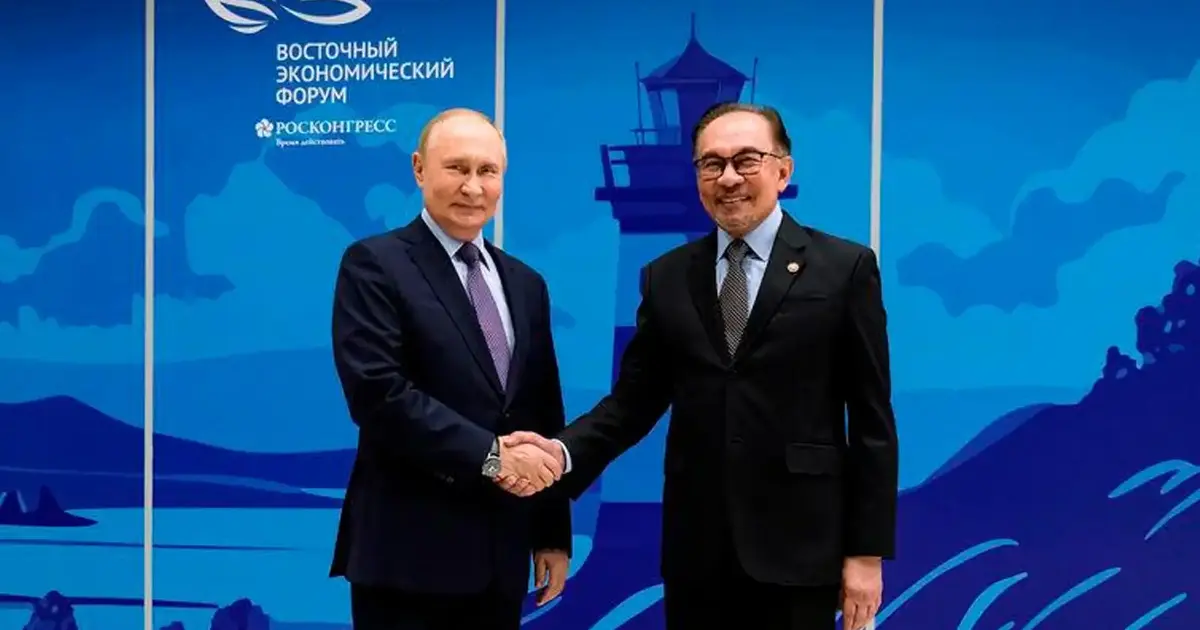
Prime Minister Anwar Ibrahim is preparing for a working visit to Russia beginning tomorrow, during which he intends to raise matters concerning Malaysia's fuel supply in direct talks with Russian President Vladimir Putin. The engagement forms part of a broader diplomatic initiative involving multiple ASEAN leaders, indicating the region's growing interest in strengthening ties with Moscow on matters of strategic importance, particularly energy security.
The timing of this visit reflects Malaysia's pragmatic approach to energy diversification. As a nation with significant energy requirements to sustain its industrial base and growing economy, Malaysia has long sought to expand its supply partnerships beyond traditional sources. The Middle East remains a crucial energy supplier, but engagement with Russia presents an opportunity to reduce dependency concentration and secure more favourable long-term arrangements. This diplomatic overture demonstrates Malaysia's willingness to engage with major global powers regardless of geopolitical tensions that have characterised international relations in recent years.
The inclusion of other ASEAN leaders in formal discussions with Russian leadership underscores the collective regional interest in energy cooperation. Southeast Asia as a whole faces mounting energy demands driven by industrialisation, urbanisation, and rising living standards across member states. By presenting a united ASEAN voice, participating nations can potentially negotiate more advantageous terms and strengthen their collective bargaining position in global energy markets. This coordinated approach also signals to global energy suppliers that Southeast Asia remains an important market worthy of serious commercial and strategic consideration.
Energy security has become increasingly central to Malaysia's domestic and foreign policy agenda. The country maintains domestic oil and natural gas production, but these reserves are finite and production levels have gradually declined over recent years. Importing liquefied natural gas represents a significant portion of Malaysia's energy budget, and fuel costs directly impact everything from electricity prices to manufacturing competitiveness. Any agreement that could stabilise supply or improve pricing terms would have tangible benefits for ordinary Malaysian households and the broader economy.
Russia's position as a major global energy exporter, particularly in natural gas markets, makes it a logical partner for Malaysia's energy planners. Despite international sanctions imposed over the Ukraine conflict, Russia continues to export energy resources to willing buyers across Asia, where geopolitical considerations are often balanced against pragmatic economic interests. For Malaysian policymakers, accessing Russian energy supplies could provide useful diversification without necessarily requiring alignment on contentious international issues.
The diplomatic format of combining bilateral discussions with multilateral ASEAN engagements reflects contemporary Southeast Asian diplomacy practices. Rather than isolated bilateral meetings, modern high-level visits increasingly incorporate both formats, allowing leaders to address bilateral concerns while also positioning their nations within broader regional frameworks. This approach acknowledges that energy security cannot be divorced from ASEAN's collective interests in regional stability and economic prosperity.
Anwar's leadership has been characterised by attention to pragmatic economic considerations and willingness to engage with diverse international partners. This Russia visit aligns with his broader vision of positioning Malaysia as a nation comfortable navigating complex geopolitical terrain while prioritising national economic interests. His administration has sought to balance relationships across major power blocs, a strategy particularly relevant for a nation dependent on stable energy supplies and open global trade routes.
The meeting carries significance beyond immediate fuel supply negotiations. Discussions between ASEAN leaders and Russian officials could address broader questions of regional security, trade relationships, and Russia's role in Asian affairs. For Russia, maintaining constructive engagement with Southeast Asia remains important given its strategic interests and desire to counterbalance Western influence in the region. The visit therefore represents mutual recognition of importance between Malaysia, ASEAN collectively, and the Russian Federation.
Energy prices and supply reliability directly influence Malaysia's inflation rates, currency stability, and international competitiveness. Any arrangements emerging from these discussions could have ripple effects across Malaysian society, from fuel pump prices to industrial production costs. The government's attention to these matters through high-level diplomatic engagement demonstrates commitment to economic management and protection of Malaysian interests in international markets.
For investors and businesses monitoring Malaysia's energy strategy, this visit signals continued government focus on securing stable, diversified fuel supplies essential for long-term economic planning. Companies dependent on energy-intensive production will be particularly attentive to outcomes, as will electricity providers and consumers concerned about utility costs. The broader message conveyed is one of active, engaged leadership pursuing Malaysia's interests across the global stage.