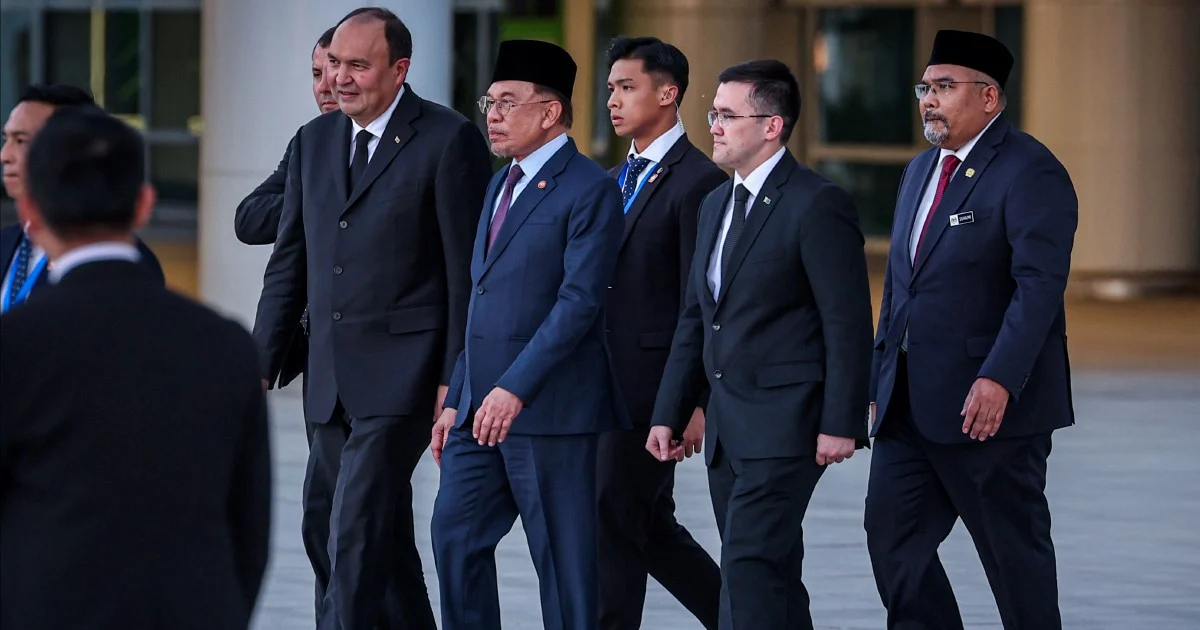
Prime Minister Datuk Seri Anwar Ibrahim is set to conclude his official visit to Turkmenistan with a packed schedule of top-tier meetings designed to advance Malaysia's economic and strategic interests in Central Asia. The concluding day of diplomatic engagement in Ashgabat will feature several significant discussions focused on strengthening bilateral trade relations and attracting mutual investment opportunities between the two nations.
Turkmenistan's strategic location along the eastern coast of the Caspian Sea positions it as a crucial gateway for Malaysia to engage with Central Asian markets. The nation serves as a vital connector between East and West, controlling significant energy resources and sitting at the crossroads of major trade corridors. For Malaysian businesses seeking to expand into this region, establishing robust diplomatic foundations through high-level government engagement is essential to building lasting commercial partnerships.
Anwar's visit represents a deliberate effort to elevate Malaysia-Turkmenistan relations beyond ceremonial exchanges. The scheduled talks will provide opportunities to explore specific sectors where both nations can collaborate, from energy and infrastructure development to technology transfer and manufacturing partnerships. Such engagements typically result in concrete memoranda of understanding that create frameworks for subsequent business deals and knowledge sharing.
The timing of this visit carries particular significance in Malaysia's broader regional strategy. As the Southeast Asian nation continues diversifying its international partnerships and reducing dependency on traditional trading partners, engagement with Central Asian states becomes increasingly valuable. Turkmenistan, with its substantial hydrocarbon reserves and infrastructure development ambitions, offers compelling opportunities for Malaysian companies in engineering, construction, and technology sectors.
Central Asia has historically remained peripheral to Southeast Asian business considerations, yet this perception is rapidly shifting. Malaysian investors are increasingly recognizing the untapped potential in markets across Kazakhstan, Uzbekistan, and Turkmenistan. Government-level diplomatic visits serve as crucial catalysts, signalling to the private sector that these markets warrant serious commercial attention and that official support exists for ventures in the region.
Turkmenistan's economy, heavily dependent on natural gas exports and state-controlled enterprises, requires foreign direct investment to modernize its infrastructure and diversify its economic base. Malaysia, with its experience in managing sovereign wealth funds and developing advanced infrastructure projects, possesses expertise that Turkmenistan seeks. Similarly, Malaysian companies have demonstrated capability in sectors ranging from hospitality and real estate to renewable energy, all areas where Turkmenistan is actively seeking development.
The diplomatic engagement also addresses geopolitical considerations. Malaysia's position as a middle-power with strong ASEAN credentials and moderate Islamic credentials makes it an attractive partner for Central Asian nations seeking to strengthen ties with Asia-Pacific regions without triggering concerns from traditional power blocs. This strategic positioning enhances Malaysia's ability to negotiate mutually beneficial agreements.
Previous high-level visits between Southeast and Central Asia have yielded tangible results. Malaysian delegation visits to Tajikistan, Kyrgyzstan, and other Central Asian states have preceded significant business developments, including joint ventures in telecommunications, food processing, and manufacturing. The Turkmenistan visit follows this established pattern of using official diplomacy to unlock commercial opportunities.
The discussions during Anwar's final day are expected to address not merely trade volumes but also the regulatory and procedural frameworks that facilitate business between nations. Simplifying visa procedures, establishing investment protection agreements, and creating mechanisms for resolving commercial disputes all form part of substantive bilateral talks at this level. These foundational arrangements often prove more valuable than headline figures in enabling sustained commercial growth.
For Malaysian companies, successful penetration of Central Asian markets requires understanding local business culture, regulatory environments, and partnership practices. Government-level visits help establish official channels through which Malaysian enterprises can access market information, identify potential partners, and navigate bureaucratic requirements. Anwar's engagement with Turkmen counterparts signals official Malaysian backing for business expansion into the region.
The energy sector represents one obvious area of potential cooperation. While Malaysia is not an energy-deficit nation like some regional peers, Malaysian companies have substantial expertise in downstream energy sectors, petrochemical processing, and energy-related infrastructure development. Turkmenistan's vast natural gas reserves and ongoing modernization initiatives create demand for precisely these capabilities.
Beyond commercial dimensions, the visit contributes to Malaysia's diplomatic objectives in Central Asia. Building relationships with Central Asian nations enhances Malaysian influence in international forums, strengthens cooperation on security matters, and creates opportunities for cultural and educational exchanges. The Central Asian region increasingly matters to global affairs, from energy security to emerging technology corridors, making strategic engagement valuable for nations seeking broader international influence.
As Malaysia increasingly positions itself as a bridge between different regions and civilizations, Central Asia represents an important frontier. Anwar's Turkmenistan visit exemplifies this strategic approach, combining ceremonial diplomacy with pragmatic commercial objectives. The high-level talks scheduled for the final day will likely establish momentum for subsequent business initiatives, government-to-government cooperation projects, and expanded people-to-people exchanges that strengthen ties between these geographically distant but potentially complementary economies.