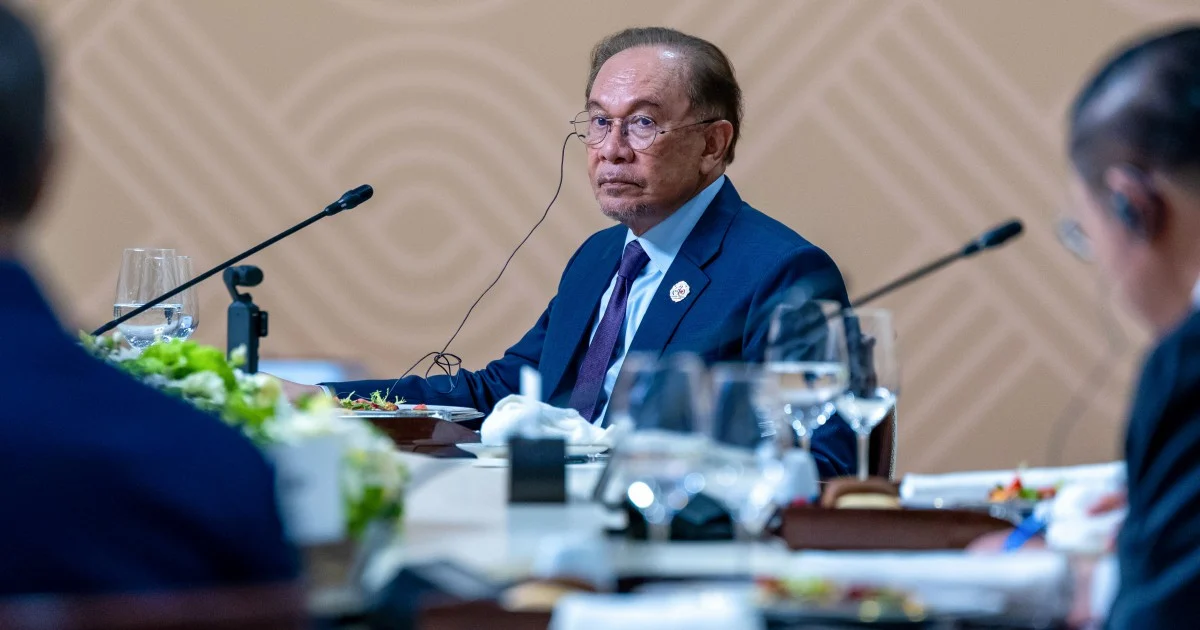
Prime Minister Datuk Seri Anwar Ibrahim has issued a sharp warning that developing countries across the Global South could increasingly look beyond traditional Western partnerships if European nations persist in what he characterises as discriminatory treatment. Speaking in Kuala Lumpur, Anwar referenced a specific defence-related dispute involving Norway to illustrate the broader frustration within the developing world over what many perceive as inconsistent or unfair standards applied by wealthy nations.
The remarks reflect growing tensions between developed European economies and emerging nations as the international order undergoes significant realignment. Anwar's comments signal Malaysia's willingness to pivot towards other strategic partners if Western nations fail to engage with developing countries on equitable terms. This stance is particularly significant given Malaysia's historical positioning as a bridge between the Global North and South, and its increasing prominence within ASEAN as a voice advocating for the interests of middle-income nations.
The underlying issue touches on broader geopolitical fault lines that have become increasingly visible in recent years. European countries, which have long positioned themselves as champions of international rules and norms, are facing accusations from developing nations of applying double standards when their strategic or economic interests are at stake. The Norway dispute, while specific in nature, appears to exemplify what Anwar views as a pattern of behaviour that disadvantages smaller developing economies while wealthier nations secure preferential treatment.
Malaysia's perspective carries particular weight within Southeast Asia and the broader developing world. As a nation that maintains economic and strategic relationships across multiple regions, Malaysia has demonstrated its ability to leverage partnerships with various powers. Anwar's warning suggests that if Western nations do not recalibrate their approach, Malaysia and similar countries may accelerate existing moves towards deepening ties with Asian powers, Middle Eastern partners, and other non-Western blocs.
The comments come at a moment when developing nations are increasingly asserting themselves in global affairs. The expansion of multilateral institutions like BRICS, the Belt and Road Initiative's continued expansion, and growing South-South cooperation mechanisms demonstrate that alternatives to traditional Western-led frameworks are becoming increasingly viable and attractive. Anwar's remarks essentially signal that Malaysia views these alternatives as legitimate options if the West proves unwilling to engage fairly.
For Malaysia specifically, the warning carries domestic political significance. It reflects the government's commitment to defending national interests and resonates with domestic constituencies that view Western interference or unfair treatment as a lingering colonial legacy. Anwar, throughout his political career, has positioned himself as a champion of developing world interests and a critic of perceived Western hypocrisy regarding democracy and human rights standards.
The Norway situation, though not detailed extensively in public commentary, highlights how defence and security matters remain particularly sensitive. These areas often expose different standards applied to developed versus developing nations, whether regarding technology transfer, military procurement procedures, or adherence to international agreements. When wealthy nations block access to certain capabilities or impose conditions that developing countries view as discriminatory, it creates friction that extends beyond the immediate bilateral relationship.
Anwar's intervention also reflects Malaysia's role within ASEAN as a spokesperson for regional interests in dealings with external powers. Southeast Asian nations have collectively sought to maintain strategic autonomy while benefiting from relationships with multiple partners. Malaysia, with its Muslim-majority population and Islamic identity, also bridges different regional and civilisational blocs, giving its leadership comments particular resonance in discussions about global fairness and representation.
The statement implies that Malaysia and other developing nations are reaching the limits of their patience with arrangements they perceive as unjust. Rather than accepting unequal treatment as inevitable, Anwar frames alternative partnerships as a logical consequence of how European nations conduct themselves. This reframing represents a shift from a posture of supplication to one of agency and choice.
Looking forward, Anwar's comments will likely influence how other developing nations articulate their grievances with Western powers. Malaysia's willingness to openly acknowledge that alternatives exist may embolden similar statements from other regional leaders. It also puts pressure on European governments to examine whether their policies towards developing nations genuinely reflect the equitable principles they espouse or whether inconsistencies have become too glaring to ignore.
The broader implications extend to Malaysia's foreign policy trajectory over the coming years. If European nations do not respond constructively to such warnings, Malaysia may continue strengthening relationships with partners in Asia, the Middle East, and Africa at the expense of traditional Western ties. For investors and businesses, this suggests that the Malaysian government is actively evaluating its strategic partnerships and willing to rebalance them if circumstances warrant such moves.