Prime Minister Datuk Seri Anwar Ibrahim has concluded a strategically important two-day working visit to Kazan where Malaysia and Russia pledged to deepen cooperation across energy, trade, investment, tourism, and technology sectors. The mission, which included attendance at the 35th ASEAN-Russia Commemorative Summit, represents a watershed moment in bilateral relations as both nations move beyond transactional arrangements towards sustained economic partnership. The centrepiece of Anwar's engagement was securing Russia's undertaking to guarantee Malaysia's long-term supply of petroleum, oil, and gas through multi-year frameworks rather than the customary annual or seasonal renewal cycles that have characterised energy dealings in the past.
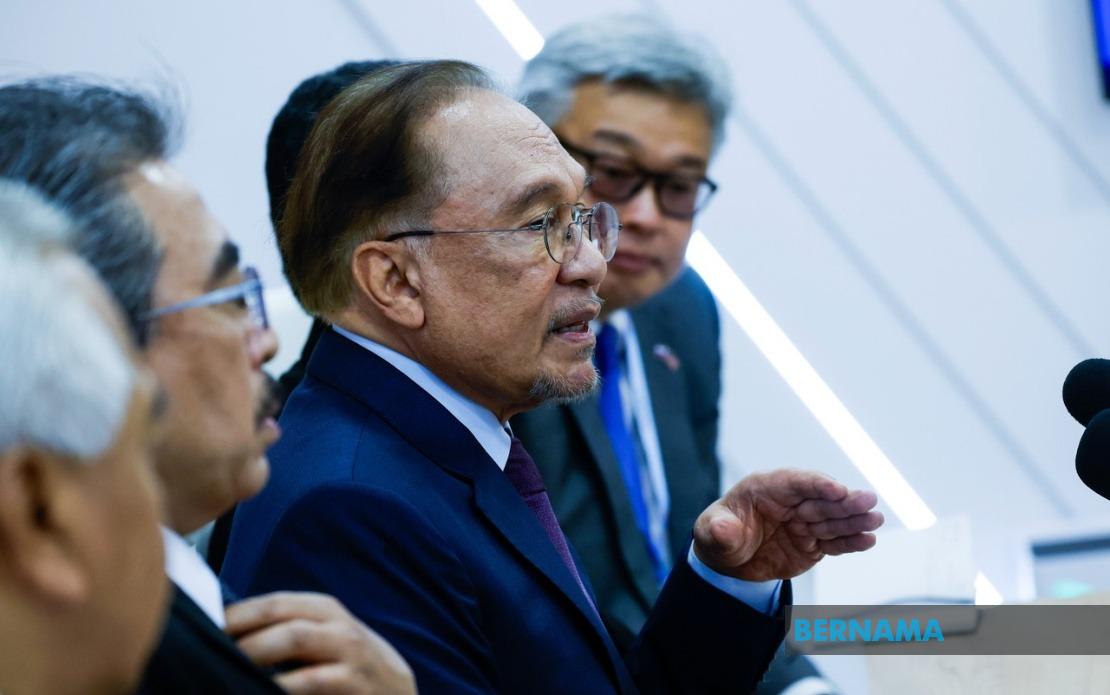
The energy security dimension carries particular significance for Malaysia, a nation grappling with the imperative to stabilise and diversify its hydrocarbon sources amid volatile global markets, geopolitical tensions, and supply chain uncertainties. During his closing remarks to Malaysian media, Anwar elaborated that Russian officials had not merely consented to maintain energy supplies but had committed to establishing a formal long-term agreement with Malaysia. The framework has already moved beyond the aspirational stage, with company representatives from both sides having visited Kazan and preliminary discussions reaching an advanced state. According to Anwar, the foundational principles have been settled and a draft agreement exists, requiring only final review and signature by delegations. He indicated that upon returning to Malaysia, the government would press Petronas and its Russian counterparts to expedite the signing process and formalise the arrangement without further delay.
Anwar conveyed his appreciation to Russian President Vladimir Putin for the Kremlin's willingness to enhance energy cooperation through Petronas, underscoring that bilateral mechanisms between the two countries have expanded substantially beyond the energy sector. The partnership architecture now encompasses trade relationships, direct investment channels, financial cooperation frameworks, and emerging opportunities within the halal economy—a sector in which Malaysia holds considerable comparative advantage and where Russian interest is mounting. This broadening of the bilateral agenda reflects a strategic recognition by both capitals that sustained engagement requires diversification across multiple economic domains rather than reliance upon a single commodity or sector.
Beyond bilateral arrangements, Anwar advocated for Malaysia to adopt a markedly more assertive and proactive posture in pursuing economic ties with Russia and other emerging markets. His remarks carried an implicit critique of what he characterised as an overly circumspect approach to international economic engagement, suggesting that excessive caution has constrained Malaysia's ability to maximise opportunities with key partners. This positioning signals a deliberate recalibration of Malaysia's strategic calculus, particularly in the context of geopolitical realignments affecting Southeast Asia. Anwar further called for the swift implementation of visa-free travel arrangements and the establishment of direct flight services connecting Malaysia and Russia, viewing these measures as instrumental in stimulating tourist flows and deepening human-to-human connectivity between the nations.
At the regional level, Anwar welcomed the finalisation of the ASEAN-Russia Strategic Programme on Trade and Investment Cooperation 2026-2035, characterising this instrument as foundational to the next phase of economic collaboration between the bloc and Moscow. The programme's adoption reflects broader efforts within ASEAN to maintain balanced engagement with major powers and to strengthen economic relationships beyond the China-centric frameworks that have dominated regional trade dynamics. Recent data demonstrates the commercial substance underpinning these diplomatic efforts: in 2024, total ASEAN-Russia trade reached US$18.1 billion, while Russian foreign direct investment in the bloc amounted to RM367.90 million (US$92.97 million). For Malaysia specifically, Russia ranked as the country's ninth-largest trading partner among European nations in 2025, with bilateral trade valued at RM8.72 billion (US$2.04 billion).
Malaysia's export profile to Russia remains concentrated in higher value-added products, with electrical and electronic goods, machinery, equipment and components, and processed food constituting the principal categories. Conversely, Malaysian imports from Russia are dominated by petroleum products, minerals, chemicals, and chemical-derived products—a composition that underscores the complementary nature of bilateral trade but also highlights Malaysia's dependence on Russian energy inputs. This structural reality lends particular importance to securing long-term supply agreements, as disruptions or price volatility in Russian energy exports would directly affect Malaysia's downstream manufacturing sectors and overall economic stability.
During his Kazan sojourn, Anwar held substantive bilateral discussions with Rustam Minnikhanov, the Rais of the Republic of Tatarstan, an autonomous region that represents one of Russia's primary hydrocarbon-producing zones. The two leaders explored expanded cooperation across trade, investment, education, tourism, the halal sector, technology, and human capital development. The energy dimension featured prominently, with Anwar identifying particular potential in downstream activities, refining, and petrochemical production—segments that would allow Malaysia to leverage its technical expertise and processing capabilities in partnership with Tatarstan's abundant hydrocarbon resources. This discussion suggests that energy cooperation may extend beyond simple resource procurement to encompass joint ventures in value-added processing and manufacturing.
Anwar articulated an expansive vision of Malaysia-ASEAN-Russia cooperation, identifying emerging priority areas including energy security, cybersecurity, agricultural modernisation, digital technology advancement, scientific research, and higher education collaboration. This enumeration suggests recognition that contemporary partnership architecture must address not only traditional energy and trade concerns but also the knowledge-intensive and security-oriented challenges of the twenty-first century. Cybersecurity cooperation, in particular, reflects awareness that regional stability increasingly depends upon protecting digital infrastructure and maintaining resilience against evolving cyber threats emanating from state and non-state actors. Similarly, emphasis on scientific research and higher education points towards building enduring institutional linkages that will sustain engagement across generations.
Anwar also expressed cautious optimism regarding international diplomacy in West Asia, suggesting that a potential memorandum of understanding between the United States and Iran addressing their longstanding conflict could facilitate broader regional stabilisation. This commentary indicates sensitivity to the interconnections between Middle Eastern geopolitics and Malaysia's own strategic position, particularly given Malaysia's significant Muslim population and its historical ties to Islamic institutions and movements across the Middle East. A reduction in West Asian tensions would alleviate some of the structural uncertainties that have complicated global energy markets and regional security arrangements.
The Kazan visit was officially accompanied by Investment, Trade and Industry Minister Datuk Seri Johari Abdul Ghani and Economy Minister Akmal Nasrullah Mohd Nasir, lending substantial ministerial weight to the engagement and signifying that energy agreements will be integrated into broader trade and investment policy frameworks. Following the conclusion of the Kazan summit, Anwar immediately departed for Turkmenistan to commence a two-day official visit, the second leg of a carefully sequenced Central Asian tour designed to strengthen energy cooperation and explore additional diversification opportunities for Malaysia's hydrocarbon supply chains. Anwar characterised the Kazan visit as productive and successful, expressing expectations that the Turkmenistan engagement would generate even more substantial outcomes for Malaysia's long-term energy security objectives.
Malaysia's intensified diplomatic engagement across Central Asia reflects structural imperatives driving energy policy in the region. The country confronts mounting pressure to strengthen and diversify its hydrocarbon supply portfolio amid an increasingly turbulent global environment characterised by geopolitical fragmentation, supply chain vulnerabilities, and cyclical volatility in petroleum and natural gas pricing. The Russian energy sector, despite international sanctions and economic pressures, retains substantial productive capacity and export orientation, making it a strategically rational counterpart for Malaysia's diversification efforts. By securing long-term contractual arrangements rather than relying upon spot market purchases or shorter-duration agreements, Malaysia positions itself to better manage price exposure and supply variability while signalling to other potential suppliers Malaysia's commitment to stable, reciprocal energy partnerships.