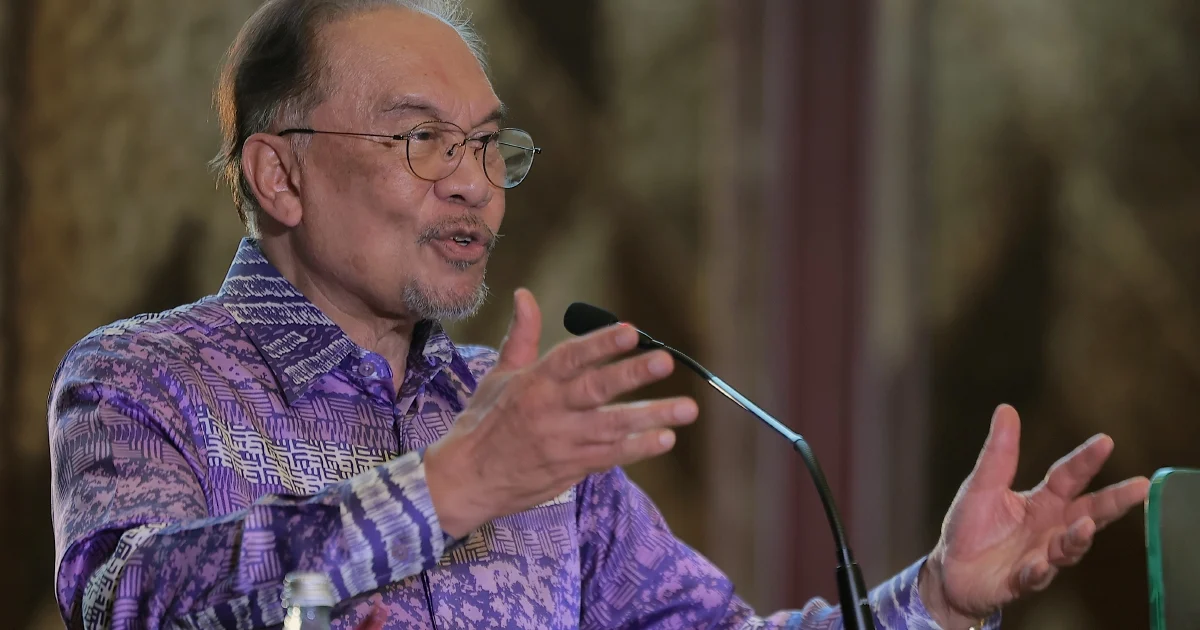
Prime Minister Datuk Seri Anwar Ibrahim is set to undertake a two-day working visit to Kazan beginning June 17, where he will hold discussions with Rais of the Republic of Tatarstan Rustam Minnikhanov. The trip represents a significant diplomatic engagement as Malaysia looks to broaden its strategic engagement with Russia beyond traditional bilateral channels, while simultaneously positioning itself as a bridge-builder within the Association of Southeast Asian Nations framework.
The visit to Russia's largest non-capital city underscores the importance both nations place on expanding economic and political cooperation. Kazan, situated on the Volga River and serving as the capital of Tatarstan, has emerged as an increasingly important international hub hosting major economic forums and attracting investment from across Eurasia. The choice of venue for this working visit signals Malaysian interest in engaging with Russia's regional development agendas and the opportunities that exist within the broader Russian Federation, not merely with Moscow.
From a Southeast Asian perspective, Anwar's engagement with Russian officials carries particular significance given the region's careful navigation of geopolitical complexities. Malaysia's approach to balancing great power competition while maintaining strategic autonomy has made it an influential voice within Asean deliberations on external relations. The prime minister's meeting with Minnikhanov is likely to encompass discussions on enhancing people-to-people connections, trade facilitation, and investment partnerships that could benefit Malaysian enterprises seeking diversified international markets.
Tatarstan itself represents a promising avenue for Malaysian business expansion. The region has developed sophisticated petrochemical, telecommunications, and manufacturing sectors that align well with Malaysian industrial capabilities. Moreover, Tatarstan's historical role as a centre of cultural exchange between Europe and Asia provides a natural meeting point for Malaysian interests in bridging Eastern and Western markets. The visit may facilitate conversations about joint ventures and collaborative projects that extend beyond conventional trade dynamics.
At the bilateral level, Malaysia and Russia have consistently sought to deepen their relationship through high-level diplomatic visits and institutional engagement. Anwar's working visit demonstrates continued commitment to this trajectory despite the complex international environment. The discussions are expected to cover areas including defence cooperation, energy security, and technology transfer arrangements that could prove mutually advantageous as both nations navigate evolving global supply chains and technological advancement.
The timing of the visit also reflects the broader Asean-Russia relationship trajectory. Asean has maintained its central position as the preferred partner for dialogue with major powers, and Malaysia's role as a credible Asean representative gives weight to its bilateral engagements. By strengthening Malaysia-Russia ties, Anwar is simultaneously reinforcing Asean's collective capacity to engage with Moscow on regional peace, security, and development matters. This is particularly relevant given ongoing regional challenges and the need for constructive dialogue channels with major external powers.
Cultural and educational dimensions are likely to feature in Anwar's conversations with Minnikhanov. Malaysia's significant Muslim population and Russia's multi-religious composition provide a foundation for interfaith dialogue and cultural exchange programmes. Educational cooperation, particularly in higher learning and technical training, could open new opportunities for Malaysian students and professionals seeking to develop expertise in Russian technological sectors and business practices.
From Russia's perspective, engaging with Malaysian leadership offers valuable insight into Asean perspectives and provides a channel for Moscow to advance its interests within the regional architecture. Russia has invested considerably in strengthening ties with individual Asean members while also seeking to enhance dialogue through the broader Asean-Russia platform. Anwar's visit provides an opportunity for the Russian side to communicate its vision for regional cooperation and address any concerns Malaysia may hold regarding international developments.
The working visit format suggests substantive negotiations rather than ceremonial engagement. Such working visits typically involve detailed discussions on implementation of previous agreements, identification of new collaboration opportunities, and the establishment of mechanisms for ongoing dialogue at both governmental and non-governmental levels. The expected outcomes may include joint statements on deepening cooperation and possibly new institutional arrangements for regular consultation between Malaysian and Russian officials.
For Malaysian stakeholders across business, academia, and civil society, the visit signals the government's active pursuit of diverse international partnerships that complement existing commitments to Western allies and regional peers. This multi-aligned approach has become increasingly important for Malaysia as it seeks to maximize economic benefits while maintaining strategic flexibility in an era of competing international blocs and shifting power dynamics.
The visit also carries implications for Malaysia's broader foreign policy orientation under Anwar's leadership. The prime minister has consistently emphasized Malaysia's commitment to international law, regional stability, and constructive engagement across ideological and geopolitical divides. By visiting Kazan and engaging with Tatarstan's leadership, Malaysia reaffirms its belief in dialogue and practical cooperation as mechanisms for addressing global challenges rather than isolation or confrontation.