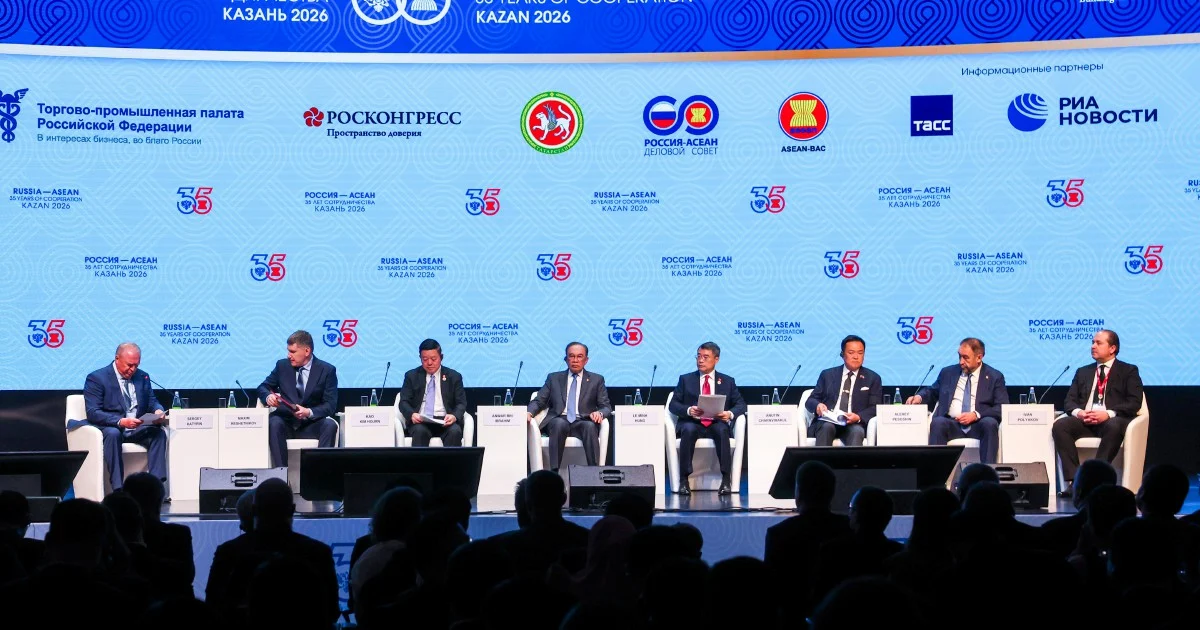
During talks in Kazan, Prime Minister Datuk Seri Anwar Ibrahim has outlined an ambitious agenda for Asean-Russia relations that extends well beyond traditional diplomatic channels, emphasizing that the two regions must harness their combined economic and strategic capacity to address shared regional and global challenges. The Malaysian leader's intervention comes at a time when both groupings are reassessing their international partnerships amid shifting geopolitical currents and heightened demand for reliable supply chains in critical sectors.
The Prime Minister's emphasis on food security carries particular weight for Southeast Asia, a region heavily dependent on imported agricultural commodities and facing mounting pressures from climate volatility and supply chain disruptions. Russia, despite international sanctions and restrictions on certain agricultural exports, remains a significant producer of grains and fertilizer inputs that many Asean nations rely upon. By advancing structured cooperation in this domain, Malaysia's government appears intent on establishing more predictable trade relationships that buffer the region against future shocks, particularly given ongoing concerns about wheat availability and pricing in global markets.
Energy cooperation represents an equally critical pillar in Anwar's framework, reflecting both the immediate needs of industrial economies like Malaysia, Vietnam, and Thailand, as well as the broader Southeast Asian transition towards more diverse energy sourcing. Russia possesses substantial hydrocarbon reserves and expertise in energy infrastructure development, areas where engagement could offer alternatives to existing supply relationships and investment patterns. The proposal resonates with Asean's longstanding commitment to strategic autonomy and non-alignment, suggesting that Moscow's energy sector experience could contribute meaningfully to the bloc's energy security objectives without compromising existing partnerships.
Advanced manufacturing emerges as a third dimension in the Malaysian Premier's vision, positioning Southeast Asia as a potential hub for technological transfer and industrial collaboration. This sector holds significance for Asean's broader development aspirations and its attempt to move beyond lower-value assembly operations. Russian expertise in specialized engineering and manufacturing processes, combined with Asean's cost advantages and increasingly sophisticated workforce capabilities, could create complementary opportunities for both regions. Such partnerships might also help diversify manufacturing bases away from overreliance on single markets, addressing concerns about excessive economic concentration that have preoccupied regional policymakers.
The digital technologies component of Anwar's proposal reflects Asean's recognition that the global economy is increasingly driven by data, artificial intelligence, and software innovation. Russia possesses notable technological capabilities in these domains, despite international constraints on its tech sector. Developing bilateral and multilateral frameworks for digital cooperation—from cybersecurity standards to artificial intelligence research—could accelerate Southeast Asia's digital transformation while providing Moscow with alternative channels for technological engagement and export.
Educational exchange occupies a distinct but equally important position within the proposed framework. By strengthening academic linkages, student exchange programs, and institutional partnerships, Asean and Russia can build human capital foundations for sustained long-term cooperation. Universities and research institutions in both regions have complementary strengths that, when properly coordinated, could address shared challenges in climate science, renewable energy, agricultural innovation, and public health—areas where cross-regional expertise would prove invaluable.
The timing of these proposals suggests Malaysia is actively attempting to position itself as a bridge between Asean and Russia at a moment when other dialogue channels have become strained or attenuated. As a maritime nation with sophisticated diplomatic traditions and economic interests spanning multiple regions, Malaysia has consistently advocated for maintaining open channels across geopolitical divides. Anwar's initiative reflects this broader orientation while simultaneously serving Malaysian interests by creating opportunities for domestic industries and investors to participate in Asean-Russia initiatives.
From Russia's perspective, engagement with Asean through frameworks proposed by respected regional voices like Anwar carries strategic value at a time when Moscow faces significant international isolation. Asean's collective economic weight and geopolitical significance make it a crucial partner for Russia's long-term international relationships and economic resilience. The bloc's nominal commitment to non-alignment and strategic autonomy provides Russia with an opportunity to demonstrate that meaningful cooperation remains possible despite broader global tensions.
Implementing these proposals would require developing specific institutional mechanisms and trade agreements that address technical barriers, regulatory differences, and political sensitivities across the Asean membership. Progress would likely be uneven, with some member states advancing faster than others based on their individual bilateral relationships with Russia and their particular economic priorities. Malaysia's willingness to champion this agenda suggests Kuala Lumpur will invest diplomatic capital in translating these broad aspirations into concrete initiatives and working groups.
The proposal also underscores the evolving architecture of international engagement in Southeast Asia, where traditional great power partnerships coexist with more fluid, issue-specific coalitions organized around sectoral rather than ideological alignments. By framing Asean-Russia cooperation around functional economic challenges rather than political positioning, Malaysia's approach seeks to create space for pragmatic collaboration that does not demand regional countries choose between competing international alignments.
For Asean observers and analysts, the significance of Anwar's intervention extends beyond bilateral Malaysia-Russia dynamics to reflect broader questions about how the bloc will navigate intensifying geopolitical competition. His vision of expanded multilateral cooperation suggests that Asean leadership envisions room for diversified international engagement that prioritizes regional interests over alignment with any particular power or bloc configuration.