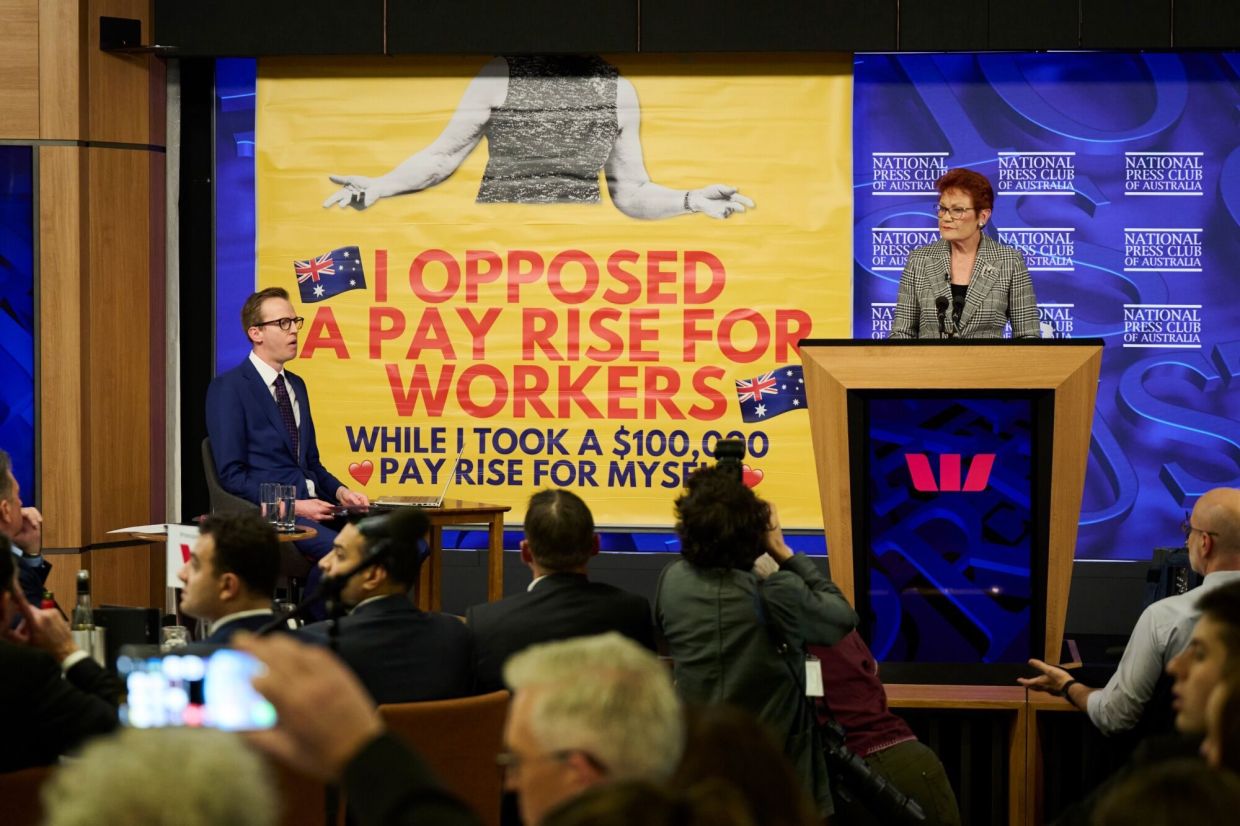
Pauline Hanson, the hard-right populist leader of Australia's One Nation party, has delivered a forceful attack on multiculturalism, declaring that the country must become a monocultural society while remaining multiracial. Speaking at the National Press Club in Canberra on Wednesday, Hanson articulated a vision fundamentally at odds with Australia's official multicultural policies that have shaped the nation for decades. Her remarks represent the clearest articulation yet of her party's cultural positioning as One Nation gains traction in national politics.
Hanson's central argument links immigration policy directly to Australia's acute housing affordability crisis. She contends that the nation's pursuit of multicultural integration has become counterproductive, creating social tensions and straining physical infrastructure. "At the centre of this crisis is the utterly flawed policy of multiculturalism. We cannot be a multicultural society," she stated. However, she distinguished between racial and cultural diversity, suggesting that while Australians can comprise multiple racial backgrounds, they must subscribe to a unified cultural framework. "We are a multiracial society, but we must be monocultural. Australians must live under the one cultural umbrella," she elaborated.
The One Nation leader used her platform to outline specific policy directions, most notably pledging to substantially reduce immigration intake across the board. Beyond general immigration restrictions, Hanson explicitly targeted migrants from regions she characterised as "immersed in extremism like radical Islam." This formulation resurrects longstanding One Nation rhetoric around religious and cultural identity, positioning certain communities as fundamentally incompatible with Australian values. Such language carries particular resonance in Southeast Asia, where Australian immigration policy and political sentiment toward the region's predominantly Muslim nations have been closely monitored and sometimes viewed with concern.
Hanson's appearance at the National Press Club itself carried symbolic weight. In a political career spanning three decades, this marked her first address to the prestigious venue, suggesting either a previous reluctance to engage mainstream institutions or a newfound confidence in her party's electoral prospects. The timing of her speech follows a period of significant political turbulence in Australia. The centre-right coalition government's collapse in federal elections last May created a vacuum that One Nation has successfully exploited, with the party gaining ground in opinion polls as voters express frustration with establishment parties.
The economic context underpinning Hanson's political ascendancy cannot be overlooked. Australians have endured substantial economic headwinds over the past year, including resurgent inflation, escalating interest rates, and volatile fuel prices driven partly by geopolitical tensions around Iran. These pressures have created fertile ground for populist messaging that offers simple explanations for complex economic problems. Hanson seized on these frustrations in her speech, attributing the cost-of-living crisis not to global economic forces or structural economic challenges, but to immigration levels and what she characterised as expensive green energy policies.
Prime Minister Anthony Albanese's Labor government has responded to these economic pressures with targeted interventions. The administration has implemented a temporary reduction in fuel excise in an effort to ease immediate cost-of-living pressures on households and businesses. Additionally, Labor has signalled interest in tax reforms designed to address the housing affordability crisis, recognising that property prices have become a central political issue affecting younger Australians and renters. These measures represent attempts to provide tangible relief without abandoning the economic policy frameworks Labor championed during its election campaign.
Albanese has diagnosed the rise of One Nation and similar populist movements as symptomatic of deeper disaffection with how the broader economy functions. He has characterised One Nation's approach as "simplistic grievance based politics," arguing that the party offers scapegoats rather than genuine solutions. According to this interpretation, voters frustrated by stagnant wages, housing unaffordability, and diminished economic security gravitate toward populist parties that blame specific groups—in this case, immigrants—for systemic problems. This analysis suggests that addressing One Nation's political momentum requires substantive economic reform rather than merely countering anti-immigration rhetoric.
For Malaysia and Southeast Asia more broadly, Hanson's statements carry implications beyond Australian domestic politics. Australia hosts significant Southeast Asian communities and maintains substantial trade relationships with the region. Immigration policies that become more restrictive affect professionals, students, and workers from Malaysia and neighbouring countries seeking opportunities in Australia. Additionally, political messaging that emphasises religious and cultural incompatibility can affect bilateral relations and perceptions of Australia in Muslim-majority nations across Southeast Asia.
The intellectual coherence of Hanson's monocultural proposal remains contestable. Critics argue that a developed, globalised economy like Australia's inevitably incorporates diverse cultural influences through trade, technology, and human movement. Defining a single Australian cultural umbrella proves conceptually difficult when Australian identity itself has evolved significantly over recent decades, incorporating influences from indigenous cultures, British heritage, and successive waves of immigration. The housing crisis, economists contend, reflects supply constraints, investment patterns, and land use policies rather than immigration levels alone.
One Nation's political momentum nonetheless reflects genuine anxieties about rapid social change and economic security. Whether Hanson's prescriptions address these underlying concerns or merely exploit them remains a fundamental political question for Australian voters. The party's rising poll numbers suggest that established parties have not adequately addressed voter concerns about affordability, community cohesion, and economic opportunity. As Australia's political landscape shifts, the influence of One Nation's cultural nationalism will likely shape policy debates around immigration, multiculturalism, and national identity for the foreseeable future.