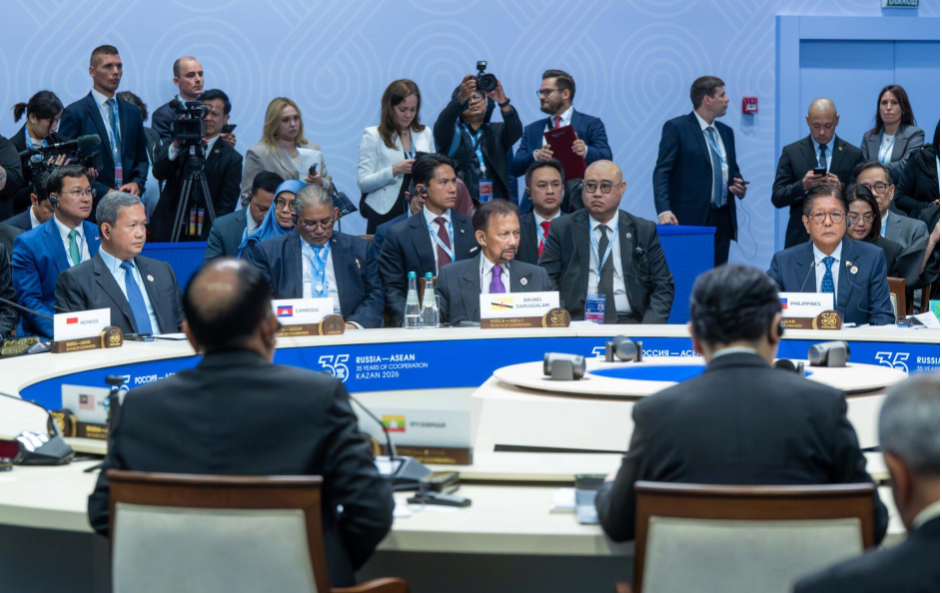
Sultan Hassanal Bolkiah travelled to Kazan, Russia on 18 June to participate in the Asean-Russia Commemorative Summit, where he emphasised the strategic importance of deepening ties between the regional bloc and Moscow. Held at the Kazan Expo International Exhibition Centre, the gathering brought together leaders from across Southeast Asia and Russian officials to assess three decades of dialogue partnership and chart a course for future engagement. The Brunei monarch, accompanied by Minister of Foreign Affairs Prince 'Abdul Mateen, expressed gratitude to Russian President Vladimir Putin for hosting the event and acknowledged the warm reception extended by the government of the Republic of Tatarstan and the people of Kazan. In his remarks, he also extended sympathies to Thailand's Prime Minister Anutin Charnvirakul regarding the recent death of Princess Bajrakitiyabha of Thailand.
The 35-year Asean-Russia relationship has evolved into a multifaceted partnership that transcends traditional diplomatic formalities, according to the Sultan's assessment at the summit. Despite sweeping geopolitical shifts and the emergence of new global challenges, the bilateral dialogue framework has demonstrated resilience and retained considerable relevance for both parties. More significantly, collaborative initiatives have expanded considerably across the three pillars of the Asean Community framework—the political-security pillar, the economic pillar, and the socio-cultural pillar—indicating a comprehensive approach to engagement rather than sporadic or narrowly focused cooperation.
Concrete outcomes from this partnership extend beyond institutional arrangements into tangible benefits for citizens and economies across Southeast Asia. The Sultan highlighted how people-to-people connections have strengthened through sustained engagement, creating networks that facilitate understanding and cultural exchange. These human ties represent foundational elements for long-term stability, as they generate mutual interest in peaceful coexistence and shared prosperity. The partnership has simultaneously contributed to advancing international objectives that both Asean and Russia deem important, namely the maintenance of peace and security frameworks and the pursuit of economic and social development in their respective regions.
Looking ahead, Sultan Hassanal Bolkiah framed Asean-Russia cooperation as essential to addressing the defining challenges of the coming decades. As Southeast Asia pursues its Vision 2045 agenda—a blueprint designed to guide regional integration and development through mid-century—continued collaboration with Russia becomes instrumental in tackling interconnected global problems. Political tensions, whether arising from great power competition or regional disputes, threaten stability essential for development. Economic fragmentation driven by protectionist policies and geopolitical rivalries undermines the open trading systems upon which Southeast Asia's prosperity depends. Climate change poses existential threats to low-lying island nations within Asean and requires coordinated international action. Rapid technological transformation creates both opportunities and risks that require sophisticated governance frameworks.
Energy and food security emerged as particularly critical domains in the Sultan's remarks, reflecting the acute vulnerabilities facing Southeast Asia in these sectors. Russia remains a significant global supplier of hydrocarbons, while agricultural production in Central Asia influences global food markets. For Asean nations, many of which are energy importers and face food security pressures from population growth and climate impacts, partnerships enabling diversified sourcing and technological collaboration offer crucial buffers against supply shocks. Beyond these immediate concerns, the Sultan identified climate action, disaster management, and non-traditional security challenges—encompassing transnational crime, cyber threats, and pandemic preparedness—as areas where Asean and Russia can leverage complementary capabilities and knowledge.
Human capital development featured prominently in the Sultan's vision for deepening the relationship, recognizing that institutional partnerships ultimately depend on sustained flows of educated professionals and trained specialists. Educational exchanges, professional training programmes, and knowledge-sharing initiatives equipped younger generations with skills and international networks necessary to manage increasingly complex bilateral and multilateral relationships. This emphasis on human development reflects a strategic understanding that durable partnerships require investment in people rather than reliance on ephemeral diplomatic gestures or transactional arrangements alone.
The formal adoption of the Kazan Declaration 2026: Asean-Russian Federation – Unity in Diversity: 35 Years Together provided institutional scaffolding for the partnership's evolution. This declaration, along with accompanying documents including the Comprehensive Plan of Action for 2026–2030, establishes frameworks guiding cooperation across multiple sectors. Separate joint statements on energy cooperation and cultural collaboration further specify priorities and modalities for advancing shared interests. The Sultan expressed confidence that these instruments, grounded in decades of accumulated trust, positioned both sides to navigate emerging challenges collectively and to capitalize on emerging opportunities.
The summit's second plenary session, conducted as a working lunch, expanded the discussion to integration processes across Eurasia more broadly. Participation from the Asean Secretariat, the Shanghai Cooperation Organisation, and the Eurasian Economic Commission reflected recognition that Asean-Russia relations operate within a wider architecture of regional and continental integration. This multilateral context matters considerably for Southeast Asian strategists, as developments in Eurasian integration affect trade patterns, investment flows, and security dynamics influencing the region. The inclusion of perspectives from these organizations enabled leaders to identify potential complementarities and synergies between different regional frameworks.
The Asean-Russia Business Forum, held on 17 June as an ancillary event, underscored private sector dimensions of the relationship often overshadowed by official diplomacy. Business leaders from member states and Russia explored commercial opportunities, investment prospects, and partnership possibilities in sectors ranging from energy and minerals to technology and services. The enthusiastic reception of business forum outcomes by political leaders signals recognition that deepening the partnership requires mobilizing commercial actors alongside government institutions. For Malaysian firms and entrepreneurs, engagement through such forums offers potential pathways into Russian and Central Asian markets, particularly in sectors aligned with Malaysia's technological capabilities and manufacturing expertise. The business dimension of Asean-Russia relations remains substantially underdeveloped relative to potential, suggesting considerable room for Malaysian and other Southeast Asian companies to expand presence and involvement in coming years.